
DbcultAccessing Vault...
Director's Spotlight
Senior Film Conservator
Director's Spotlight: United States
A Deep Dive into the 1927 Vision of Edward Ludwig
Analyzing Sign Them Papers (1927) requires a deep dive into the unique directorial voice that Edward Ludwig brought to the screen. By challenging the status quo of 1927 cinema, it continues to spark endless debates among critics and cinephiles alike.
In Sign Them Papers, Edward Ludwig pushes the boundaries of conventional narrative. The film's unique approach to its subject matter has sparked endless debates and interpretations among cinephiles and critics alike.
| Cinematography | High-Contrast |
| Soundtrack | Minimalist |
| Editing | Disjunctive |
| Art Direction | Baroque |
Visualizing the convergence of Edward Ludwig's style and the core Short narrative.
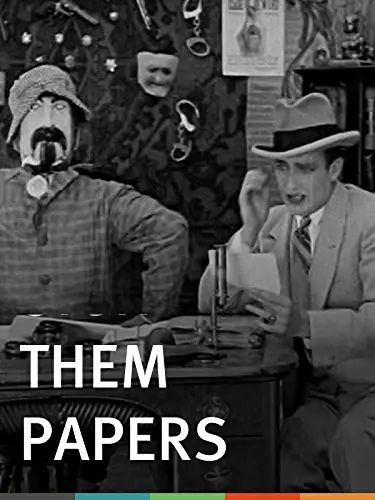
Earl McCarthy is back as C.W. Kahles' comic-strip hero Hairbreadth Harry. This time his sweetie Beautiful Belinda (Erin La Rue) is an "up-to-date sports model" kidnapped by Relentless Rudolph (John J. Richardson), who's "not just a bad apple, he was the whole orchard." When she refuses to sign over her gold mine, she's threatened with a "free bath" in boiling oil, being crushed by a giant papier-mâché boulder dangling from a burning rope and other grim fates. Naturally, our Harry rides to the rescue. The funniest sequence has him outfoxing the villains in a man-sized, logic-defying "shell game." - Dennis Harvey
Decades after its release, Sign Them Papers remains a vital piece of the cinematic puzzle. Its influence can be seen in countless modern works, solidifying Edward Ludwig's status as a master of the craft in United States and beyond.