
DbcultAccessing Vault...
Director's Spotlight
Senior Film Conservator
Director's Spotlight: United States
A Deep Dive into the 1917 Vision of Edward Warren
Analyzing The Warfare of the Flesh (1917) requires a deep dive into the defining moment in cult history that Edward Warren helped create. Defining a new era of United States artistic expression, it transcends regional boundaries to tell a universal story.
In The Warfare of the Flesh, Edward Warren pushes the boundaries of conventional narrative. The film's unique approach to its subject matter has sparked endless debates and interpretations among cinephiles and critics alike.
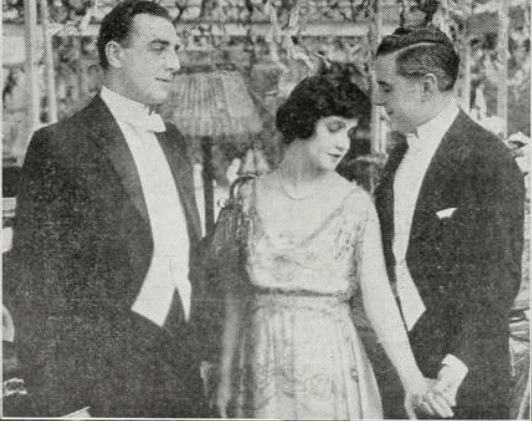
To fully appreciate The Warfare of the Flesh, one must consider the cinematic climate of 1917. During this period, United States was undergoing significant artistic shifts, and Edward Warren was at the forefront of this cult movement, often challenging established norms.
| Cinematography | Deep Focus |
| Soundtrack | Minimalist |
| Editing | Disjunctive |
| Art Direction | Baroque |
Visualizing the convergence of Edward Warren's style and the core cult narrative.
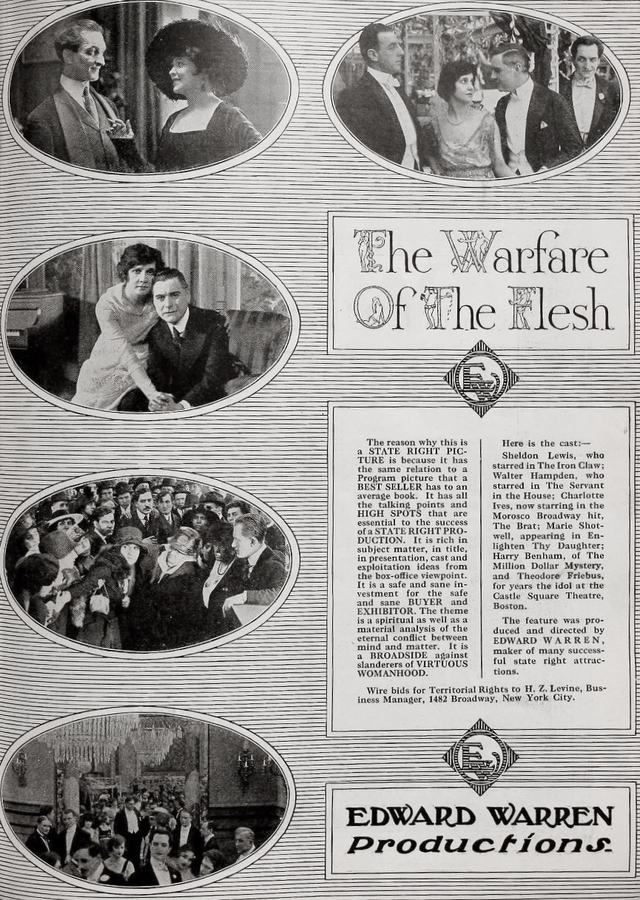
"The Warfare of the Flesh" does not mean a battle nor a struggle of flesh in the material sense. It means the eternal conflict our spirit and soul wage against the desires of the flesh. The warfare is between forces of good and those of evil. Thus the theme is developed by first showing the warfare of the flesh in the beginning, when the first transgressors were expelled from Heaven for their wrongdoing. We see the fallen angels in Hell and on Earth intent on spreading the scourge of evil. We see Satan and Sin in the Garden of Eden, and Sin tempts Eve, who is not strong enough to engage in a warfare with the desires of the flesh and win. We then pass on to the later civilization, and see the Magdalene about to be stoned because she was vanquished in the warfare of mind with matter. The Good Samaritan comes to her rescue, and the machinations of Satan and Sin are thus frustrated in a conflict with Good. Then there is a quick transition to the present era, and again we see Satan and Sin casting their ominous shadows over the affairs of mankind and accelerating evil, in the guise of a lady and gentleman of the leisure class. They temporarily befog the vision of weak men and women thrown into the maelstrom of life where the warfare of the flesh is perpetual. In the stress of circumstances the heroine is about to give up her fight with matter, but the eternal spirit of good again comes to the relief of the distressed and the unfortunate. Thus Satan and Sin lose out in a clash with the forces of Good.
Decades after its release, The Warfare of the Flesh remains a vital piece of the cinematic puzzle. Its influence can be seen in countless modern works, solidifying Edward Warren's status as a master of the craft in United States and beyond.