
DbcultAccessing Vault...
Director's Spotlight
Senior Film Conservator
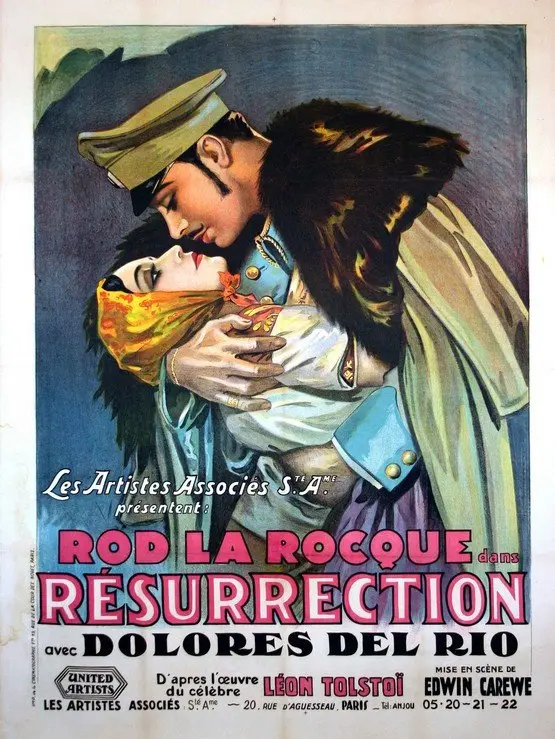
Director's Spotlight: United States
A Deep Dive into the 1927 Vision of Edwin Carewe
The thematic gravity of Resurrection (1927) is rooted in the historical context that Edwin Carewe weaves into the Romance fabric. Synthesizing the best elements of United States and international cinema, it highlights the importance of independent voices in United States.
In Resurrection, Edwin Carewe pushes the boundaries of conventional narrative. The film's unique approach to its subject matter has sparked endless debates and interpretations among cinephiles and critics alike.
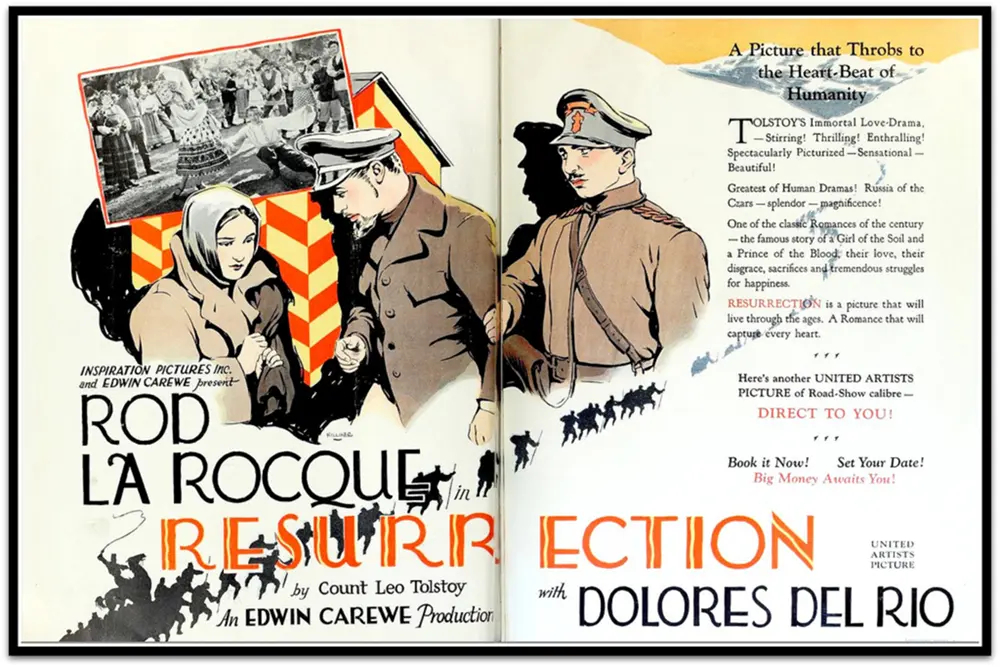
The visual language of Resurrection is defined by its use of shadows and framing, a hallmark of Edwin Carewe's style. By utilizing a 1927-era palette, the film creates an immersive experience that perfectly complements its Romance themes.
| Cinematography | Noir-Inspired |
| Soundtrack | Orchestral |
| Editing | Invisible |
| Art Direction | Kitsch |
Visualizing the convergence of Edwin Carewe's style and the core Romance narrative.
Prince Dimitri comes from St. Petersburg to spend the summer in a rural district and falls in love with Katusha, an orphaned peasant girl who works for his relatives. Later, en route to the Turkish-Russian front, Dimitri's regiment bivouacs near the village, and Katusha secretly yields to his passion. Her condition soon arouses the suspicions of her aunt, and she is sent from the home in disgrace. Bereft by the death of her infant, Katusha is eventually reduced to surviving as a prostitute, and finds herself imprisoned on a charge of poisoning and robbing a merchant. Dimitri, summoned to the jury at her trial, feels his responsibility and agrees to marry her. Although innocent of the crime, Katusha is banished to Siberia. Their old love is rekindled, but she refuses to become his wife and bears her exile alone.
Decades after its release, Resurrection remains a vital piece of the cinematic puzzle. Its influence can be seen in countless modern works, solidifying Edwin Carewe's status as a master of the craft in United States and beyond.