
DbcultAccessing Vault...
Director's Spotlight
Senior Film Conservator
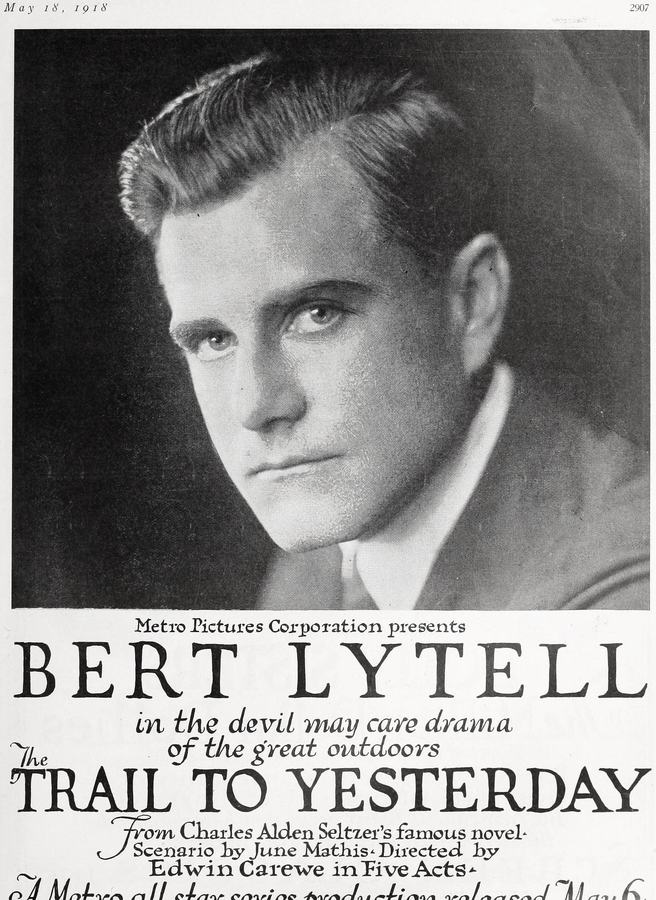
Director's Spotlight: United States
A Deep Dive into the 1918 Vision of Edwin Carewe
The evocative power of The Trail to Yesterday stems from the unique collaboration between the subversive storytelling techniques employed by Edwin Carewe in 1918. Synthesizing the best elements of United States and international cinema, it reminds us of the fragility and beauty of the 1918s.
In The Trail to Yesterday, Edwin Carewe pushes the boundaries of conventional narrative. The film's unique approach to its subject matter has sparked endless debates and interpretations among cinephiles and critics alike.
To fully appreciate The Trail to Yesterday, one must consider the cinematic climate of 1918. During this period, United States was undergoing significant artistic shifts, and Edwin Carewe was at the forefront of this cult movement, often challenging established norms.
| Cinematography | High-Contrast |
| Soundtrack | Diegetic |
| Editing | Elliptical |
| Art Direction | Expressionist |
Visualizing the convergence of Edwin Carewe's style and the core cult narrative.
David Langford, a member of the firm of Keegles and Langford, hardware merchants, has a violent quarrel with his partner, and kills him. Ned, Mr. Keegles' son, who has been expelled from college, returns on the night of the murder, and is suspected of the crime. He leaves for the west, where he becomes known as "Dakota." "Texas" Blanca, a Mexican, and John Duncan blacken the name of "Dakota" by unjustly accusing him of cattle stealing. Later, "Dakota" aids a young girl named Sheila during a thunderstorm, and he subsequently learns that she is the daughter of Langford, the murderer of his father. In revenge he forces her to marry him, and then she leaves for the Double R ranch, which her father has purchased. "Dakota" becomes implicated in a number of other diabolical plots, but emerges triumphant, and the climax of the drama shows him and Sheila living happily as man and wife.
Decades after its release, The Trail to Yesterday remains a vital piece of the cinematic puzzle. Its influence can be seen in countless modern works, solidifying Edwin Carewe's status as a master of the craft in United States and beyond.