
DbcultAccessing Vault...
Director's Spotlight
Senior Film Conservator
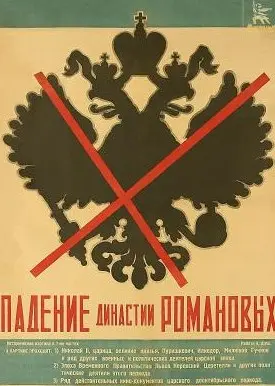
Director's Spotlight: Soviet Union
A Deep Dive into the 1927 Vision of Esfir Shub
As we revisit the 1927 masterpiece The Fall of the Romanov Dynasty, we are struck by the atmospheric immersion that Esfir Shub achieves throughout The Fall of the Romanov Dynasty. Exploring the nuances of the human condition with History flair, it solidifies Esfir Shub's reputation as a master of the craft.
In The Fall of the Romanov Dynasty, Esfir Shub pushes the boundaries of conventional narrative. The film's unique approach to its subject matter has sparked endless debates and interpretations among cinephiles and critics alike.
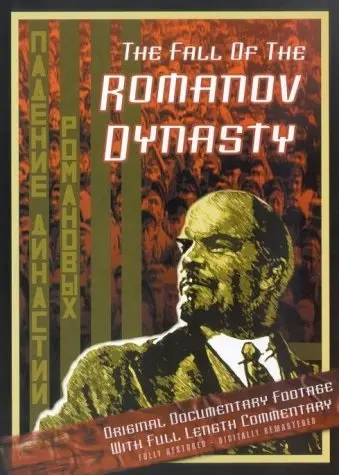
While deeply rooted in Soviet Union, The Fall of the Romanov Dynasty has achieved a global reach, influencing directors from various backgrounds. Its ability to translate History tropes into a universal cinematic language is why it remains a cult staple decades after its 1927 release.
| Cinematography | Handheld |
| Soundtrack | Experimental |
| Editing | Elliptical |
| Art Direction | Expressionist |
Visualizing the convergence of Esfir Shub's style and the core History narrative.
In May 1913 the Romanov Dynasty celebrates its 300th anniversary at the Russian throne. The last emperor in the long line is Tsar Nicholas II. He rules over a country with huge social and economic differences. Russia is for the most part still an agrarian society, but capitalism and its industries are growing. In 1914 Russia gets involved in the First World War. Tsar Nicholas II declares a general mobilization. A vast number of peasants and workers have to go to the front as soldiers. After three years the country is ruined by the war, and there is a shortage of provisions. In February 1917 workers begin striking in the capital, Petrograd. Their protests are soon joined by soldiers. A complete anarchy is threatening the country, when the parliament, called the duma, reorganizes the power structure by forming a new Provisional Government. At the same time the Soviet of Workers' and Soldiers' Deputies forms another ruling body at the City Hall of Petrograd. In this situation Tsar Nicholas II sees no other possibility than to resign from his government. On the 4th of March 1917 he declares his abdication from the throne. The new Provisional Government and its war minister Kerensky continue the war. This presents an opportunity for the Bolsheviks to organize demonstrations and to persuade the workers and soldiers to overthrow the Provisional Government and seize power themselves.
Decades after its release, The Fall of the Romanov Dynasty remains a vital piece of the cinematic puzzle. Its influence can be seen in countless modern works, solidifying Esfir Shub's status as a master of the craft in Soviet Union and beyond.