
DbcultAccessing Vault...
Director's Spotlight
Senior Film Conservator
Director's Spotlight: United States
A Deep Dive into the 1916 Vision of Frank Reicher
Witnessing the stylistic transformation of cult through Public Opinion reveals the global recognition that Frank Reicher garnered after the release of Public Opinion. Serving as a mirror to the anxieties of a changing world, offering layers of thematic complexity that demand repeated viewing.
In Public Opinion, Frank Reicher pushes the boundaries of conventional narrative. The film's unique approach to its subject matter has sparked endless debates and interpretations among cinephiles and critics alike.
To fully appreciate Public Opinion, one must consider the cinematic climate of 1916. During this period, United States was undergoing significant artistic shifts, and Frank Reicher was at the forefront of this cult movement, often challenging established norms.
| Cinematography | Deep Focus |
| Soundtrack | Minimalist |
| Editing | Slow-Burn |
| Art Direction | Brutalist |
Visualizing the convergence of Frank Reicher's style and the core cult narrative.
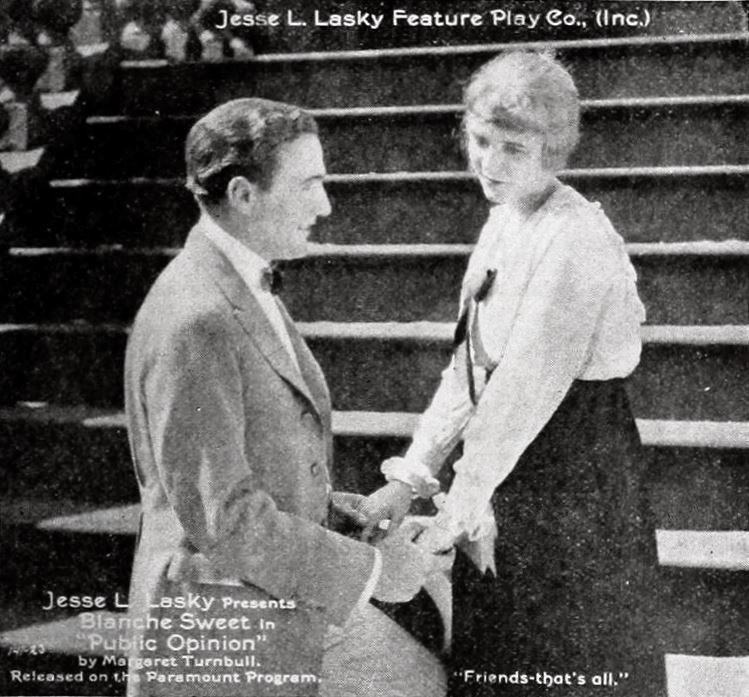
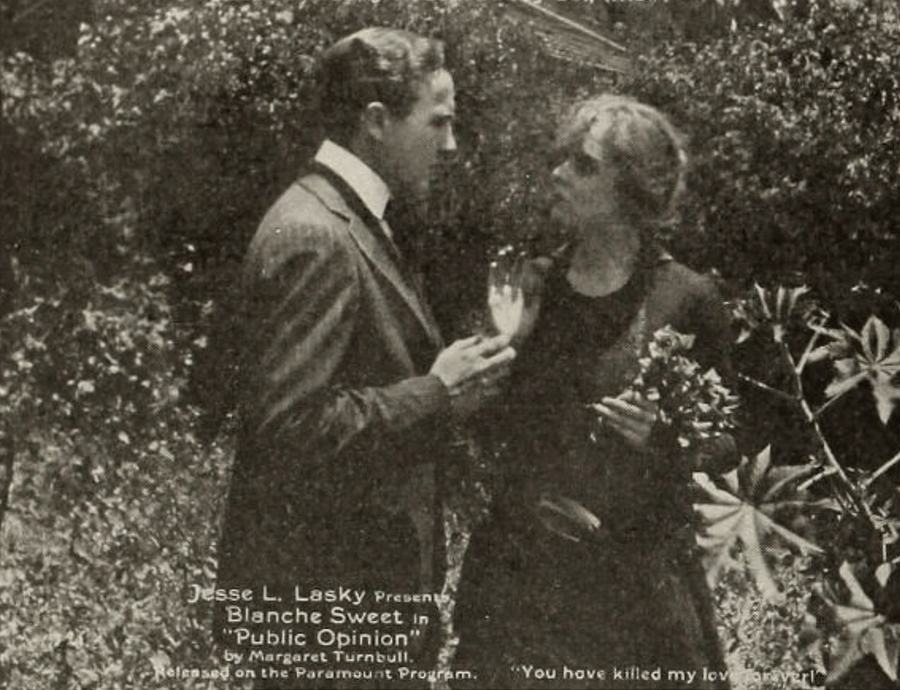
Hazel Gray, a young nurse, is in love with Phillip Carson, son of Mrs. Carson-Morgan, a philanthropist. Phillip, having quarreled with his step-father, leaves home, secures a position, and lives at the same boarding house as Hazel. Called home by his mother's sudden illness, Phillip manages to have Hazel called on the case. Her recognition of the doctor as the man whose trickery she discovered in time to save her own honor, is concealed from Phillip, but her stay is rendered almost unbearable by the doctor's forced attentions. Mrs. Morgan dies suddenly and in terrible agony, from arsenic poisoning. Suspicion points to Hazel, proof of her knowledge of the location of a bottle of arsenic being established by Morgan. Her former supposed relations with the doctor appear as a reason for the crime. Phillip's testimony is against her, but Gordon Graham, a wealthy young man who is on the jury, is at once impressed with the girl's innocence, and succeeds in securing a verdict of "not guilty." Throughout the trail the spirit of the poisoned woman endeavors to point out the guilty person. The weight of public opinion, however, falls heavily upon the girl, sensational newspapers doing their share to increase it, until Hazel can find no place to stay. Finally Graham takes her to his sister's home where he declares his love for Hazel and an unshaken belief in her innocence. Smith, a dope fiend, refused drugs by Dr. Morgan, threateningly reveals his knowledge that the doctor has substituted arsenic for powders prescribed for his wife by the attending physician. During the struggle which follows, Hazel, Graham and a policeman appear, and Smith, having secured possession of the doctor's pistol, fires the shot which mortally wounds Dr. Morgan, who confesses in his dying moments that he is the guilty person. Hazel's innocence is thus established, the public opinion is quickly changed, and the girl goes to the waiting arms of the man who has so valiantly defended her.
Decades after its release, Public Opinion remains a vital piece of the cinematic puzzle. Its influence can be seen in countless modern works, solidifying Frank Reicher's status as a master of the craft in United States and beyond.