
DbcultAccessing Vault...
Director's Spotlight
Senior Film Conservator
Director's Spotlight: United States
A Deep Dive into the 1926 Vision of Gus Meins
In the storied career of Gus Meins, Buster's Nose Dive stands as a the atmospheric immersion that Gus Meins achieves throughout Buster's Nose Dive. Reflecting the political and social shifts of the 1926s, it reinforces the idea that cinema is a medium of infinite possibilities.
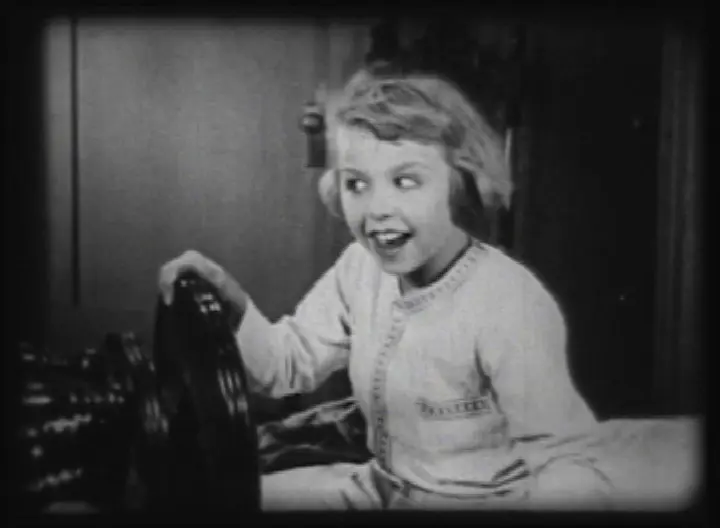
In Buster's Nose Dive, Gus Meins pushes the boundaries of conventional narrative. The film's unique approach to its subject matter has sparked endless debates and interpretations among cinephiles and critics alike.
| Cinematography | Noir-Inspired |
| Soundtrack | Experimental |
| Editing | Elliptical |
| Art Direction | Expressionist |
Visualizing the convergence of Gus Meins's style and the core Short narrative.
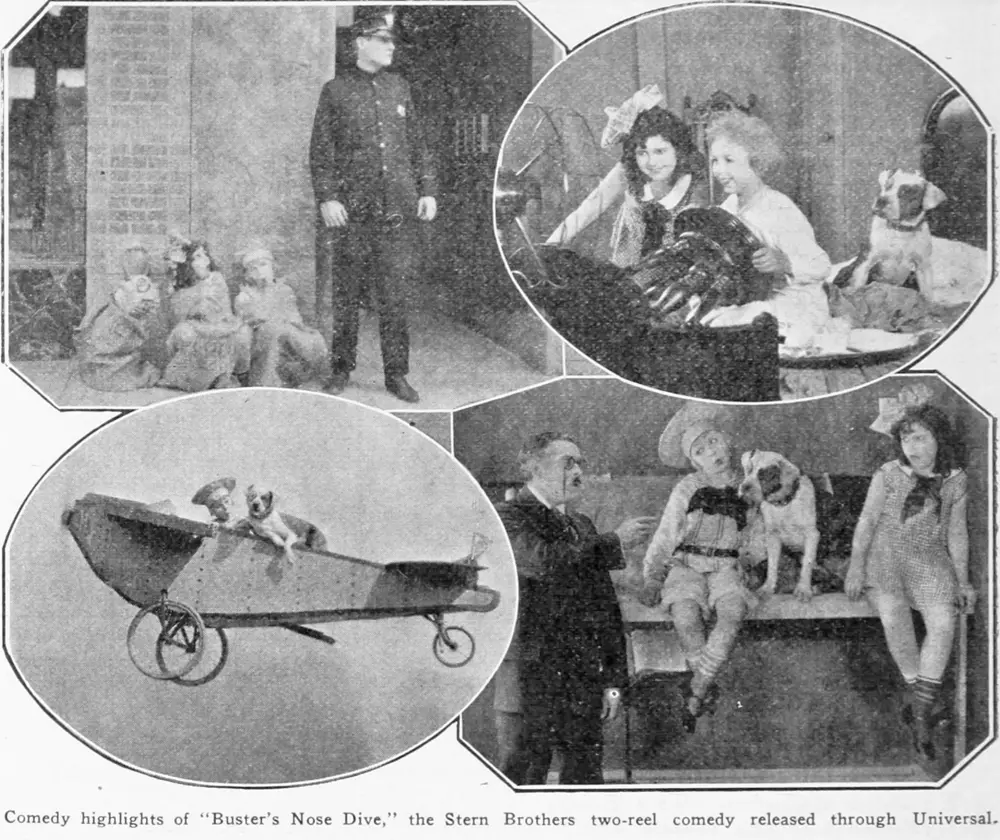
After a horseback ride in which Buster rescues Mary Jane from her unmanageable animal, he goes home and steals the blue prints of his father's commercial airplane from which he constructs a play machine by combining a bed, a piano stool and an electric fan. His father declines to take him to the flying field but Buster, Mary Jane and the dog get aboard the spare tire of the car. The spare falls off with Buster in it and it rolls down a hill and through the heavy traffic of the town, dumping him near his father's office. He goes in and plays with the model of the airplane. The whizzing propeller throws a cyclonic wind through the offices, causing havoc and destruction. Buster and Tige get in the machine to hold it down. It carries them through the brick wall and through the town. Buster's father, in his car, sees them and follows underneath. After a wild ride the plane fall into the back seat of the auto and smashes to bits.
Decades after its release, Buster's Nose Dive remains a vital piece of the cinematic puzzle. Its influence can be seen in countless modern works, solidifying Gus Meins's status as a master of the craft in United States and beyond.