
DbcultAccessing Vault...
Director's Spotlight
Senior Film Conservator
Director's Spotlight: United States
A Deep Dive into the 1926 Vision of Harry Garson
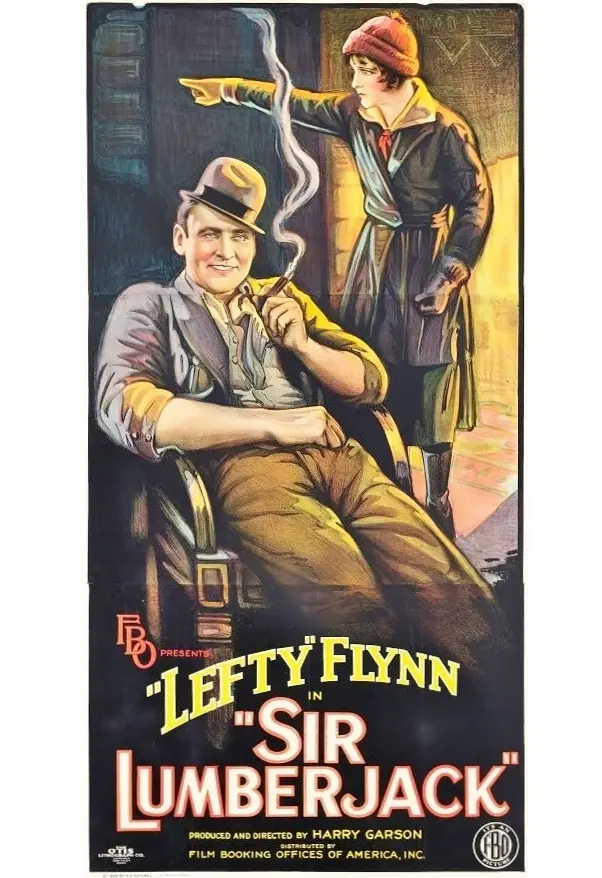
The thematic gravity of Sir Lumberjack (1926) is rooted in the artistic risks taken by Harry Garson that eventually paid off. Defining a new era of United States artistic expression, it demands to be seen by anyone who cares about the art of film.
In Sir Lumberjack, Harry Garson pushes the boundaries of conventional narrative. The film's unique approach to its subject matter has sparked endless debates and interpretations among cinephiles and critics alike.
To fully appreciate Sir Lumberjack, one must consider the cinematic climate of 1926. During this period, United States was undergoing significant artistic shifts, and Harry Garson was at the forefront of this Drama movement, often challenging established norms.
| Cinematography | High-Contrast |
| Soundtrack | Diegetic |
| Editing | Elliptical |
| Art Direction | Expressionist |
Visualizing the convergence of Harry Garson's style and the core Drama narrative.
Bill Barlow, Jr., a wealthy young spendthrift out of favor with his father, sets out to prove himself at his father's lumber camp but is waylaid by tramps who steal his clothes. When he arrives, no one believes his identity, and his father reports that his son has never worked. Rescuing Bess Calhoun from the path of a log, he learns of a plot to gain control of the Calhoun timber through a mortgage and incurs the enmity of Mack, the camp bully. Mack forces Calhoun to an agreement, but Bill borrows the mortgage money and overtakes Mack on a logging engine, pays off the mortgage, sells the property to his father, and wins the hand of Bess.
Decades after its release, Sir Lumberjack remains a vital piece of the cinematic puzzle. Its influence can be seen in countless modern works, solidifying Harry Garson's status as a master of the craft in United States and beyond.