
DbcultAccessing Vault...
Director's Spotlight
Senior Film Conservator
Director's Spotlight: France
A Deep Dive into the 1917 Vision of Henry Krauss
In the storied career of Henry Krauss, Le chemineau stands as a the provocative questions that Henry Krauss poses to the France audience. Elevating the source material through Henry Krauss's unique vision, it persists as a haunting reminder of our own cinematic history.
In Le chemineau, Henry Krauss pushes the boundaries of conventional narrative. The film's unique approach to its subject matter has sparked endless debates and interpretations among cinephiles and critics alike.
In this work, Henry Krauss explores the intersection of cult and France cultural identity. The meticulous attention to detail suggests a deep-seated commitment to pushing the boundaries of the medium, ensuring that Le chemineau remains a relevant topic of study for cult enthusiasts.
| Cinematography | Static |
| Soundtrack | Experimental |
| Editing | Invisible |
| Art Direction | Kitsch |
Visualizing the convergence of Henry Krauss's style and the core cult narrative.
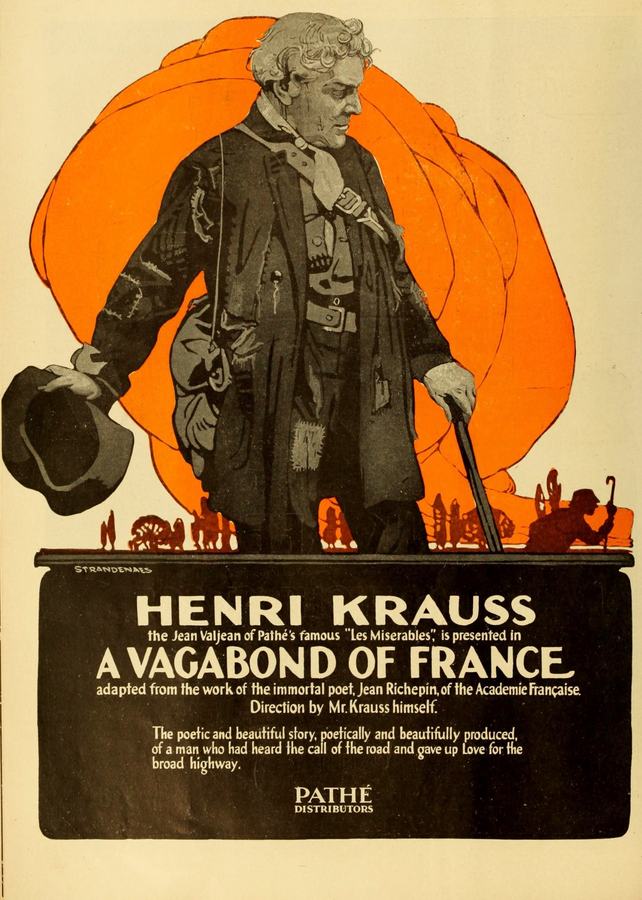
The vagabond comes to the little village and to the farm of Pierre, where toil Toinon and Francois. There is a plague upon the sheep, and the vagabond pauses in his wanderings to cure the sheep - and win the love of Toinon. But the road calls him, and he goes, leaving the girl broken hearted. Francois marries her, and the child, Toinet, grows to be a lusty lad who loves the daughter of Pierre. Pierre, knowing the secret of his birth, refuses his consent, but again comes the vagabond, and once more his strange spells work for happiness, but he turns his back upon his new found son and the happiness he has wrought. The call of the open road is too strong.
Decades after its release, Le chemineau remains a vital piece of the cinematic puzzle. Its influence can be seen in countless modern works, solidifying Henry Krauss's status as a master of the craft in France and beyond.