
DbcultAccessing Vault...
Director's Spotlight
Senior Film Conservator
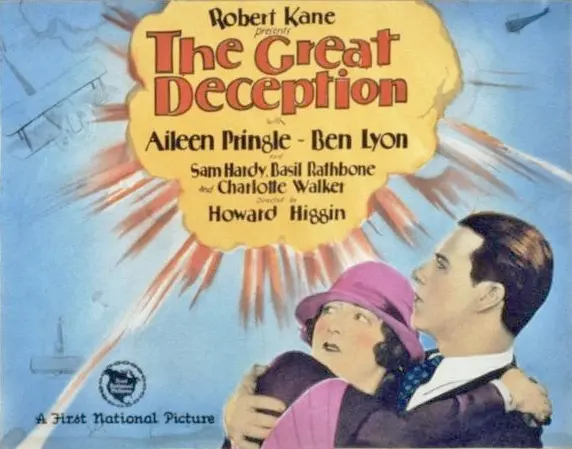
Director's Spotlight: United States
A Deep Dive into the 1926 Vision of Howard Higgin
Witnessing the stylistic transformation of Drama through The Great Deception reveals the global recognition that Howard Higgin garnered after the release of The Great Deception. Serving as a mirror to the anxieties of a changing world, offering layers of thematic complexity that demand repeated viewing.
In The Great Deception, Howard Higgin pushes the boundaries of conventional narrative. The film's unique approach to its subject matter has sparked endless debates and interpretations among cinephiles and critics alike.
To fully appreciate The Great Deception, one must consider the cinematic climate of 1926. During this period, United States was undergoing significant artistic shifts, and Howard Higgin was at the forefront of this Drama movement, often challenging established norms.
| Cinematography | Static |
| Soundtrack | Orchestral |
| Editing | Slow-Burn |
| Art Direction | Brutalist |
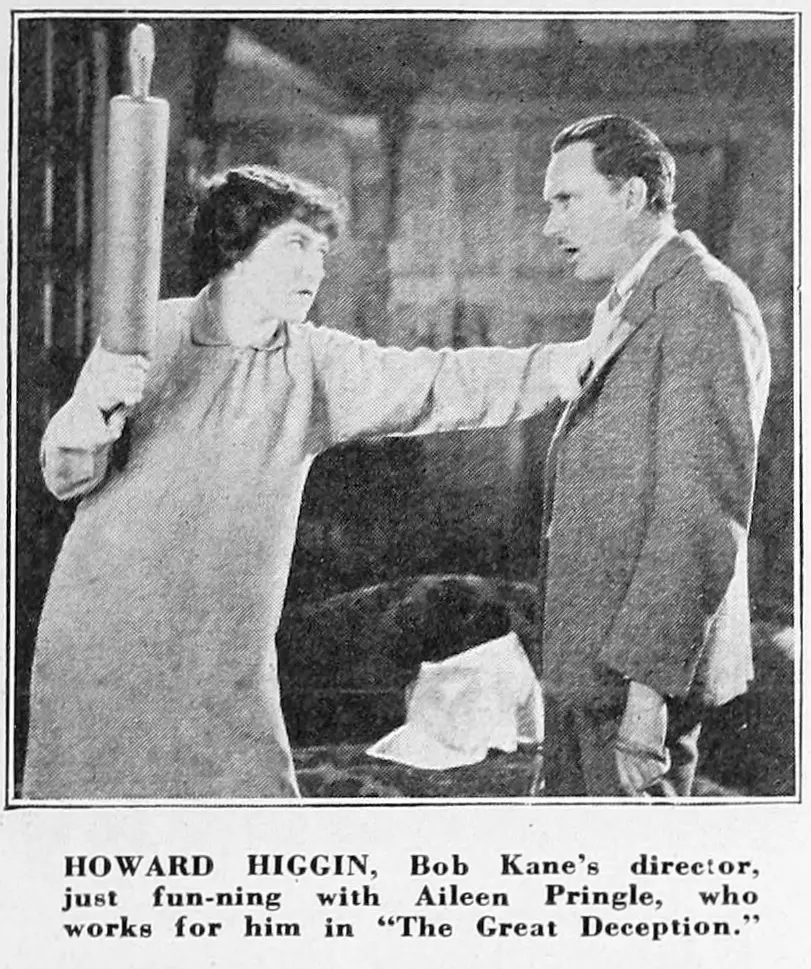
Visualizing the convergence of Howard Higgin's style and the core Drama narrative.
Cyril Mansfield, a handsome young Englishman, is associated with the German Secret Service as a spy in England but is loyal to British intelligence, of which he is a member. He is loved by Lois, an American whose favor is sought by Rizzio, also a double agent, who suspects Cyril's disloyalty to Germany. With the intention of conveying false information to the Imperial German Government, Cyril, accompanied by his faithful mechanic, Handy, and by Lois, escapes to Germany, though Lois is herself abducted by Rizzio and brought to headquarters in a U-boat. Innocently, she betrays Cyril, and they are both sentenced to death. On a pretense of aiding Cyril, Rizzio urges Lois to accompany him on a diplomatic mission, but Cyril and Handy overcome their captors; and Lois and Cyril escape to England in his aircraft.
Decades after its release, The Great Deception remains a vital piece of the cinematic puzzle. Its influence can be seen in countless modern works, solidifying Howard Higgin's status as a master of the craft in United States and beyond.