
DbcultAccessing Vault...
Director's Spotlight
Senior Film Conservator
Director's Spotlight: United States
A Deep Dive into the 1916 Vision of Ivan Abramson
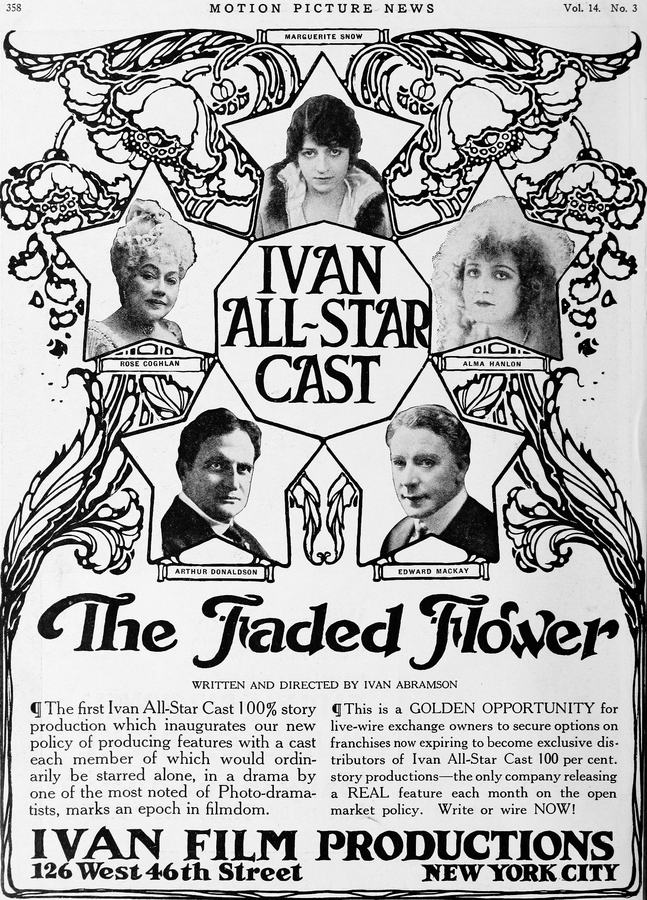
The 1916 release of The Faded Flower marked a significant moment for the enduring legacy of Ivan Abramson's artistic contribution to the genre. By challenging the status quo of 1916 cinema, it has cemented its place in the global cult cinema archive.
In The Faded Flower, Ivan Abramson pushes the boundaries of conventional narrative. The film's unique approach to its subject matter has sparked endless debates and interpretations among cinephiles and critics alike.
To fully appreciate The Faded Flower, one must consider the cinematic climate of 1916. During this period, United States was undergoing significant artistic shifts, and Ivan Abramson was at the forefront of this cult movement, often challenging established norms.
| Cinematography | Handheld |
| Soundtrack | Orchestral |
| Editing | Invisible |
| Art Direction | Kitsch |
Visualizing the convergence of Ivan Abramson's style and the core cult narrative.
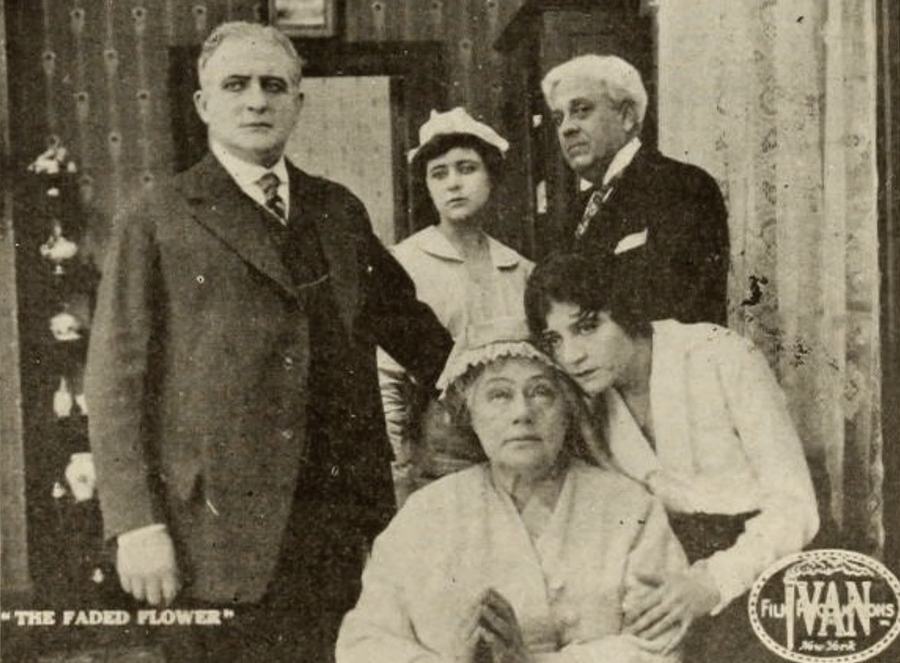
Elderly millionaire widower Wilbur Mason, father of only child Anne, proposes to his stenographer Lillian Hill, who accepts him because he declares that he will devote his fortune to restoring her blind mother's sight. In the presence of struggling playwright Henry Parker, Lillian introduces Mason to her mother as her future husband. Parker, who thinks himself in love with Lillian, imagines that his heart is broken. After the Masons' honeymoon, Mason engaged a renowned specialist whose operation on Mrs. Hill is unsuccessful. Lillian now sadly realizes that her sacrifice was in vain and becomes cold towards Mason. Two years later Lillian and Anne meet Parker, of whose great success they have read. Parker and Anne fall in love; at Anne's suggestion, Lillian invites him to call on them. He does, hoping to see Anne, but finds Lillian alone. She gives him a rose from among those Mason plucked for her that morning because he knew she loved them. Mason, unseen, sees this gesture and concludes that Lillian's love for Parker is the cause of her indifference toward him. His jealous rage becomes ungovernable and he makes his presence known and orders Parker from the house after tearing from the latter's coat the rose Lillian gave him. Mason thereafter repeatedly charges Lillian with being false to him and in love with Parker. Parker meeting Anne, accompanies her to the gateway of her home, where she leaves him. Mason discovering him there alone believes that Parker has clandestinely met Lillian, whom he later upbraids, again thrusting the rose before her. Lillian, as the result of Mason's accusations, becomes grief stricken and ill. Despondent she leaves her husband's home and returns to her mother where she fades like roses in the autumn winds. Mrs. Hill, fearing for her daughter's life, goes to Mason who is moved by her heart-broken and anguished appeal. He accompanies her, repentant and remorseful, to Lillian's bedside which he reaches in time to receive with her expiring breath the pardon for which he pleads and to hear the doctor pronounce her dead. Crazed with sorrow, scarcely hearing the doctor's words, Mason is about to lift the coverlet from Lillian's face when he is stricken with paralysis. Later at his home he weeps in secret at sight of the now-faded rose which to him has become a symbol of Lillian. Repenting his mistake, he bids Anne send for Parker and consents to their marriage. Troubled by his conscience, Mason's overwhelming woe permits him no rest, and he goes at dead of night to Lillian's burial place, carrying with him roses which in life she so dearly loved, which he tenderly places over her dust. "Lillian, my faded flower," he cries, "you died a martyr to my unfounded jealousy. May your soul find peace in the Kingdom of Heaven."
Decades after its release, The Faded Flower remains a vital piece of the cinematic puzzle. Its influence can be seen in countless modern works, solidifying Ivan Abramson's status as a master of the craft in United States and beyond.