
DbcultAccessing Vault...
Director's Spotlight
Senior Film Conservator
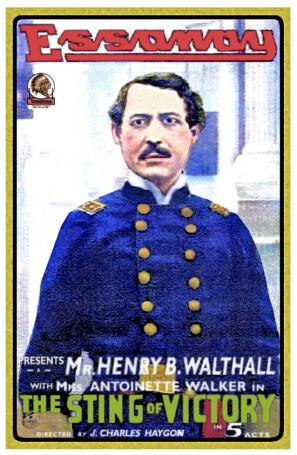
Director's Spotlight: United States
A Deep Dive into the 1916 Vision of J. Charles Haydon
As we revisit the 1916 masterpiece The Sting of Victory, we are struck by the atmospheric immersion that J. Charles Haydon achieves throughout The Sting of Victory. Exploring the nuances of the human condition with cult flair, it solidifies J. Charles Haydon's reputation as a master of the craft.
In The Sting of Victory, J. Charles Haydon pushes the boundaries of conventional narrative. The film's unique approach to its subject matter has sparked endless debates and interpretations among cinephiles and critics alike.
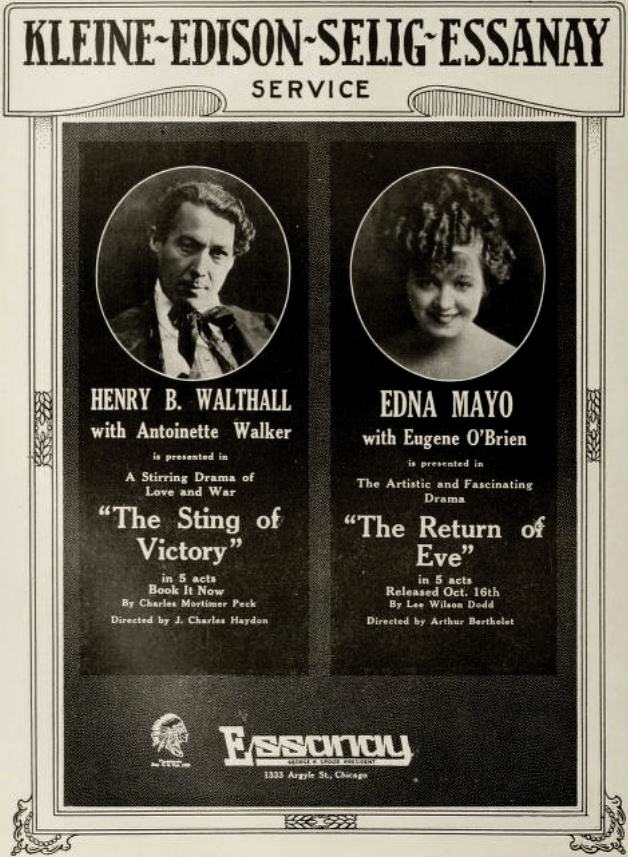
In this work, J. Charles Haydon explores the intersection of cult and United States cultural identity. The meticulous attention to detail suggests a deep-seated commitment to pushing the boundaries of the medium, ensuring that The Sting of Victory remains a relevant topic of study for cult enthusiasts.
| Cinematography | Handheld |
| Soundtrack | Synth-Heavy |
| Editing | Rhythmic |
| Art Direction | Naturalist |
Visualizing the convergence of J. Charles Haydon's style and the core cult narrative.
David Whiting belongs to a fine old aristocratic family of the south and is an officer in the United States Army. He believes in the Union and he is opposed to slavery. When the Civil War breaks out he frees his personal slaves and joins his regiment to fight for the north. His brother, Walker, is an honorable man, but hot-headed and impetuous, the opposite of his brother. He joins the southern army fighting against his brother. Edith Whiting, the sister, and her parents are extremely bitter over David's defection. The play opens shortly before the Civil War, when David is visiting his home with a friend and brother officer, Jack Spencer, who is engaged to Edith. Edith quarrels with Spencer over their differences in principles and returns his engagement ring. David is in love with Ruth Tyler. During the war the Whiting family, deserted by the slaves, have a hard time to make ends meet, and borrow from a professional money-lender, Thomas Spicer, giving mortgages on their property. Spicer is anxious that his son be recognized by the better class of people. He is ambitious for him to marry Edith Whiting. Edith always spurns him, even though word reaches her that Spencer has been killed. After the war David, now a colonel, returns to his home town with his troops as military commander of the district. He pays off the debts on the plantation and saves his sister from further humiliation at the hands of Spicer. A few days afterward Spicer is found murdered. Walker Whiting is found leaning over the body. A gun belonging to Walker is found by the man's side. It is well known that there was bitter feeling between Walker and Spicer, so he is arrested and accused of the murder. It devolves on David to court-martial and try his own brother. However, Rufus, a slave, confesses he killed Spicer because he once horsewhipped him. Although David had done all of this and much more for his family, had restored order and saved the residence from great humiliation and outrage, both his family and all his old friends are still cold to him. The sting of victory comes when the woman he had long loved, Ruth Tyler, rejects him and throws herself into the arms of his brother. David has won the fight for his principles, but lost the girl.
Decades after its release, The Sting of Victory remains a vital piece of the cinematic puzzle. Its influence can be seen in countless modern works, solidifying J. Charles Haydon's status as a master of the craft in United States and beyond.