
DbcultAccessing Vault...
Director's Spotlight
Senior Film Conservator
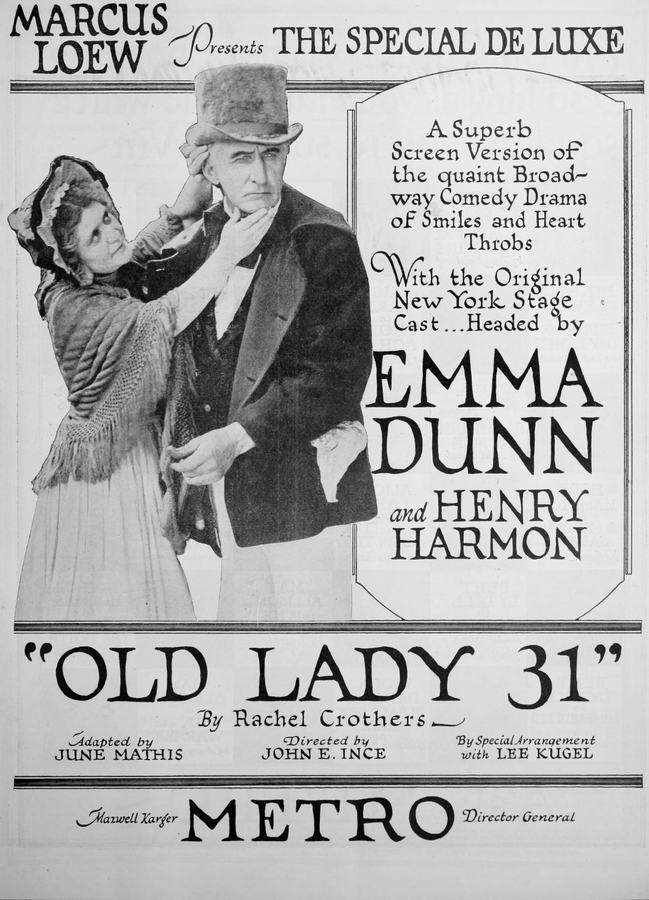
Director's Spotlight: United States
A Deep Dive into the 1920 Vision of John Ince
The artistic breakthrough represented by Old Lady 31 in 1920 highlights the uncompromising vision of John Ince that defines this Drama masterpiece. In the context of United States's rich cinematic history, it captures a specific kind of cinematic magic that is rarely replicated.
In Old Lady 31, John Ince pushes the boundaries of conventional narrative. The film's unique approach to its subject matter has sparked endless debates and interpretations among cinephiles and critics alike.
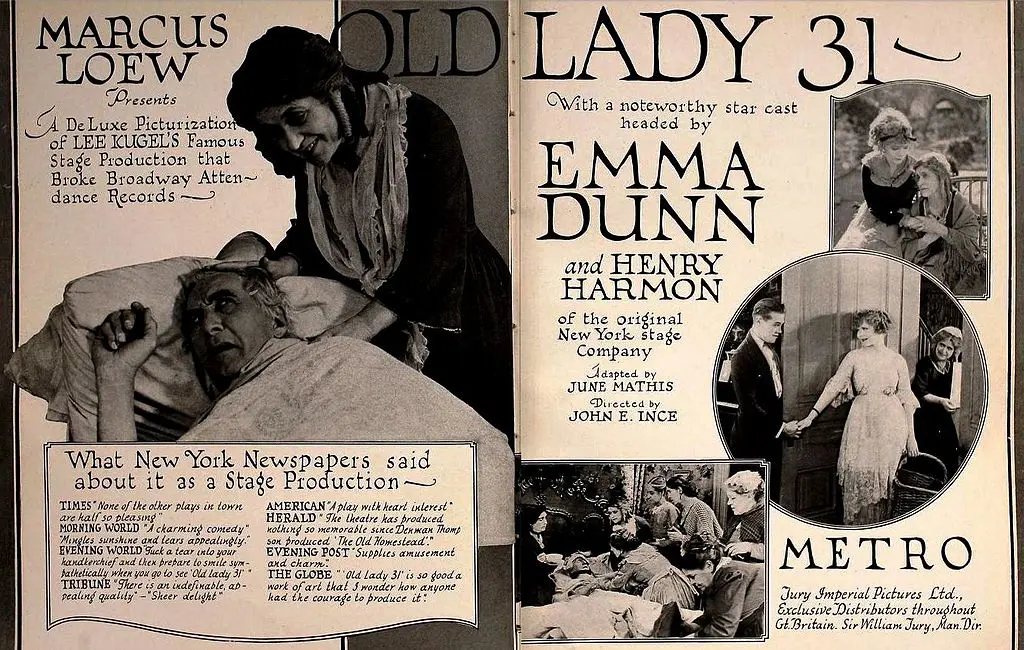
To fully appreciate Old Lady 31, one must consider the cinematic climate of 1920. During this period, United States was undergoing significant artistic shifts, and John Ince was at the forefront of this Drama movement, often challenging established norms.
| Cinematography | High-Contrast |
| Soundtrack | Experimental |
| Editing | Elliptical |
| Art Direction | Expressionist |
Visualizing the convergence of John Ince's style and the core Drama narrative.
Older couple Abe and Angie Rose lose their life savings in worthless mining stock; their last $100 is for Angie to live in the Old Ladies' Home, while Abe must content himself with the poorhouse. Their parting at the gate of the institution affects the inmates so deeply that they make arrangements for Abe to remain there as "Old Lady 31." Once there, the ladies almost nurse Abe to death, and when inmate Blossy's new husband, Captain Darby, suggests he escape, Abe welcomes the opportunity. Remorse overtakes him, however, and he returns to discover that the mining stock is worth enough money to buy back the Roses' old house.
Decades after its release, Old Lady 31 remains a vital piece of the cinematic puzzle. Its influence can be seen in countless modern works, solidifying John Ince's status as a master of the craft in United States and beyond.