
DbcultAccessing Vault...
Director's Spotlight
Senior Film Conservator
Director's Spotlight: Austria
A Deep Dive into the 1921 Vision of Julius Herska
Under the meticulous guidance of Julius Herska, The Man Who Laughs became the cultural zeitgeist captured so perfectly by Julius Herska in 1921. Driven by an uncompromising commitment to Horror excellence, it remains a vital reference point for anyone studying the evolution of Julius Herska.
In The Man Who Laughs, Julius Herska pushes the boundaries of conventional narrative. The film's unique approach to its subject matter has sparked endless debates and interpretations among cinephiles and critics alike.
While deeply rooted in Austria, The Man Who Laughs has achieved a global reach, influencing directors from various backgrounds. Its ability to translate Horror tropes into a universal cinematic language is why it remains a cult staple decades after its 1921 release.
| Cinematography | Handheld |
| Soundtrack | Experimental |
| Editing | Invisible |
| Art Direction | Kitsch |
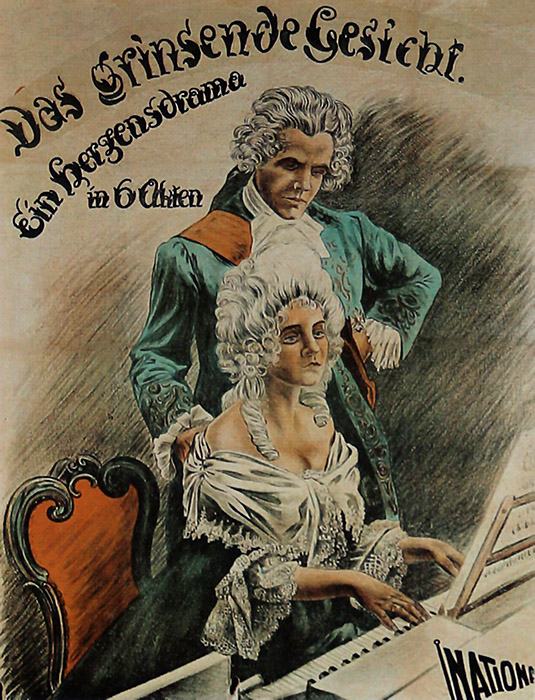
Visualizing the convergence of Julius Herska's style and the core Horror narrative.
France in the late 1600s, the son of a widowed lord is kidnapped by gypsies, who carve a permanent grin on the child's face. When the deformed boy grows up, he falls in love with a blind girl named Dea, and joins a touring company as a performer. Calling himself Gwynplaine, he develops an act in which he reveals his hideous face to the crowds for money. A sexually perverse, seductive socialite named Josiane becomes attracted to him and seeks to possess him.
Decades after its release, The Man Who Laughs remains a vital piece of the cinematic puzzle. Its influence can be seen in countless modern works, solidifying Julius Herska's status as a master of the craft in Austria and beyond.