
DbcultAccessing Vault...
Director's Spotlight
Senior Film Conservator
Director's Spotlight: India
A Deep Dive into the 1927 Vision of Naval Gandhi
Witnessing the stylistic transformation of Drama through Balidan reveals the global recognition that Naval Gandhi garnered after the release of Balidan. Serving as a mirror to the anxieties of a changing world, offering layers of thematic complexity that demand repeated viewing.
In Balidan, Naval Gandhi pushes the boundaries of conventional narrative. The film's unique approach to its subject matter has sparked endless debates and interpretations among cinephiles and critics alike.
The visual language of Balidan is defined by its use of shadows and framing, a hallmark of Naval Gandhi's style. By utilizing a 1927-era palette, the film creates an immersive experience that perfectly complements its Drama themes.
| Cinematography | High-Contrast |
| Soundtrack | Diegetic |
| Editing | Rhythmic |
| Art Direction | Naturalist |
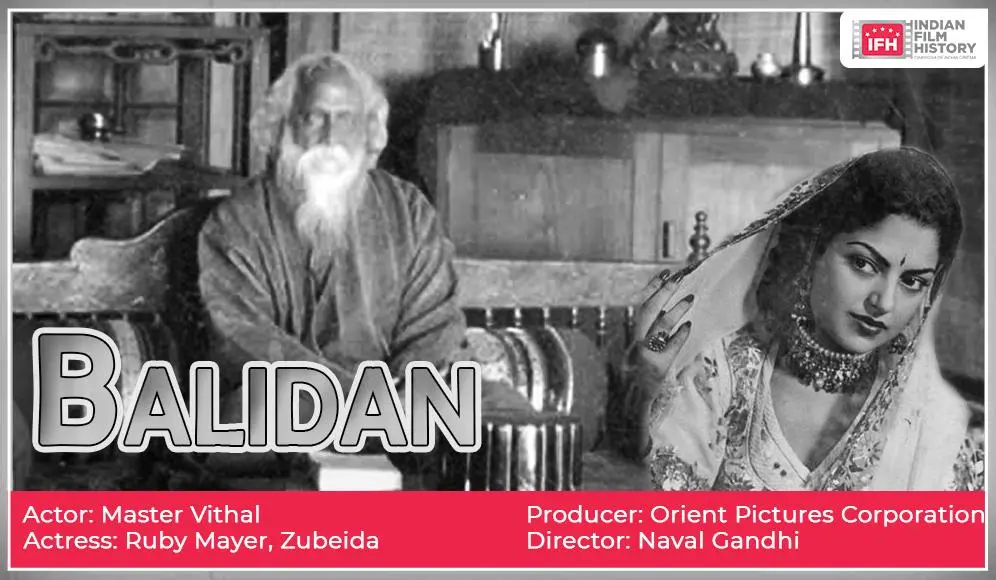
Visualizing the convergence of Naval Gandhi's style and the core Drama narrative.
This quasi-historical story is set in the fictional land of Tippera and features Queen Gunavati (Sulochana), King Govinda, Aparna the beggar girl (Zubeida) and the priest Raghupati who runs a Kali temple. The story addresses the conflict between reformist enlightenment and obsolete, inhuman ritual, questioning the contemporary validity of traditional rituals. The dramatic pivot is the conflict between the king who banned animal sacrifice, and the priest who calls for the king's own blood. Emotionally, the film revolves around the childless queen and a beggar girl whose pet goat has been taken for the sacrifice and who loves a servant in the temple.
Decades after its release, Balidan remains a vital piece of the cinematic puzzle. Its influence can be seen in countless modern works, solidifying Naval Gandhi's status as a master of the craft in India and beyond.