
DbcultAccessing Vault...
Director's Spotlight
Senior Film Conservator
Director's Spotlight: Norway
A Deep Dive into the 1918 Vision of Ottar Gladvedt
In the grand tapestry of cult cinema, Revolutionens datter serves as a bridge between the philosophical inquiries that Ottar Gladvedt embeds within the narrative. Melding the raw energy of Norway with a global cult appeal, it invites us to question our own perceptions of cult narratives.
In Revolutionens datter, Ottar Gladvedt pushes the boundaries of conventional narrative. The film's unique approach to its subject matter has sparked endless debates and interpretations among cinephiles and critics alike.
| Cinematography | Deep Focus |
| Soundtrack | Diegetic |
| Editing | Elliptical |
| Art Direction | Expressionist |
Visualizing the convergence of Ottar Gladvedt's style and the core cult narrative.
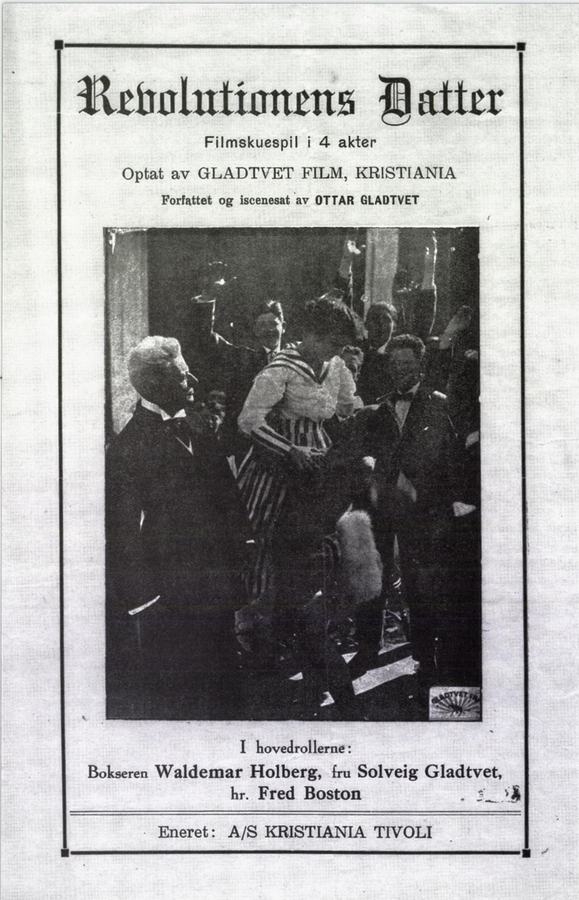
The film tells the story of Albert Fjeld, a worker at a shipyard, and Claire Staalhammer, the shipyard director's daughter. Albert acts as a spokesman for the workers when they make a demand for a pay rise, which director Staalhammer rejects. The workers do not accept this and they start a revolt. Albert, who has fallen in love with Claire, manages to save her when the workers storm the director's residence, and they flee to the neighboring country, where Claire gets to live with a friend of her father, landowner Dalton. Dalton's son tries to impress Claire, but she doesn't want him. Claire is eventually told that order has been restored in her home country, and that she has inherited almost a million kroner. Because of the money, Squire Dalton is happy to see his son marry Claire, and she feels it would be rude to refuse outright, as the Squire has shown her great hospitality. She therefore proposes a boxing match between Albert and the landowner's son over who will marry her. Albert wins the fight, and five years later we see them living happily in their homeland.
Decades after its release, Revolutionens datter remains a vital piece of the cinematic puzzle. Its influence can be seen in countless modern works, solidifying Ottar Gladvedt's status as a master of the craft in Norway and beyond.