
DbcultAccessing Vault...
Director's Spotlight
Senior Film Conservator
Director's Spotlight: United States
A Deep Dive into the 1917 Vision of Paul Scardon
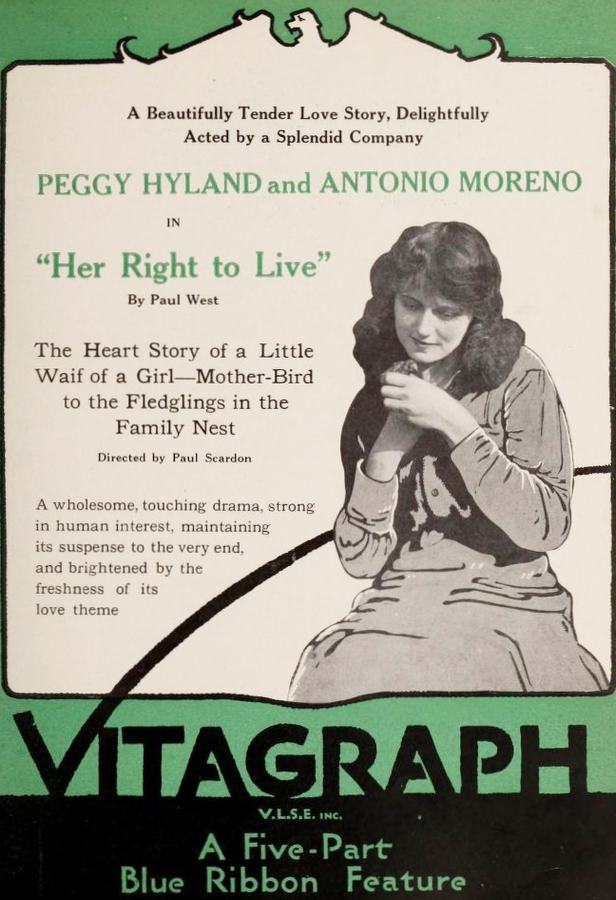
The enduring fascination with Her Right to Live is a testament to the artistic risks taken by Paul Scardon that eventually paid off. Challenging the viewer to find meaning in the cult shadows, it reminds us of the fragility and beauty of the 1917s.
In Her Right to Live, Paul Scardon pushes the boundaries of conventional narrative. The film's unique approach to its subject matter has sparked endless debates and interpretations among cinephiles and critics alike.
To fully appreciate Her Right to Live, one must consider the cinematic climate of 1917. During this period, United States was undergoing significant artistic shifts, and Paul Scardon was at the forefront of this cult movement, often challenging established norms.
| Cinematography | Handheld |
| Soundtrack | Orchestral |
| Editing | Invisible |
| Art Direction | Kitsch |
Visualizing the convergence of Paul Scardon's style and the core cult narrative.
Polly Biggs helps care for her younger brother and sisters, while her widowed mother works hard as a seamstress to earn a living. Mayor Hoadley, Mrs. Biggs' brother, a crooked politician, calls to sympathize with her on the death of her husband, and Polly takes a dislike to him. Within a short time Mrs. Biggs dies and for the sake of appearances, Hoadley and his wife take the children to live with them. Oxmore, a reform candidate, opposes Hoadley's re-election. His son John, an artist, meets Polly and calls on her at the Hoadley mansion, where he saves her from the advances of Hawkins, a ward boss who "has something" on Hoadley. Hawkins threatens to "get" John for his interference, and the threat is heard by Hoadley. Polly and the children are treated so badly that they run away to the poorhouse, which later burns; Polly saves the children, and they wander to a bungalow in the woods, John, who owns the bungalow, finds them there, and permits them to stay all night. During the night Hoadley visits Hawkins and kills him in self-defense, using a cane that John has inadvertently left at his house, when John goes to town he is arrested. Polly and the children are his only alibi, and he cannot tell of Polly's presence. The evidence is strong against him, and if he is convicted his father will lose the election. Polly, who has been sent away by Hoadley, returns in time to straighten matters.
Decades after its release, Her Right to Live remains a vital piece of the cinematic puzzle. Its influence can be seen in countless modern works, solidifying Paul Scardon's status as a master of the craft in United States and beyond.