
DbcultAccessing Vault...
Director's Spotlight
Senior Film Conservator
Director's Spotlight: United States
A Deep Dive into the 1918 Vision of Perry N. Vekroff
As we revisit the 1918 masterpiece Men, we are struck by the meticulous attention to detail that Perry N. Vekroff applied to every frame. Anchored by a narrative that is both personal and universal, it bridges the gap between traditional cult and contemporary vision.
In Men, Perry N. Vekroff pushes the boundaries of conventional narrative. The film's unique approach to its subject matter has sparked endless debates and interpretations among cinephiles and critics alike.
| Cinematography | Noir-Inspired |
| Soundtrack | Experimental |
| Editing | Invisible |
| Art Direction | Kitsch |
Visualizing the convergence of Perry N. Vekroff's style and the core cult narrative.
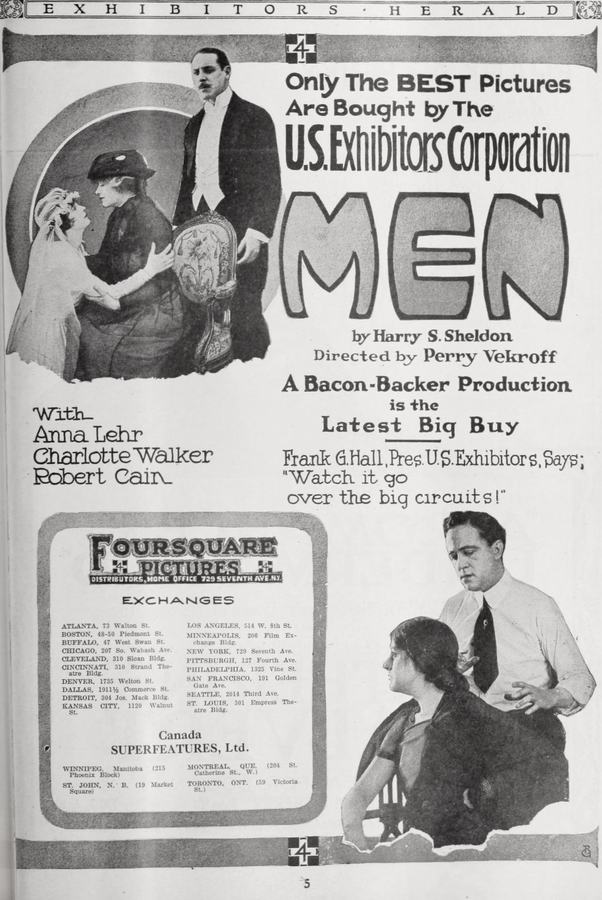
Poverty forces Mrs. Burton to allow the wealthy Mr. Fairbanks, whose wife has become deranged since her baby's death, to adopt Alice, one of her two little girls, while the other, Laura, stays with her mother. Kept in ignorance of each other's existence, the girls grow to womanhood and unknowingly become involved with the same man: vain, wealthy Roger Hamilton. Roger becomes intimate with Laura by promising to marry her, but Alice's wealth soon becomes irresistible to him, and when she quarrels with her fiancé, Tom Courtney, Roger presses his suit with ardor. On the day that Roger is to marry Alice, Laura tells her mother of her own affair with him; Mrs. Burton rushes to the church and publicly denounces the villain. Alice returns to Tom, while Laura is married to artist Anthony Gerard, who loved her all along.
Decades after its release, Men remains a vital piece of the cinematic puzzle. Its influence can be seen in countless modern works, solidifying Perry N. Vekroff's status as a master of the craft in United States and beyond.