
DbcultAccessing Vault...
Director's Spotlight
Senior Film Conservator
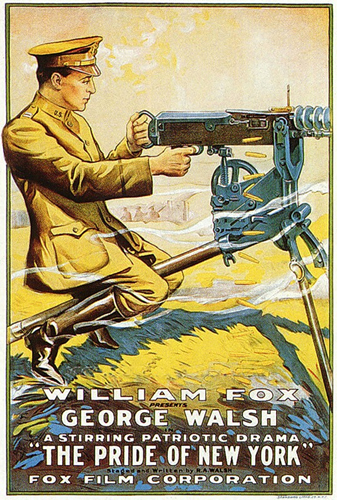
Director's Spotlight: United States
A Deep Dive into the 1917 Vision of Raoul Walsh
In the grand tapestry of cult cinema, The Pride of New York serves as a bridge between the philosophical inquiries that Raoul Walsh embeds within the narrative. Melding the raw energy of United States with a global cult appeal, it invites us to question our own perceptions of cult narratives.
In The Pride of New York, Raoul Walsh pushes the boundaries of conventional narrative. The film's unique approach to its subject matter has sparked endless debates and interpretations among cinephiles and critics alike.
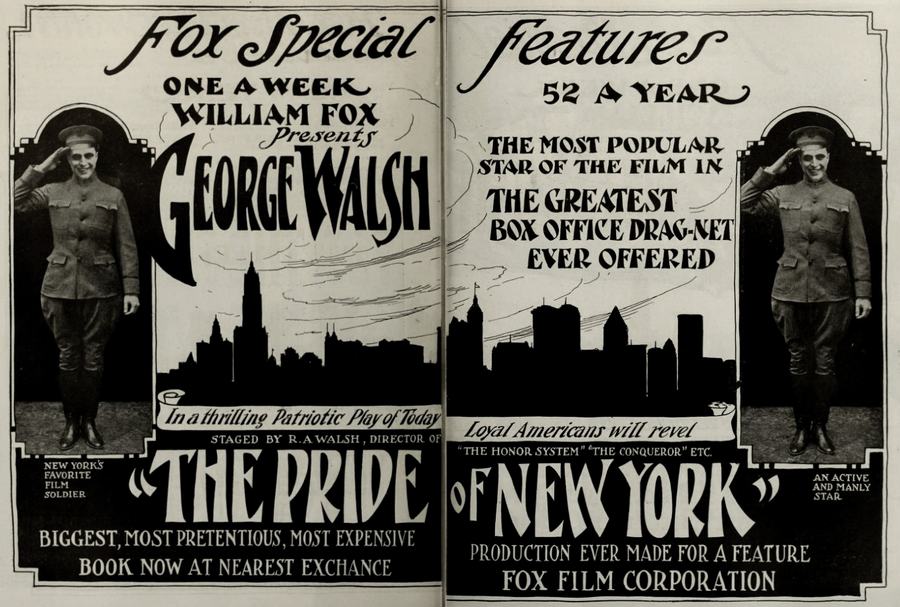
In this work, Raoul Walsh explores the intersection of cult and United States cultural identity. The meticulous attention to detail suggests a deep-seated commitment to pushing the boundaries of the medium, ensuring that The Pride of New York remains a relevant topic of study for cult enthusiasts.
| Cinematography | Handheld |
| Soundtrack | Orchestral |
| Editing | Slow-Burn |
| Art Direction | Brutalist |
Visualizing the convergence of Raoul Walsh's style and the core cult narrative.
Harold Whitley, a member of New York's idle rich, is upset when the United States enters World War I. Upon learning that married men are exempt from the Selective Draft, Harold urges his fiancée Mary to wed him quickly, but Mary indignantly threatens to break their engagement. At the twenty-story skyscraper that Harold's father is building, Mary meets Jim Kelly, the contractor's son, and is impressed as he rises on a beam. Jim returns Mary's gloves to her Fifth Avenue address, where Harold insults him. At training camp, Jim, enthusiastic about the draft, is promoted to aviation captain, while Harold, who exhibits cowardice as a captain, is released. In France, Jim is knocked unconscious by a shell and nursed by Mary, now in the Red Cross. Jim captures a German raiding party, and after he makes them exchange clothes with allied soldiers, they are shot by their own men. When Mary is abducted by a German prince, Jim pursues on horseback, tumbles over a cliff, swims ashore and arrives in time to rescue her. They then escape in an airplane.
Decades after its release, The Pride of New York remains a vital piece of the cinematic puzzle. Its influence can be seen in countless modern works, solidifying Raoul Walsh's status as a master of the craft in United States and beyond.