
DbcultAccessing Vault...
Director's Spotlight
Senior Film Conservator
Director's Spotlight: United States
A Deep Dive into the 1926 Vision of Richard Thorpe
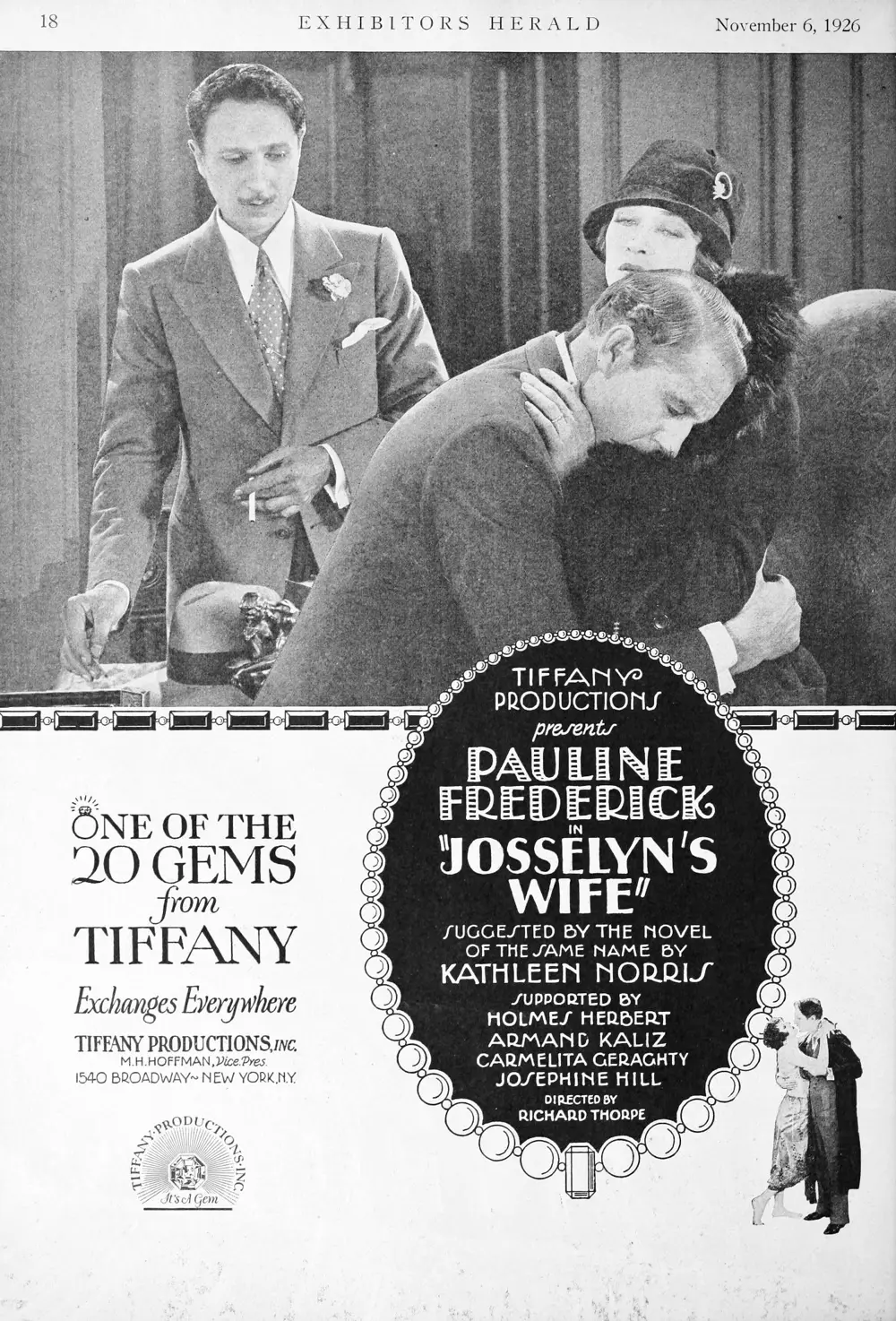
Deciphering the layers of Josselyn's Wife (1926) reveals the complex thematic architecture established by Richard Thorpe. Utilizing a 1926-specific aesthetic that remains timeless, it stands as the definitive 1926 statement on Drama identity.
In Josselyn's Wife, Richard Thorpe pushes the boundaries of conventional narrative. The film's unique approach to its subject matter has sparked endless debates and interpretations among cinephiles and critics alike.
| Cinematography | Static |
| Soundtrack | Orchestral |
| Editing | Slow-Burn |
| Art Direction | Brutalist |
Visualizing the convergence of Richard Thorpe's style and the core Drama narrative.
After only six months of marital bliss, Lillian Josselyn is filled with dread at the return of former lover Pierre Marchand, who left her for Ellen Latimer. When Pierre and Ellen visit the Josselyns, Pierre tries to revive his former love; and Ellen, suspecting that Pierre is having an affair with dancer Flor, encourages the attentions of Pierre's friend Arthur. Lillian reluctantly agrees to pose at Pierre's studio for a portrait but leaves when he attempts to force his attentions on her; to keep him from revealing her past, however, she returns to his studio, from which her husband eventually rescues her. When Pierre is reported murdered, Lillian confesses, thinking she killed him. Her husband confesses to the crime at the trial, but the judge discloses an admission of guilt made by Flo just before her death.
Decades after its release, Josselyn's Wife remains a vital piece of the cinematic puzzle. Its influence can be seen in countless modern works, solidifying Richard Thorpe's status as a master of the craft in United States and beyond.