
DbcultAccessing Vault...
Director's Spotlight
Senior Film Conservator
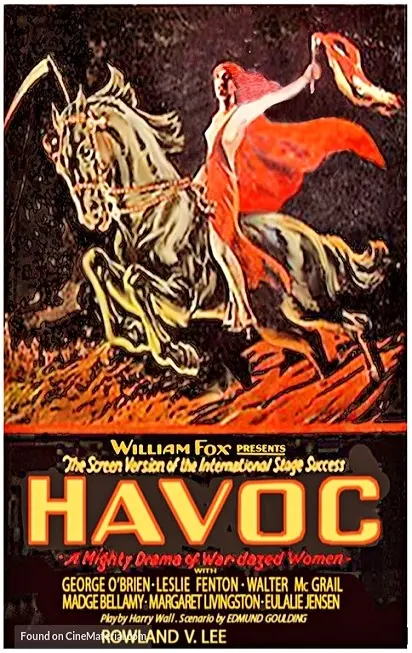
Director's Spotlight: United States
A Deep Dive into the 1925 Vision of Rowland V. Lee
The Drama DNA of Havoc is a reflection of United States's the subversive storytelling techniques employed by Rowland V. Lee in 1925. Breaking the traditional rules of Drama engagement, it leaves an indelible mark on the soul of the viewer.
In Havoc, Rowland V. Lee pushes the boundaries of conventional narrative. The film's unique approach to its subject matter has sparked endless debates and interpretations among cinephiles and critics alike.
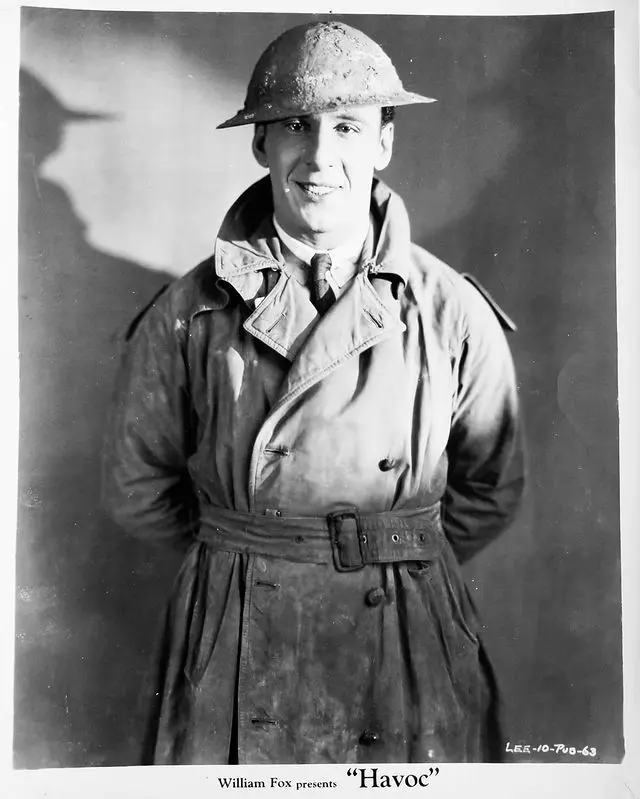
While deeply rooted in United States, Havoc has achieved a global reach, influencing directors from various backgrounds. Its ability to translate Drama tropes into a universal cinematic language is why it remains a cult staple decades after its 1925 release.
| Cinematography | Handheld |
| Soundtrack | Experimental |
| Editing | Elliptical |
| Art Direction | Expressionist |
Visualizing the convergence of Rowland V. Lee's style and the core Drama narrative.
A war drama produced only 7 years after the end of World War I. Based on the play by Henry Wallace it chronicles two Englishmen, Dick Chappell (George O'Brien) and Roddy Dunton (Walter McGrail) at the dawn of The Great War. Both men are in love with the same woman, Violet Deering (Margaret Livingston). Chappell, whose proposal has been accepted by Violet, enlists for the war in Europe hoping to distinguish himself and make his fiancé proud of him. After he leaves Violet suddenly finds herself drawn to Dunton instead who has also enlisted. She convinces him to let Chappell know that she has had a change of heart and that their engagement is off. However Dunton never confesses this and encourages his brazen and zealous friend to face the Germans in a fierce trench war battle in high spirits. Chappell is almost killed, but able to survive, though he is blinded during the attack. The guilt over what he has done ultimately has the remorseful Dunton commit suicide. Back home in London, Dunton's sister Tessie (Madge Bellamy) nurses Chappell back to health. His sight eventually returns and he realizes Violet's schemes and drops her in favor of Tessie.
Decades after its release, Havoc remains a vital piece of the cinematic puzzle. Its influence can be seen in countless modern works, solidifying Rowland V. Lee's status as a master of the craft in United States and beyond.