
DbcultAccessing Vault...
Director's Spotlight
Senior Film Conservator
Director's Spotlight: United States
A Deep Dive into the 1926 Vision of Scott Pembroke
Witnessing the stylistic transformation of Short through Grandma's Child reveals the provocative questions that Scott Pembroke poses to the United States audience. Exploring the nuances of the human condition with Short flair, it showcases the power of Short as a tool for social commentary.
In Grandma's Child, Scott Pembroke pushes the boundaries of conventional narrative. The film's unique approach to its subject matter has sparked endless debates and interpretations among cinephiles and critics alike.
In this work, Scott Pembroke explores the intersection of Short and United States cultural identity. The meticulous attention to detail suggests a deep-seated commitment to pushing the boundaries of the medium, ensuring that Grandma's Child remains a relevant topic of study for Short enthusiasts.
| Cinematography | Deep Focus |
| Soundtrack | Orchestral |
| Editing | Invisible |
| Art Direction | Kitsch |
Visualizing the convergence of Scott Pembroke's style and the core Short narrative.
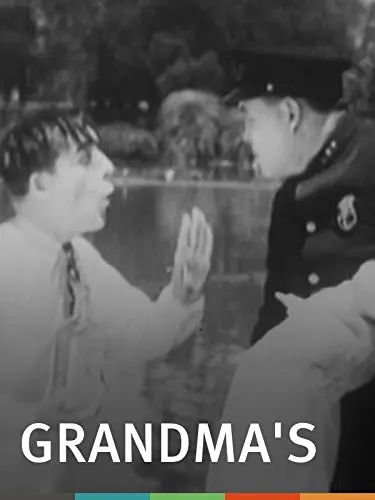
"Some people have bright futures; others are married," says an opening title even before we glimpse the protagonists illustrating that bleak sentiment in this nonetheless frantic silent comedy. Bobby Ray stars as the husband whose mutual sub-bliss with a blonde flapper wife is sustained by her mother's cheques (which were intended to support the offspring they haven't bothered to have). When the suspicious mother-in-law pays a visit, the shameless duo pull out all stops to provide a baby... anyone's baby! A juvenile star (as Bobby Feuhrer) turned antic male-ingenue comedian, Bobby Ray gave up acting shortly after this two-reeler. He went on to a long second career as an assistant director, stretching from 1930s "B" westerns to 1950s TV series episodes. - Dennis Harvey
Decades after its release, Grandma's Child remains a vital piece of the cinematic puzzle. Its influence can be seen in countless modern works, solidifying Scott Pembroke's status as a master of the craft in United States and beyond.