
Cult Cinema
The Silent Saboteurs: How Early Cinema’s Forgotten Outliers Invented the Cult Gaze
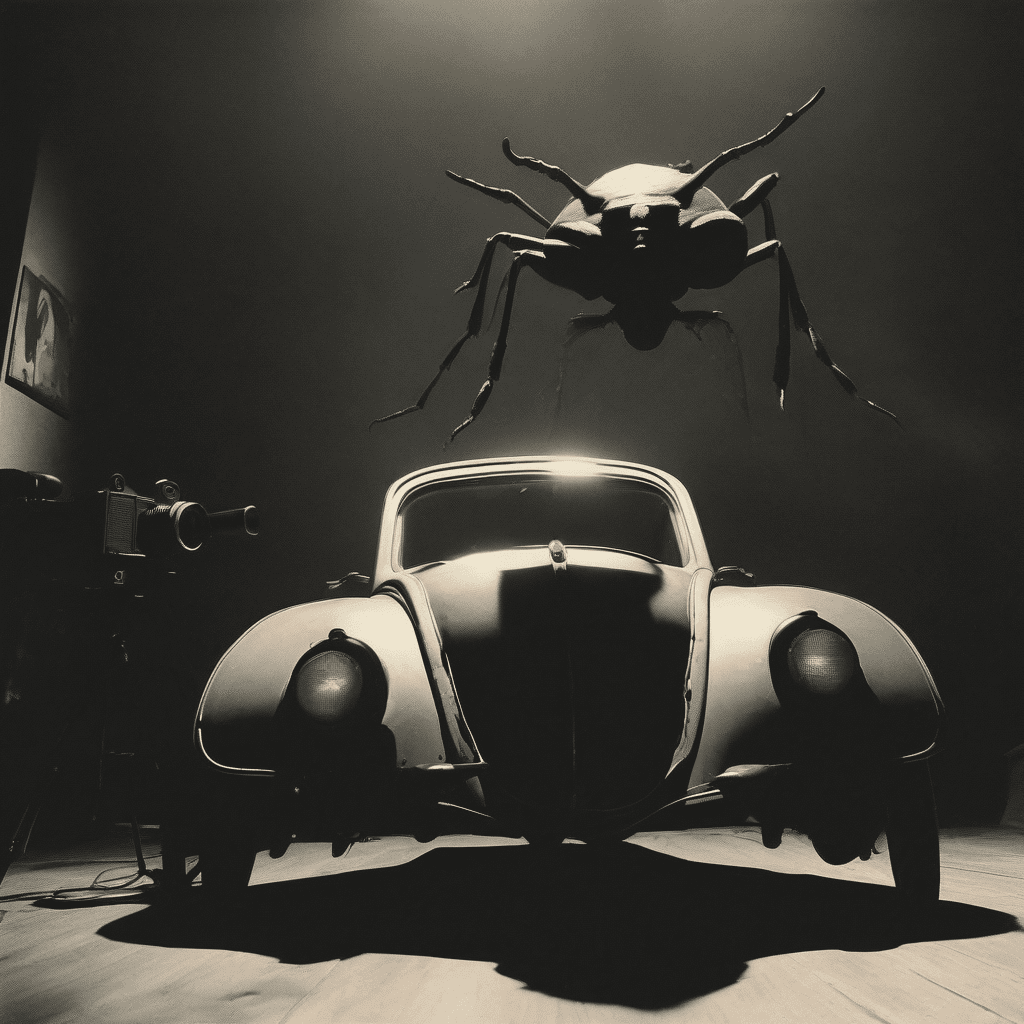
“A deep dive into the pre-1920 roots of cult cinema, exploring how silent-era anomalies and primitive genre-benders established the blueprint for midnight movie obsession.”
The prevailing myth of cult cinema often begins in the smoke-filled midnight screenings of the 1970s, where El Topo and The Rocky Horror Picture Show transformed moviegoing into a religious ritual. However, to truly understand the DNA of the obsessive, the transgressive, and the beautifully strange, we must look much further back. Long before the term 'cult film' was coined, the fringes of the silent era were already vibrating with a maverick spirit that defied the burgeoning Hollywood assembly line. These were the films that didn't just entertain; they haunted, provoked, and confused, creating a blueprint for the niche obsessions that define underground cinema today.
The Primordial Weird: Supernatural Seeds and Occult Curiosities
Cult cinema thrives on the 'other'—the stories that mainstream logic cannot quite contain. In the early 1910s, filmmakers were already experimenting with the surreal and the supernatural in ways that feel startlingly modern. Consider the 1919 curiosity The Beetle. Long before body horror became a staple of the midnight circuit, this film presented the soul of an ancient Egyptian princess inhabiting a beetle to enact revenge on a British Parliamentarian. It is exactly the kind of high-concept, slightly tilted narrative that modern audiences flock to at 3 A.M. festivals. It taps into a primal fear and fascination with the ancient and the insectoid, a precursor to the creature features that would later dominate the cult landscape.
Similarly, the short film Tell Us, Ouija! (1920) highlights the era's fascination with the occult as a source of both comedy and dread. The Ouija board, a staple of teenage sleepovers and horror tropes, was already being mined for its ritualistic potential. This early embrace of the 'hidden' world suggests that the cult audience's desire for the esoteric is as old as the medium itself. These films didn't just tell stories; they invited the audience to peer into the shadows, a fundamental requirement for any film seeking cult status.
The Social Outcast: From Hoboes to Wayward Souls
If there is one unifying theme in cult cinema, it is the celebration—or at least the unflinching observation—of the outsider. The early silent era was obsessed with the social fringe. In The Source (1918), we see a young man of high social standing choose the life of a hobo, eventually finding himself embroiled in a lumber camp intrigue involving German agents. This rejection of traditional class structures is a hallmark of the 'rebel' cinema that would later define the 1960s counterculture. The hobo, much like the modern cult protagonist, exists outside the system, governed by a different set of rules.
This theme of the 'wayward' is explored with even more moral complexity in The Curse of Eve (1917). By focusing on the movement to rescue 'wayward' girls, the film engages with social taboos that the mainstream often preferred to ignore. This 'exploitation' of social issues for dramatic effect is the direct ancestor of the grindhouse films of the 70s. It provides a voyeuristic look into a world that is simultaneously condemned and celebrated. Furthermore, films like Down Home (1920), featuring Nance Pelot’s struggle to support her drunk father by playing piano in a 'roadside inn,' highlight the gritty, unvarnished reality of rural life. This 'rural noir' aesthetic would later be perfected in cult classics like The Texas Chain Saw Massacre, proving that the fascination with the dark underbelly of the 'heartland' has deep, nitrate-soaked roots.
The Aesthetic of Failure and Unintentional Surrealism
Part of the cult experience is the 'so bad it's good' phenomenon—an appreciation for films that fail so spectacularly in their intentions that they transcend their own limitations. While many early films were technical masterpieces, others possessed a clunky, earnest weirdness. The Agonies of Agnes (1918) is a prime example. Featuring a 'tiny tot' character who weighs two hundred pounds and has a fondness for mixed ale, the film leans into a grotesque, absurdist comedy that feels like a precursor to the transgressive humor of John Waters. The sheer oddity of the premise—a baker handing out plaster of Paris bread to the poor while his daughter drinks ale—creates a fever-dream atmosphere that is undeniably 'cult.'
Then there is Mary's Ankle (1920), a comedy that uses a doctor's poverty and a 'tag day' scam to drive its plot. The focus on a specific, almost fetishistic body part in the title, combined with a frantic, low-budget energy, mirrors the zany, often nonsensical plots of later cult comedies. These films weren't trying to be high art; they were trying to survive in a competitive market, and in their desperation, they often stumbled into a singular vision that modern cinephiles find irresistible.
Global Anomalies: The International Cult Gaze
Cult cinema has never been a purely American phenomenon, and the early 20th century proves it. From the Polish war drama Dla ciebie, Polsko (1920), which depicted the savage Bolsheviks plundering Vilnius, to the Dutch mystery Het geheim van Delft (1916), cinema was already crossing borders to tell stories of national identity and secret obsessions. Het geheim van Delft, with its plot centered on the lost recipe for shiny pottery and a desperate search for platinum, is a perfect example of 'niche' interest. The idea of a film dedicated to the chemistry of ceramics is the ultimate cult premise—a hyper-specific obsession that appeals to a dedicated few.
Italy contributed the mysterious Il mistero di Galatea (1918), while Germany offered the action-packed Der Meisterschuß (1920). These films provided a different texture and a different visual language than their American counterparts. The 'cult' audience is often one that seeks out the 'foreign,' the 'exotic,' and the 'untranslated.' In the silent era, the lack of a language barrier (aside from intertitles) allowed these strange, beautiful flickers to travel the globe, planting the seeds for a worldwide network of film obsession.
The Violence of the Vengeful
Revenge is a cornerstone of cult narratives, from Lady Snowblood to John Wick. In the 1917 film The Pulse of Life, we see an Italian brother following his sister to New York to avenge her dishonor with a dagger. This use of a specific, symbolic weapon and the cross-continental journey for blood is pure cult melodrama. It echoes the 'vigilante' genre that would explode decades later. Similarly, Beating Back (1914) tells the story of an Oklahoma lawyer seeking justice for his brother, who was shot in the back. These films tapped into a visceral, almost primal desire for justice outside the law, a theme that consistently resonates with audiences who feel disenfranchised by the 'official' system.
The Legacy of the Nitrate Dream
Why do we still talk about these films? Why does a movie like The Symbol of Sacrifice (1918), a dramatization of the Anglo-Zulu War, still hold a certain fascination? It is because these films represent the wild west of cinema. Before the Hays Code, before the rigid structures of the studio system, and before the homogenization of global culture, there was a period of pure, unadulterated experimentation. These films were the 'first' to try everything—the first to use the Ouija board as a plot device, the first to turn a beetle into a vessel for a princess’s soul, and the first to find the poetry in a hobo’s life.
Cult cinema is, at its heart, a form of archeology. It is about digging through the layers of film history to find the things that were 'too much' for their time—the films that were too weird, too violent, too sad, or too strange to be mainstream hits. When we watch The Heights of Hazard (1916) and see a woman searching for romance in a modern world she deems 'unromantic,' we are seeing the birth of the 'modern' malaise that would define so much of 20th-century cult art. We are seeing the beginning of the cult gaze: a way of looking at the world that finds beauty in the broken, the forgotten, and the misunderstood.
As we move further into the digital age, the 'nitrate nightmares' of the 1910s become even more precious. They remind us that the impulse to create something 'different' is not a modern invention. The mavericks who made The Enemy Within (1918) or The Silence Sellers (1917) were driven by the same restless energy that drives the independent filmmakers of today. They were the original saboteurs, the ones who threw a wrench into the gears of early cinema to see what kind of sparks would fly. And those sparks, over a century later, are still lighting the way for every midnight movie lover who ever dared to prefer the shadow over the sun.
Community
Comments
Log in to comment.
Loading comments…