Summary
A blood-ruddy dawn breaks over the marshlands of post-Versailles Vilnius, where splintered crucifixes jut from the peat like broken ribs of a ravaged body politic. Bolshevik cavalry—half spectral, half wolf—gallop through hamlets, torching ikons with flamethrowers improvised from church organs, turning grain stores into smoldering cathedrals of ash. Into this scorched theater rides the tatters of the newborn Polish Army: boys still smelling of gymnasium chalk, grandfathers hauling scythes sharpened on tombstones, women in repurposed wedding dresses hauling ammunition boxes painted with wildflowers. Their march is less a linear campaign than a fevered Stations of the Cross: at each village they rehearse a new sorrow—an orchard strung with hanged choirboys, a lake bobbing with Communion wafers masquerading as ice floes. Commandant Jakub, a former astronomy professor, keeps star charts instead of maps, navigating by Orion while his lungs gurgle with chlorine; he speaks of galaxies as if they were regiments, of regiments as if they were constellations doomed to collapse. His foil arrives in the shape of Commissar Voronov, a thespian-turned-Butcher who stages show-trials inside gutted cathedrals, forcing villagers to act as both jury and gallows choir. Between them flickers the ghost of Elena, a bilingual schoolteacher who translates bullets into lullabies, smuggling verses of Mickiewicz stitched inside her cheek like contraband Hosts. The film’s spine, though, is not the clash of armies but the erosion of memory: every barn torched erases a lullaby, every well poisoned annihilates a patron saint. When the Poles finally retake a burnt-out railway station, they find the timetable still fluttering: arrivals from 1914, departures to 1920, a whole nation caught between two nullified hours. In the apocalyptic finale, Jakub aligns artillery along a frozen river, firing not shells but glass jars stuffed with soil from each village; the ice fractures, water rushes up like history vomiting its own entrails, and soldiers on both sides drown while clutching scraps of passports—papers that dissolve faster than flesh. The camera lingers on a single button from a cadet’s coat bobbing amid floes, engraved with the word „Polska” now half-erased by icy currents, a microscopic epitaph for a country that must reinvent itself every time the Vistula floods.
The north-eastern Polish province of Vilnius is after WW1 plundered by savage Bolsheviks. The heroic Polish army is bound to stop them.
Review Excerpt
"
There are films you watch; then there are films that watch you—films that crawl behind your corneas and rewire the optic nerve so every sunset thereafter looks like a warning flare.
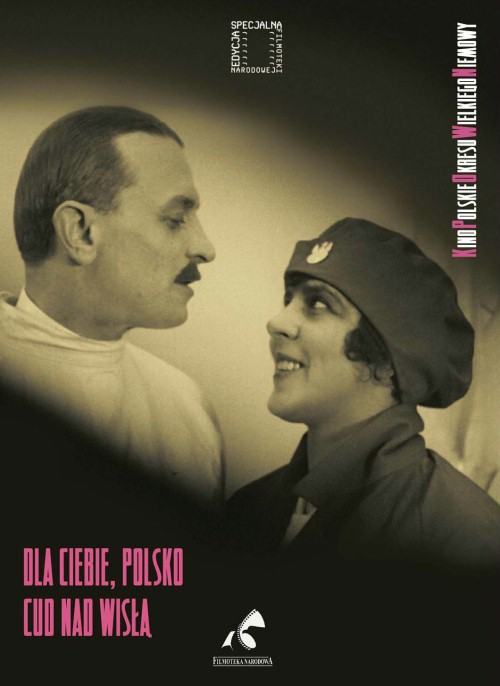
Dla ciebie, Polsko belongs to the latter tribe. Shot in the cratered summer of 1920 while the real Red Army licked its wounds outside Warsaw, this politically scalding fresco feels less like narrative cinema than like someone drilling a borehole into the collective unconscious of a nation still smoldering from 123 y..."