
Cult Cinema
Spectral Synapses: How Early Cinema’s Narrative Deviants Forged the Modern Cult Obsession
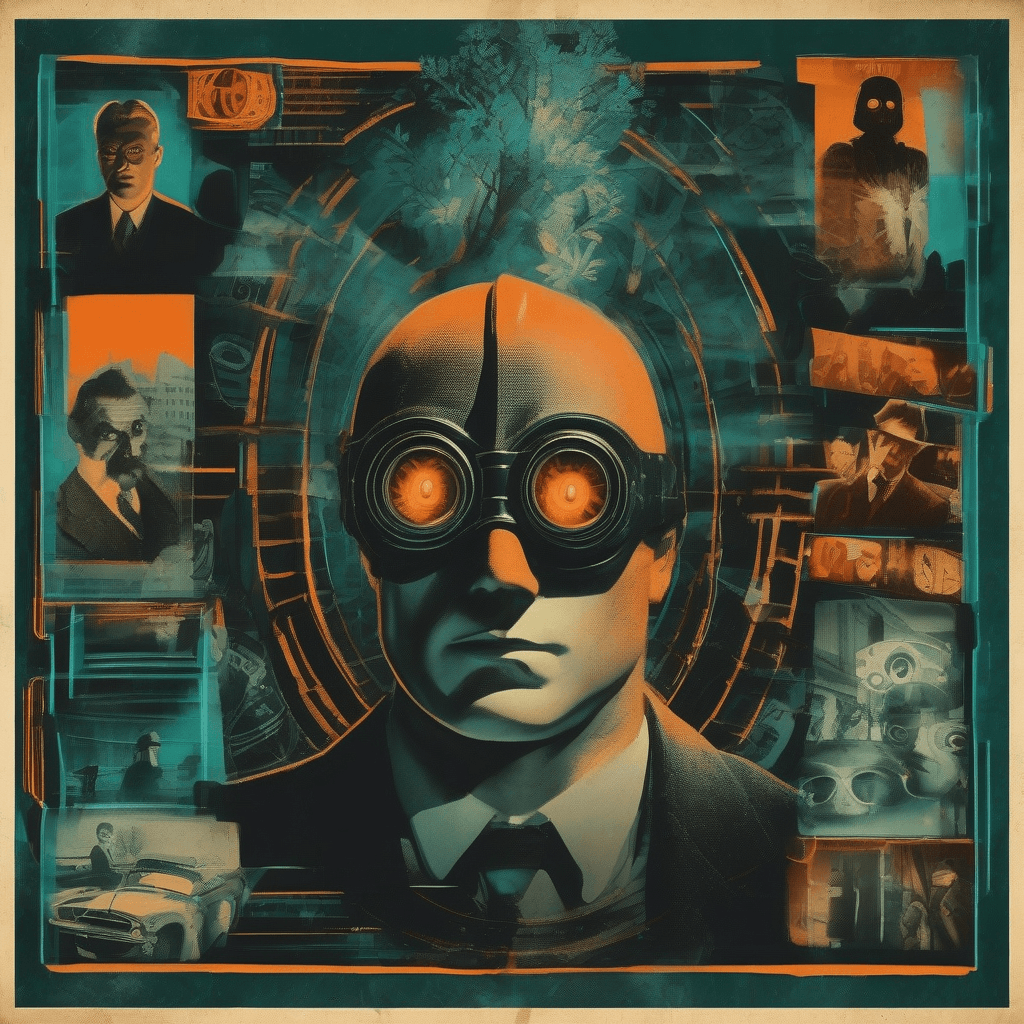
“Explore the hidden history of cult cinema by examining the transgressive, bizarre, and revolutionary films of the early 20th century that set the stage for midnight movie madness.”
To understand the modern midnight movie, one must look beyond the neon-soaked 1970s and the grindhouse circuits of the 80s. The true DNA of cult cinema—that elusive, transgressive spark that transforms a flickering reel into a religious experience—was forged in the silent era and the early days of talkies. This was a time when the rules of narrative were being written and, more importantly, being broken by a cadre of cinematic outlaws. These early films, often dismissed as mere novelties or genre experiments, were actually the first salvos in a long war against the mundane. From the hypnotic gaze of evil scientists to the high-wire stunts of masked vigilantes, the foundations of the cult aesthetic were laid by those who dared to embrace the weird, the wild, and the unclassifiable.
The Hypnotic Gaze and the Birth of the Genre Weird
One of the most potent ingredients in the cult movie cauldron is the presence of the 'Other'—the figure who exists outside social norms and possesses powers that defy logic. In the 1920s, this was often personified by the figure of the mesmerist or the mad scientist. Consider the atmospheric dread of The Sleep of Cyma Roget. Here, we see the prototypical cult villain in Chandra Dak, a Hindu scientist who uses hypnotic power to cast a woman into a death-like trance. This film isn't just a drama; it is an exploration of psychological transgression. It predates the psychedelic mind-control tropes of later cult classics, establishing a visual language where the eyes—and the power of the gaze—become the primary site of conflict.
This fascination with the uncanny extended into the realm of artificial life with Homunculus, 2. Teil - Das geheimnisvolle Buch. The Homunculus series, a staple of early German expressionism, dealt with the creation of life without a soul. It tapped into the deep-seated fears of the industrial age, much like later cult favorites such as Blade Runner or Videodrome. By focusing on the 'mysterious book' as a source of forbidden knowledge, the film created a sense of esoteric lore that invited viewers to become more than spectators—it invited them to become initiates into a secret world of cinematic alchemy.
Masked Avengers and the Dualities of Identity
Cult cinema has always been obsessed with the mask—the idea that the public self is a lie and the private self is a monster, or a hero. The Unknown (1921), starring Dick Talmadge, is a masterclass in this early pulp sensibility. Talmadge plays a dual role: an indolent son of a flour magnate and a masked champion of the people. This trope of the 'masked champion' is a direct ancestor to the costumed heroes and vigilantes that populate the cult canon today. It challenges the audience to question the nature of authority and the necessity of law, suggesting that true justice can only be found in the shadows.
This theme of hidden identity and shifting loyalties is further explored in Under Two Flags. The story of an English nobleman who joins the French Foreign Legion to escape his past is more than an adventure; it is a narrative of identity erasure. In cult cinema, the protagonist is often someone who has been discarded by society, only to find a new, more authentic life in the fringes—whether those fringes are the Algiers desert or the neon streets of a dystopian future. The character of Cigarette, the French-Arab girl caught between worlds, embodies the tragic, romantic heart that often beats within the most transgressive films.
The Avant-Garde Pulse: Truth and Subversion
While some films used fiction to explore the weird, others used the camera itself as a weapon. Dziga Vertov’s Kino-pravda no. 1 was not just a newsreel; it was a revolution. By documenting Russian life through a lens of 'film truth,' Vertov and his collaborators were creating a new kind of visual literacy. This experimental approach to reality is a cornerstone of the cult documentary and the 'found footage' genre. It taught audiences that the camera could see things the human eye could not, and that the editing process could create meanings that were entirely subversive to the status quo.
Even in the world of advertising, early filmmakers were pushing boundaries. Das Wunder, an animated short for a distillery, used surreal visuals to sell fruit juices and spirits. This intersection of commercialism and the avant-garde is a recurring theme in cult history, where the most bizarre imagery often comes from the need to capture attention in a crowded marketplace. It proves that the cult sensibility can flourish anywhere, provided there is a willingness to abandon traditional logic in favor of visceral impact.
The Domestic Grotesque and Social Anarchy
Cult films often find their power by taking the familiar and making it strange. Foolish Lives presents a domestic situation—two families sharing a house—and turns it into a theatre of the absurd. This early comedy of errors hints at the breakdown of the nuclear family, a theme that would later be explored with much more bite in the works of John Waters or the 'transgression' movement of the 1980s. When the families quarrel over furniture, it isn't just a joke; it's a critique of the materialist foundations of society.
Similarly, Mind Your Business takes the sanctity of marriage and subjects it to a cruel, calculated test. By hatching a plan to tempt a husband's faith, the female protagonists are exerting a level of agency that was often denied to them in mainstream narratives. This subversion of gender roles is a hallmark of cult cinema, where the 'militant' and the 'deviant' are often the most compelling characters on screen. Speaking of militancy, A Militant Suffragette goes as far as to place a bomb under a lord’s chair, blending political radicalism with a burgeoning romantic sensibility. It is this refusal to play by the rules of 'polite' society that makes these films endure in the collective memory of the fringe.
The Wilderness of the Soul: Recluses and Outcasts
The setting of a film often dictates its cult potential. The more isolated the location, the more the rules of civilization seem to melt away. In Tongues of Flame, we see a dance-hall girl escape the law to hide in a forest with a recluse living in a hollowed-out redwood. This image is pure cult iconography—the sanctuary of the natural world as a refuge for the moral outcast. It echoes the themes of films like The Wicker Man or Midsommar, where the deep woods become a place of transformation and, occasionally, violence.
The theme of the 'outcast' is also central to The Road to the Dawn, where the town drunkard, Bill Hedrick, represents the ultimate failure of the American dream. Cult cinema has a long history of celebrating the 'loser'—the person who cannot or will not integrate into the capitalist machine. Bill’s struggle for his 'jug of liquor' is a tragic, low-stakes odyssey that resonates with the gritty realism of later cult classics like Barfly or Withnail and I. It is a reminder that the most profound stories are often found in the gutters of the human experience.
Spiritualism, Fraud, and the Occult
The fascination with the supernatural often overlaps with a healthy skepticism of those who claim to control it. The Zero Hour explores the world of fake spiritualism, where a stepfather's fraudulent séances create a backdrop of moral decay. This obsession with the occult and the 'beyond' is a staple of cult horror, but by framing it through the lens of a 'fake' medium, the film adds a layer of cynicism that is quintessentially cult. It suggests that the real horror isn't the ghosts, but the people who use them to exploit the vulnerable.
This theme of spiritual and moral conflict is further echoed in The Awakening of Helena Ritchie. A woman seeking balm for a broken heart finds herself in a village where her past—and her dissolute husband's crimes—haunt her every move. This is a story of moral reckoning, a narrative structure that cult cinema loves to subvert. Whether it's through the lens of religious fervor or gothic melodrama, these films suggest that the soul is a battlefield where the stakes are nothing less than eternal.
Physicality and the Thrill of the Stunt
Finally, we cannot talk about cult cinema without mentioning the visceral thrill of the physical. Before CGI, the 'spectacle' was real, and the danger was palpable. Hold Your Breath features characters clambering about the roof of a building high above a busy street. This kind of 'hair-raising' stunt work created a direct, physical connection between the audience and the screen. It is the same energy found in the high-octane action of Mad Max or the body horror of David Cronenberg—the sense that the human body is being pushed to its absolute limit.
Whether it's the boxing matches in Young King Cole (where dope on the gloves adds a layer of criminal intrigue) or the firefighting chaos of Fireman Save My Child, early cinema was obsessed with the mechanics of the body in motion. This focus on the physical, the tangible, and the dangerous is what keeps these films alive. They aren't just stories; they are documents of human endurance and audacity.
Conclusion: The Eternal Return of the Fringe
The films mentioned here—from the Viking-like Norse landowners of A Modern Thelma to the diamond fields of South Africa in Lost Money—represent a global tapestry of rebellion. They prove that the 'cult' impulse is not a modern invention but a primal human need to see the world reflected back in all its messy, contradictory, and beautiful strangeness. As we continue to dig through the archives, we find that the 'new' visions of today are often just echoes of the transgressive rhythms established a century ago.
By embracing the 'immovable guests' and the 'dippy dentists' of our cinematic past, we honor the lineage of the weird. We recognize that every midnight movie screening is a séance, a way of calling back the ghosts of the rebels who first dared to point a camera at the shadows and say, 'Look at this.' The modern cult obsession is not just a trend; it is a continuation of a century-long dialogue with the unknown, the unseen, and the unforgettable.
Community
Comments
Log in to comment.
Loading comments…