
DbcultAccessing Vault...
Director's Spotlight
Senior Film Conservator
Director's Spotlight: United States
A Deep Dive into the 1917 Vision of Stanner E.V. Taylor
Analyzing Public Be Damned (1917) requires a deep dive into the unique directorial voice that Stanner E.V. Taylor brought to the screen. By challenging the status quo of 1917 cinema, it continues to spark endless debates among critics and cinephiles alike.
In Public Be Damned, Stanner E.V. Taylor pushes the boundaries of conventional narrative. The film's unique approach to its subject matter has sparked endless debates and interpretations among cinephiles and critics alike.
The visual language of Public Be Damned is defined by its use of shadows and framing, a hallmark of Stanner E.V. Taylor's style. By utilizing a 1917-era palette, the film creates an immersive experience that perfectly complements its cult themes.
| Cinematography | Handheld |
| Soundtrack | Orchestral |
| Editing | Invisible |
| Art Direction | Kitsch |
Visualizing the convergence of Stanner E.V. Taylor's style and the core cult narrative.
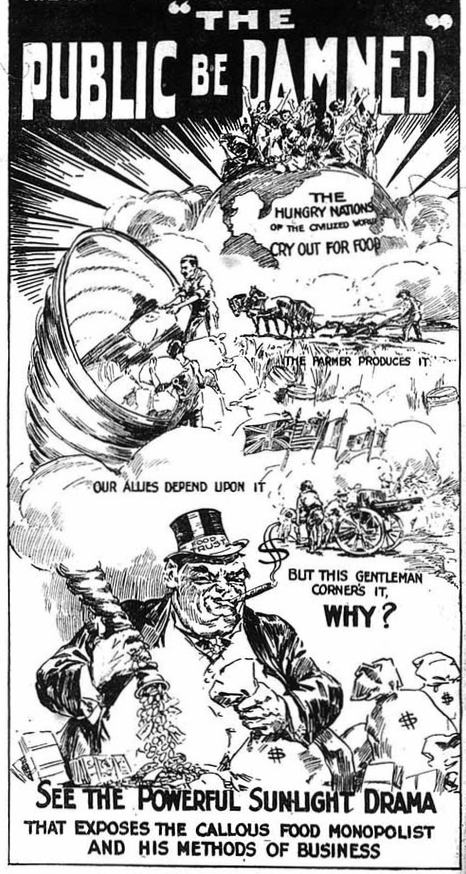
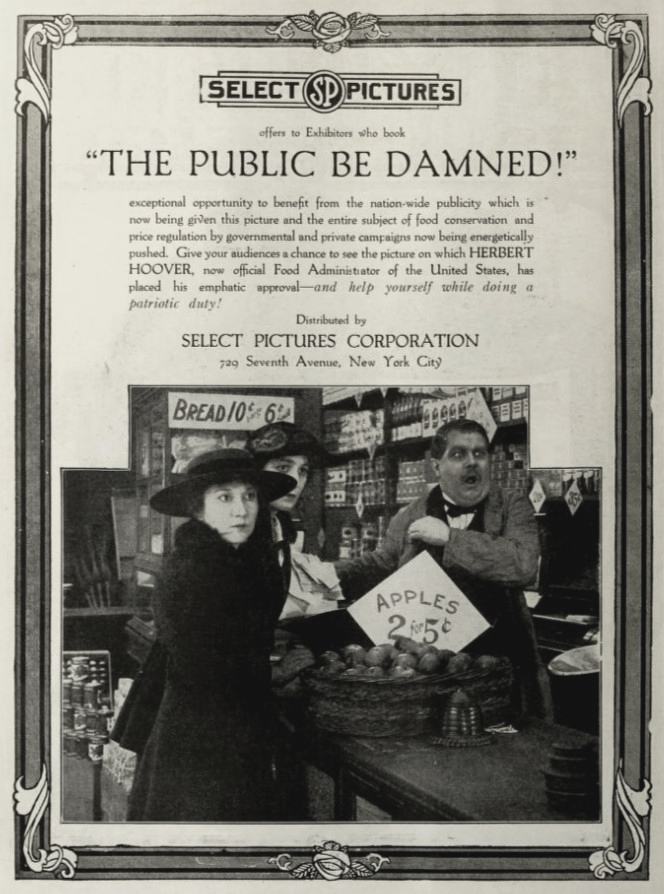
A prologue shows United States Food Administrator Herbert Hoover in his office and gives excerpts from Mr. Hoover's speeches. The story begins in the country as young farmer Robert Merritt is unable to make a profit because of the low prices offered by the food trust. At the suggestion of his wife Marion, he organizes a society of farmers to fight the trust, but finally sells out to the trust's representative, David Higgins. Disgusted, Marion leaves him and journeys to the city where she undertakes a fight against John Black, the head of the trust and an old suitor. Marion is successful in introducing a bill in the state senate that would make all food distribution centers state controlled, but political boss Bill Garvin inserts a clause that would defeat the bill. Black, experiencing a change of heart, joins forces with Robert to prevent a vote on the false bill, substituting the original one in its stead. Her duty done, Marion is reconciled with Robert.
Decades after its release, Public Be Damned remains a vital piece of the cinematic puzzle. Its influence can be seen in countless modern works, solidifying Stanner E.V. Taylor's status as a master of the craft in United States and beyond.