Summary
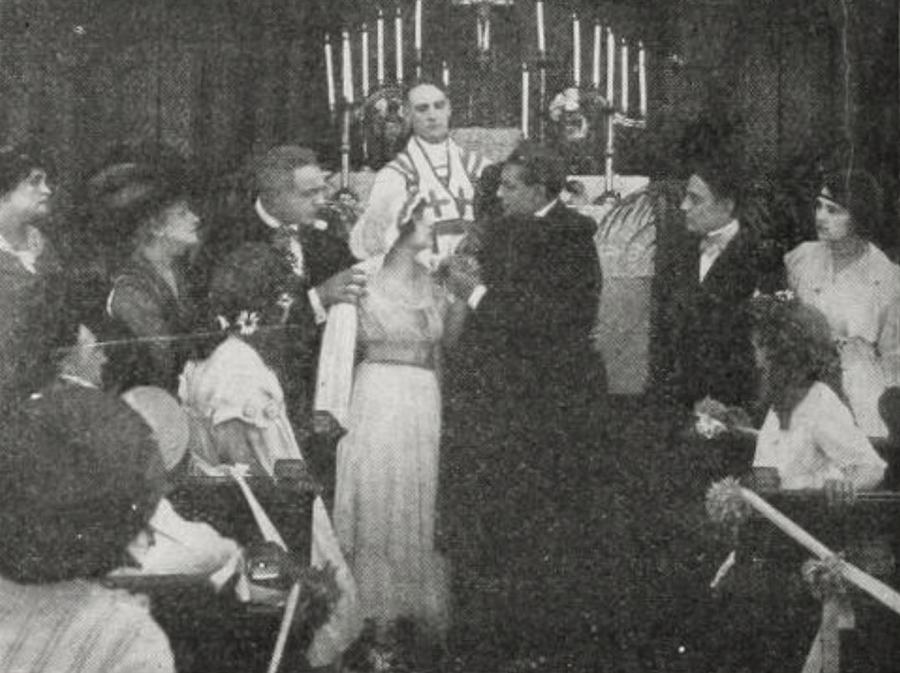
In the gas-lit dusk of Chicago, Henry Patterson—miner, husband, father—steps onto a westbound train and into the chasm of his own duplicity. A barren Colorado claim, a snow-silked Denver ballroom, and the perfumed fortune of Louise Douglas conspire to seduce him into a second marriage: a clandestine lattice of lies mailed back to the loyal Lola in perfumed envelopes stuffed with cash. Years accrete like frost; two households bloom—one legitimate yet abandoned, one illicit yet gilded—until a daughter, Muriel, laughs in a nursery that echoes with the footfalls of a ghost-wife. Lola, weary of widowhood-by-correspondence, seeks solace in the charcoal gaze of painter Fred Warren, whose brushstrokes immortalize her sorrow on canvas. When Henry finally staggers home to confess, he carries Louise’s dowry like a communion wafer of guilt; Warren intercepts the letter, the pistol crack ricochets, and a self-sacrificing artist claims the crime. Across oceans and prison bars, the children—Harold and Muriel—meet as strangers in Milan, their hearts harmonizing until wedding bells threaten to clang into an incestuous knell. In a Manhattan nave smelling of lilies and mildew, Lola’s final scream of truth cleaves bloodlines, sending Muriel to a nunnery and Harold to a fragile mercy.
Synopsis
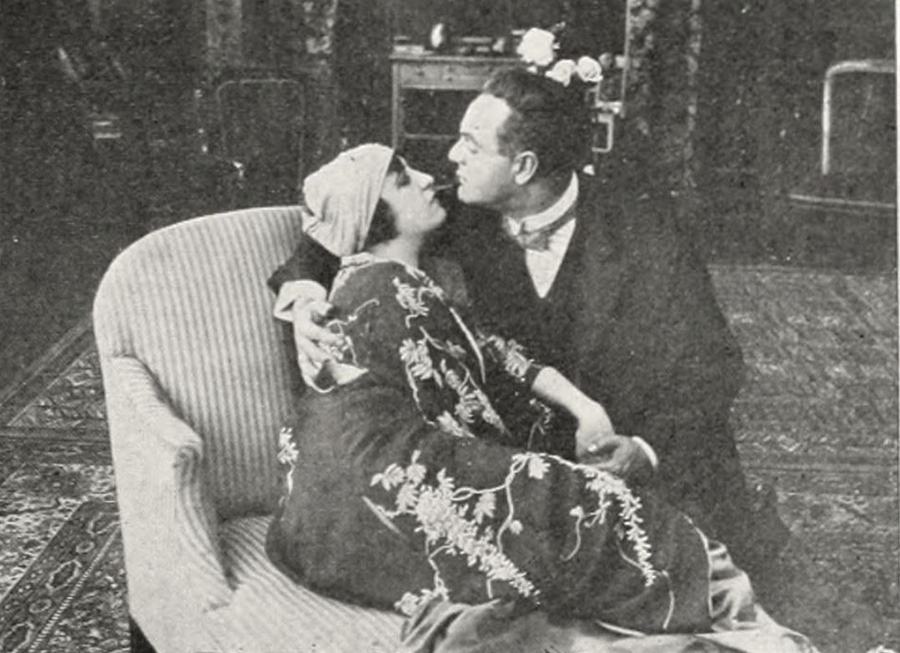
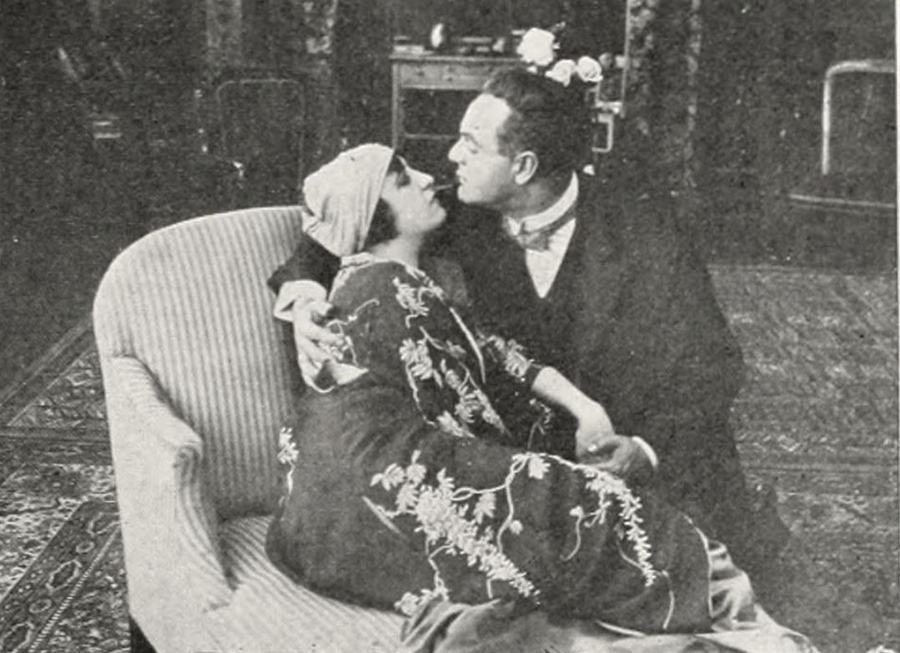
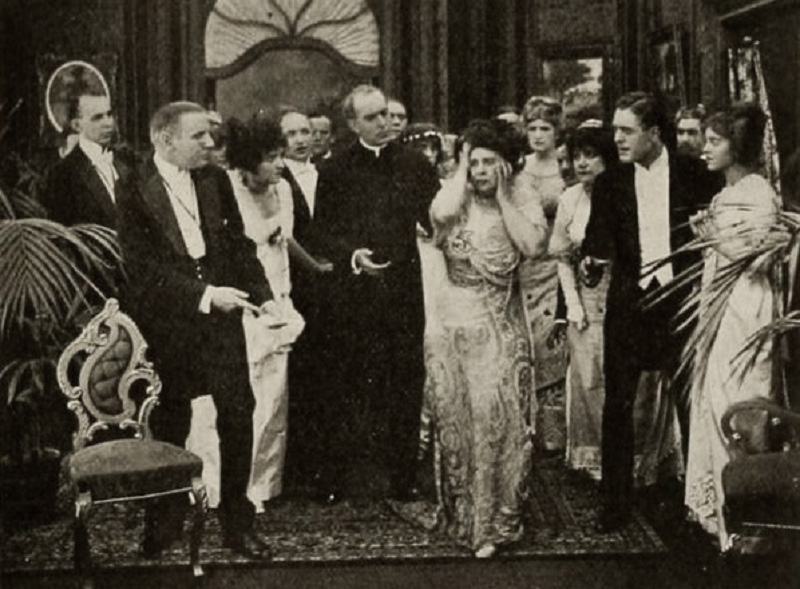
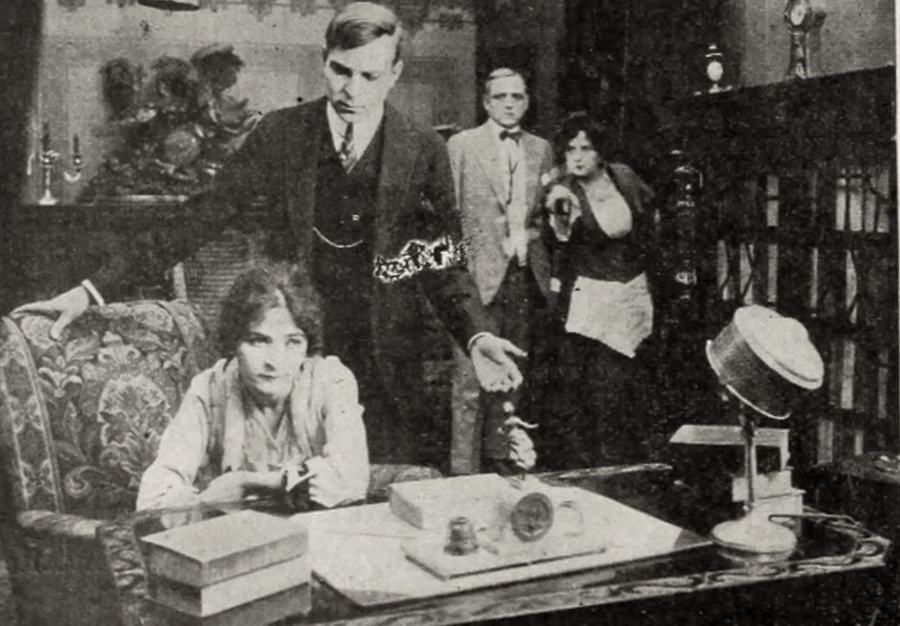
Henry Patterson, living in Chicago with his wife, Lola, and infant boy, Harold, receives disturbing news regarding his mining interests at Denver. He goes there to investigate, and to avoid publicity, assumes the name of Henry Donovan. At Denver, he finds the mine is worthless, and faces ruin. He meets Louise Douglas, a wealthy woman, who becomes attracted to him. She makes overtures of marriage, unaware of his real identity. Henry, in a wild belief that he can save his family from poverty, marries Louise. He invents excuses to Lola, whom he still loves, for his long absence. The poor woman receives his money and affectionate letters, ignorant of his folly. In due course, Louise gives birth to a daughter, Muriel. The months lengthen into years, Lola in her solitude, has formed a strong friendship for Fred Warren, an artist, for whom she poses. The artist, believing Lola to be a widow, presses her to marry him. Her refusals arouse his suspicion, until one day Lola receives a letter which, Warren notices, agitates her. The letter is, indeed, from her husband, a confession of his bigamous union with Louise, and promising to make early reparation. Taking advantage of Lola's absence from the room, Warren purloins the letter and learns her secret. Meanwhile, Louise has entrusted Henry with a large sum of money for investment in New York. He goes instead to his wife at Chicago. In a touching scene, past sins are confessed and forgiven, and the couple make preparations for a hasty departure. At the moment of leaving, Warren pays Lola an unexpected visit. Furiously Warren denounces Henry, calls him "Bigamist," and threatens to turn over his letter of confession to his wife Louise. Henry, demanding the letter, draws a revolver, and in the struggle, the pistol is accidentally discharged, killing the bigamist. With a plea for forgiveness as he dies. Henry hands over to Lola Louise's money. In order not to implicate her in the murder. Warren orders Lola away from the scene. She, having in mind the $50,000, heeds his advice and immediately leaves with Harold for New York, where she assumes the name of "Gibson." Warren telephones the police, giving himself up as the murderer. Louise, notified by the Chicago police of her husband's death, comes to Chicago. Seeking revenge, she secures permission to see her husband's murderer. She enters the cell with a concealed weapon. There she learns for the first time the truth, from the written confession of her husband which the prisoner has concealed on his person. She is prostrated by grief, and her vow of vengeance becomes a promise to help the prisoner. The trial takes place. Warren, aided by Louise's counsel and her testimony, is declared "not guilty." With gratitude on the one side, and sympathy on the other, a strong bond of friendship is formed which soon gives way to love. Warren and Louise marry and come to live in New York. With the passing of years, Lola, giving way to extravagance, becomes penniless. Harold, now at Milan studying music, requests funds, and with her son's need in mind, Lola at a dance steals a necklace. Her theft detected, she is tried and sent to prison for two years. Harold, who has made a name for himself in Milan, meets a charming student, Muriel Warren. Unaware of each other's antecedents, they form a deep attachment and finally arrange to return to America to marry. Lola's prison term expired, she comes to New York. There, sitting on a park bench, she picks up a discarded newspaper, in which she reads the wedding announcement of Harold and Muriel, to take place that afternoon. She rushes to the church, breaks through the crowd, and in a most dramatic scene, before the altar, makes her confession to the priest. Muriel now learns for the first time that her stepfather, Warren, killed her father. Her soul, embittered by the guilt of her parents, she leaves her mother's house and becomes a nun. Harold, learning that his, father's misdeeds nearly caused the marriage of brother and sister, forgives his broken-hearted mother, takes her with him and makes a home for her.
Review Excerpt
"Chicago, 1915: streetcars rattle like mechanical cicadas while nickelodeons exhale the perfume of warm nitrate. Into this electric dusk strides A Mother’s Confession, a five-reel moral earthquake from Ivan Abramson, the Polish-American showman who believed cinema should preach as loudly as it titillated. The film, once thought lost, now survives only in scattered cue sheets, lobby photos, and a pristine tinted print discovered in a Slovenian monastery vault—enough to let us reconstruct its fever..."