Summary
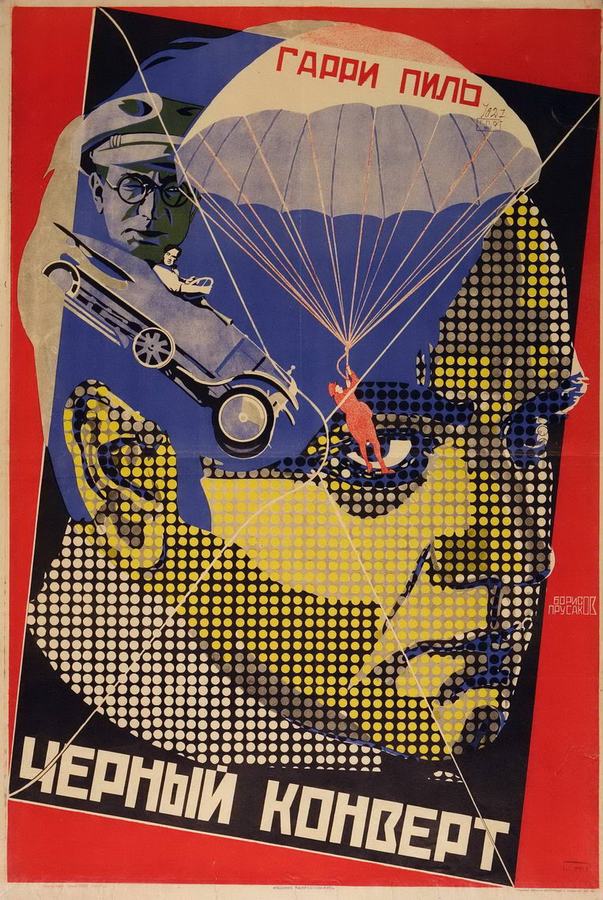
Weimar Berlin, that fever-dream metropolis of fractured mirrors and jittery neon, receives a poison-pen love letter slipped inside a matte-black envelope; whoever breaks its blood-red seal is pitched into a labyrinth of velvet-lined parlours, canal-side doss-houses and shuttered Ufa soundstages where every acquaintance wears a detachable smile. Inge Helgard—part Garbo frost, part Dietrich smoke—plays a cabaret chanteuse whose off-stage life is an octave lower, all pianissimo dread, until her brother, a muck-raking journalist, is found floating face-down in the Spree with the titular ebony envelope clenched between his teeth. Enter Harry Piel’s laconic sleuth, a former flying-ace now haunting tobacco-staked police corridors on a gammy leg; he trails the stationery’s paper-mill watermark through clandestine wax-seal clubs, anarchist print-shops and the tuxedoed orgies of a countess (Else Bodenheim) whose diamonds flash like distress flares. Each fresh recipient of the black missive is delivered a grisly epitaph: a sound engineer suffocated by a reel of his own tape, a financier hanged from the Brandburg Gate’s horse sculpture, a clown shot mid-guffaw with a silencer that coughs softer than his last joke. The envelope itself mutates—sometimes parchment, sometimes photographic negative—until the detective realises the ink is human bile, the seal a child’s molar, the message always the same: “You have seven nights to confess the crime you convinced yourself was forgotten.” In a breathless midnight montage Piel deciphers that every victim once invested in a shell company trafficking orphans to Argentina; their silence purchased the Teutonic elite’s prosperity. The final showdown spills across the Babelsberg backlot where fog machines exhale guilt over plaster cathedral ruins; Helgard, draped in male tuxedo tails, lip-synchs the national anthem backwards as bait, drawing the masked mailer into a scaffolded cathedral set where reels of nitrate film become flaming serpents. The culprit is unmasked not by a bullet but by the silhouette of conscience projected onto a torn movie screen: it is the circus dwarf (Erich Sandt) whose sister perished on a steamer to Buenos Aires, her tiny passport photo now enlarged to giant proportions, dwarfing him into a confessional howl. Film ends on freeze-frame of the black envelope drifting, unsealed, into the Spree—its blank interior reflecting every viewer’s complicit face.
Review Excerpt
"
Berlin, 1928. The asphalt outside the Moka Efti hums like a plucked cello while inside a woman in satin gloves slips an obsidian envelope beneath a champagne coupe. No postmark, no return address—only the faint scent of lye and violin rosin. Victor Abel and Alfred Zeisler’s screenplay treats this scrap of stationery as both MacGuffin and moral Rorschach: everyone who touches it sees the shape of their own unspoken atrocity.
What follows is less a whodunit than a who-are-we, a stroboscopic to..."