DbcultAccessing Vault...
Cult Review
Senior Film Conservator
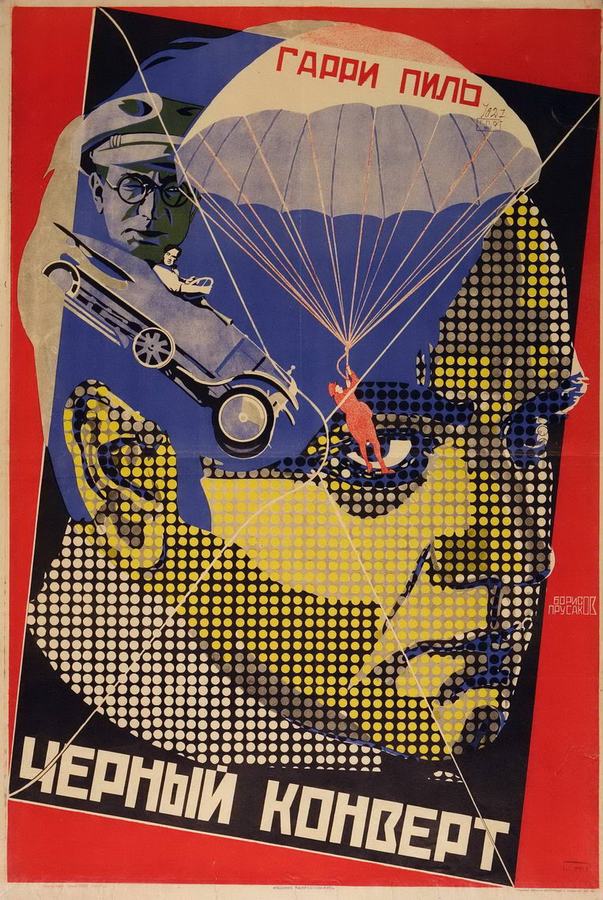
Berlin, 1928. The asphalt outside the Moka Efti hums like a plucked cello while inside a woman in satin gloves slips an obsidian envelope beneath a champagne coupe. No postmark, no return address—only the faint scent of lye and violin rosin. Victor Abel and Alfred Zeisler’s screenplay treats this scrap of stationery as both MacGuffin and moral Rorschach: everyone who touches it sees the shape of their own unspoken atrocity.
What follows is less a whodunit than a who-are-we, a stroboscopic tour through a republic already auctioning off its soul in bulk. Director Harry Piel—better remembered for stunt-laden pulp—here swaps gymnastics for gravitas, letting camera cranes stalk characters like guilty consciences. Shadows fall not to conceal but to sculpt: cheekbones become cliff-faces, cigarette smoke writes cursive warnings across chiaroscuro walls.
Film historians pigeonhole Das schwarze Kuvert as “proto-noir,” yet its DNA splices Wolves of Kultur’s conspiratorial circuitry with the domestic gaslight of Young Mrs. Winthrop. The eponymous envelope mutates tactilely—vellum, kraft, even celluloid negative—mirroring a society whose morals reset per transaction. One shot superimposes a stock-ticker over the flap: shares climb as blood drips, capitalism literally sealing fate.
Inge Helgard’s performance is a masterclass in reluctant magnetism. She enters each frame as though pushed by an invisible tide, eyes registering off-screen dread milliseconds before the audience spots it. When she croons “Mein kleines Herz ist schwarz wie Tinte” in a beer-cellar so hushed you can hear ice melt, the lyric becomes national dirge. Compare her to Mary Miles Minter’s wide-eyed ingenue in The Adventures of Kitty Cobb: both navigate predatory boardrooms, yet Helgard’s survivor sings not to entertain but to testify.
Piel’s screen persona once vaulted across moving trains (Through Dante’s Flames). Here he reins in athletic swagger, embodying disillusionment with a single slumped shoulder. Note the scene where he questions a night-watchman: the camera begins in extreme close-up on his bad leg, the leather brace squeaking like a mouse in a trap; cut to a wide shot of the deserted factory, human frailness swallowed by industrial maw. The blocking predates Lang’s M by three years, yet Piel never claimed credit—typical of a film overshadowed by its own obscurity.
Supporting players shimmer like guttering candles. Albert Paulig’s corrupt councillor exudes oleaginous charm; watch how he buffs his pince-nez with the same silk that later strangles him, a visual rhyme worthy of grand opera. Else Bodenheim’s Countess—half Medea, half stockbroker—delivers a banquet toast so laced with menace the champagne seems to curdle.
While Calibre 38 flaunts artifice, Das schwarze Kuvert sneaks reportage into its dreamscape. Cinematographer Fritz Arno Wagner—uncredited due to studio politics—intercuts staged interiors with clandestine street footage of real 1928 breadlines. Result: a world where Caligari’s cabinet opens onto a securities office, and the somnambulist is a portfolio manager.
The editing rhythm anticipates modern thrillers: insert shots of ticking stopwatches, revolving doors, phonograph needles digging deeper into shellac grooves. Each cut lands like a metronome for panic, a lesson The Mystery Road would borrow a year later.
Released mere months before The Jazz Singer hit Berlin, the film remains defiantly silent yet sonically suggestive. Intertitles by Zeisler read like atonal libretto: “Schrei / aber keine Stimme / nur das Geld zählt”. In the penultimate reel, the screen goes black while the orchestra in the cinema pit is instructed to play a single muffled drumbeat—viewers are meant to feel rather than hear the heartbeat of a drowning child. Contemporary censors, bamboozled by sensory sleight-of-hand, passed the sequence without cuts.
Unlike Artie, the Millionaire Kid, which neuters female agency, Kuvert weaponizes femininity. Helgard’s final tuxedoed performance queers the cabaret convention; she commandeers the male gaze, flips it, pockets the tip. When she rips off her bow-tie to strangle a stalker, the garment becomes both noose and necktie—business and punishment knotted together.
For decades the only extant print languished in Montevideo, mislabeled as Screen Follies No. 1. Recent 4K restoration by the Deutsche Kinemathek reinstates amber tints for interiors, Prussian blues for exteriors, and a crimson so deep it verges on arterial. The digital cleanup reveals textures previously lost: the fuzz on a peach bruised by blackmail, the caliginous grain of a child’s molar sealing the envelope—details that turn nausea into necromancy.
Cinephiles tracing proto-noir breadcrumbs will spot parallels with The Red Glove’s moral vertigo, yet where the latter wallows in Catholic guilt, Kuvert indicts capitalist complicity. Its DNA even resurfaces in Hitchcock’s Blackmail (also 1929): both weaponise everyday objects—knife, envelope—as extensions of repressed violence.
Viewed today, the film feels like a message in a bottle hurled from a sinking republic. Its warnings—about paper trails, about disposable children, about the cost of silence—land with forensic precision on a world still trafficking in convenient amnesia. When the last envelope floats downriver, blank as tomorrow, you realise the crime was never hidden; it was merely addressed to everyone.
Verdict: essential viewing for anyone who believes noir began in America. It didn’t; it began in a Berlin post-office, stamped with a child’s tooth.
IMDb —
1925
Community
Log in to comment.