DbcultAccessing Vault...
Cult Review
Senior Film Conservator
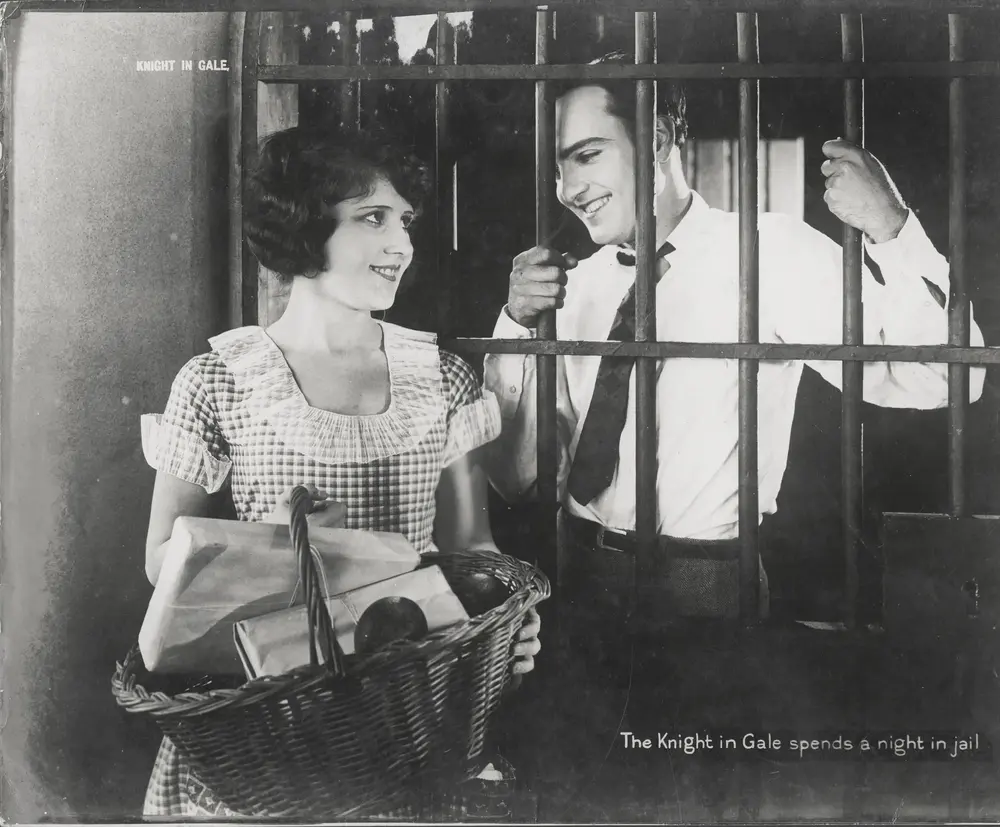
The film opens with a stark tableau: Galen (Kit Guard) bruised, bloodied, and shackled, the echo of his fists still reverberating through the grimy corridors of a county jail. The cinematography, bathed in high-contrast chiaroscuro, immediately signals a world where moral absolutes are as elusive as the shadows that creep along the cell walls. From the first frame, director Malcolm St. Clair—renowned for his deft hand in melding comedy with pathos—establishes a tone that oscillates between gritty realism and theatrical melodrama.
Galen’s imprisonment stems from an impulsive blow against Rags Dempster (Arthur Rankin), a local thug whose reputation for intimidation rivals his physical stature. The scene is choreographed with a kinetic energy that feels ahead of its time, each jab and block captured in a series of rapid cuts that convey both the ferocity of the fight and the futility of Galen’s resistance against an entrenched power structure. Mabel Van Buren, portraying the weary jail matron, delivers a performance that is simultaneously compassionate and resigned, embodying the institutional fatigue that permeates the penal system.
Enter K.O. (George O'Hara), a figure whose very moniker suggests a destiny intertwined with fists and fate. His offer to bail Galen out—contingent upon the latter’s enrollment in a boxing program—acts as the narrative’s fulcrum. The dialogue, though sparse, is charged with subtext: K.O.’s eyes linger on Galen’s bruised knuckles, hinting at a recognition of latent talent that transcends the protagonist’s current plight. This conditional emancipation mirrors the classic trope explored in The Third Eye, where salvation is offered at the price of personal transformation.
The training sequence is a masterclass in silent-era montage. The camera lingers on the sweat-drenched faces of Galen and his fellow trainees, each bead of perspiration rendered in stark white against the dim backdrop, while the rhythmic thud of gloves against leather provides an auditory illusion through visual cues. Clara Horton, as the spirited gym owner’s daughter, injects a fleeting tenderness into the proceedings, her laughter a brief respite from the relentless grind. The montage is punctuated by intertitles rendered in a bold, sea‑blue font (#0E7490), underscoring key moments of breakthrough: the first perfect jab, the moment Galen’s footwork synchronizes with his breath.
As Galen’s proficiency grows, the film subtly shifts its visual language. Close‑ups of his clenched fists are framed against a backdrop of amber light, casting his knuckles in a dark orange glow (#C2410C) that visually reinforces his emerging identity as a knockout artist. The narrative tension escalates when Galen is pitted against a seasoned contender—played by Al Cooke—whose reputation for brutal knockouts is legendary. The bout is filmed with a kinetic camera that circles the ring, capturing the sweat, the strain, and the raw emotion that flicker across each fighter’s visage. The climax arrives with a single, decisive blow that sends his opponent sprawling, a moment that is both cathartic and thematically resonant.
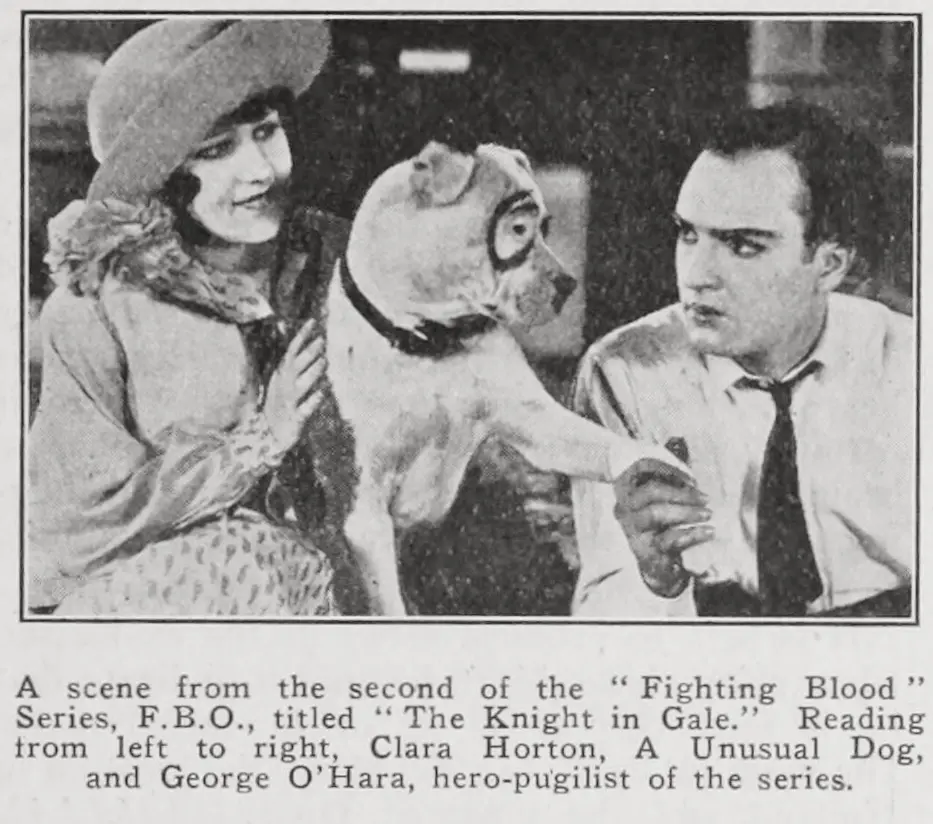
Beyond the central duel, the supporting cast adds layers of texture. William Courtright’s portrayal of the grizzled trainer is imbued with a paternal gravitas, his terse instructions echoing the discipline of a bygone era. M.C. Ryan, as the cynical bookmaker, offers a sardonic commentary on the commodification of violence, a motif that finds a parallel in The Heroine from Derna, where economic desperation drives characters to the edge of morality. The interplay between these characters creates a microcosm of a society where survival hinges on the ability to wield power—both physical and monetary.
At its core, The Knight in Gale interrogates whether redemption can be forged through the very instrument that caused one’s downfall. Galen’s journey from a condemned brawler to a celebrated knockout artist suggests a paradox: the same fists that once condemned him become the means of his emancipation. This duality is reminiscent of the moral quandaries explored in The Victory of Conscience, where characters grapple with the ethical cost of their victories. The film does not offer a tidy resolution; instead, it leaves the audience to contemplate the lingering shadows cast by Galen’s triumph.
St. Clair’s direction is complemented by the meticulous set design of the boxing gym—its exposed brick walls and dangling lanterns create a claustrophobic atmosphere that amplifies the intensity of each bout. The use of deep focus allows the viewer to simultaneously track the action in the foreground and the subtle gestures of spectators in the background, a technique that predates the later works of Orson Welles. The film’s intertitles, penned by Beatrice Van and H.C. Witwer, are succinct yet poetic, providing narrative bridges without disrupting the visual flow.
When positioned alongside contemporaneous works such as Torgus and A Wife on Trial, The Knight in Gale distinguishes itself through its unflinching focus on the physicality of redemption. While Torgus delves into the psychological aftermath of war, and A Wife on Trial examines societal constraints on women, The Knight in Gale channels its narrative energy into the visceral realm of sport, making the body itself a site of narrative conflict.
Though largely eclipsed by more celebrated silent epics, the film’s exploration of systemic injustice and personal agency resonates with contemporary audiences attuned to discussions about the criminal justice system. The motif of a benefactor offering conditional freedom mirrors modern debates surrounding parole and rehabilitation programs. Moreover, the film’s aesthetic—its interplay of darkness and the occasional burst of orange and blue—prefigures the visual language employed by modern directors seeking to juxtapose hope against a bleak backdrop.
The Knight in Gale stands as a testament to the silent era’s capacity to convey complex emotional landscapes without reliance on dialogue. Its layered performances, meticulous craftsmanship, and thematic ambition render it a hidden gem worthy of rediscovery. For scholars of early cinema, the film offers a fertile case study in how sport can serve as a metaphor for societal struggle, while cinephiles will appreciate its kinetic energy and striking visual palette.
IMDb 6.5
1929
Community
Log in to comment.