Summary
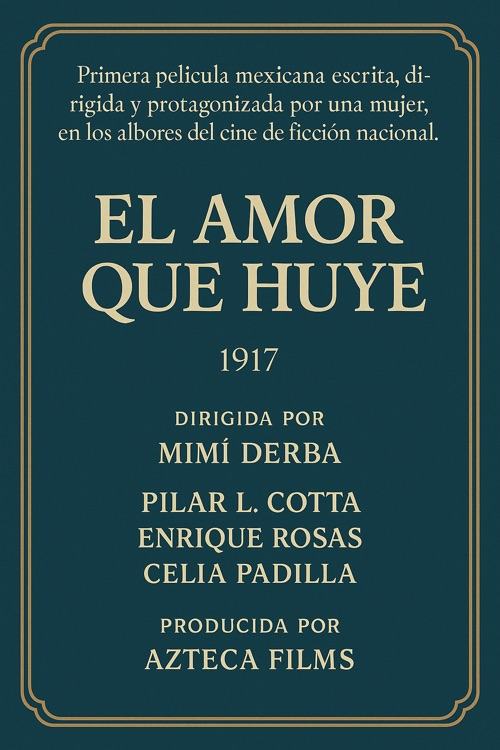
A sun-bleached Andalusian town exhales the scent of orange blossoms and secrets; into this labyrinth of whitewashed walls tiptoes Elvira, a convent-bred beauty whose dowry is rumor and whose dowry is ruin. Her betrothed, the aloof landowner Rafael, has vanished on the eve of their wedding—some whisper he fled to the New World, others that he was swallowed by the Guadalquivir—leaving Elvira clutching a moth-eaten lace veil and a letter whose ink has run with her tears. The town’s matriarchs, a chorus of black lace and perpetual rosaries, declare her damaged goods; the men circle like crows. Only two souls dare defy the gossip: Tomasa, a cigarillo-puffing midwife who knows every back-alley shortcut to human mercy, and little Pinín, a choirboy who trades altar candles for scribbled verses of doomed love. Together they coax Elvira into disguising herself as a pilgrim bound for Santiago, her shorn curls hidden beneath a fraying sombrero, her heart pinned with a silver brooch that once belonged to Rafael’s mother—a talisman rumored to bring back what was lost, or burn the hand that clutches too tightly. Their exodus is soundtracked by the creak of ox-carts, the hiss of olive branches against moonlight, the distant clang of the town’s solitary clocktower counting hours that no longer belong to her. Along the brackish marshes of Doñana they encounter a travelling cinematograph showman projecting flickers of Méliès’ moon on a patched canvas; for a few copper coins Elvira sees a rocket crash into the lunar eye and understands that love, too, can be a silent explosion leaving craters in the soul. Further north, in a tavern heavy with sherry and saffron, a one-eyed anarchist recites the Quintero brothers’ latest zarzuela; the refrain “el amor que huye, nunca vuelve” lodges like a barb in Elvira’s throat. She bargains her voice for passage on a river barge, singing a seguiriya so raw the bargemen swear the water level rises an inch. Yet each mile inland pulls Rafael’s memory like a tide: she spots his initials carved into a chestnut tree, smells the bergamot he used to press behind his ears, hears a nightingale trill the exact rhythm of his laugh. When at last she reaches the granite cliffs of Finisterre—where Romans once believed the sun drowned itself—she finds not her lover but a small wooden box buried beneath scree: inside, a reel of film no longer than a heartbeat, its frames showing Rafael glancing back at the camera, smiling as if he knew she would one day stand right here, projector light on her face, wind whipping the Atlantic into a thousand silver daggers. Elvira threads the reel through the cinematograph’s sprockets, cranks the handle, and watches the man she chased across provinces dissolve into white scratch and flutter. In that stuttering beam she understands that the love which flees does not wish to be caught; it wishes to be witnessed, to be framed, to be set free again. She unscrews the brooch, pins it to the cliff-edge cross, and walks backward into the horizon until the filmstrip flaps like a flag of surrender against the sky.
Review Excerpt
"
The first time I saw El amor que huye I was alone in a drafty cinematheque, the projector’s carbon arc spitting violet ghosts across the ceiling. Ninety-seven years after its premiere, the film still smells of orange peel and gunpowder—an alchemical marriage of costumbrismo and raw nerve that makes Griffith’s flirtations with melodrama feel like nursery rhymes.
Manuel Cirerol Sansores and the Quintero brothers lace Iberian folklore with proto-surrealist sting: every frame quivers between post..."