DbcultAccessing Vault...
Cult Review
Senior Film Conservator
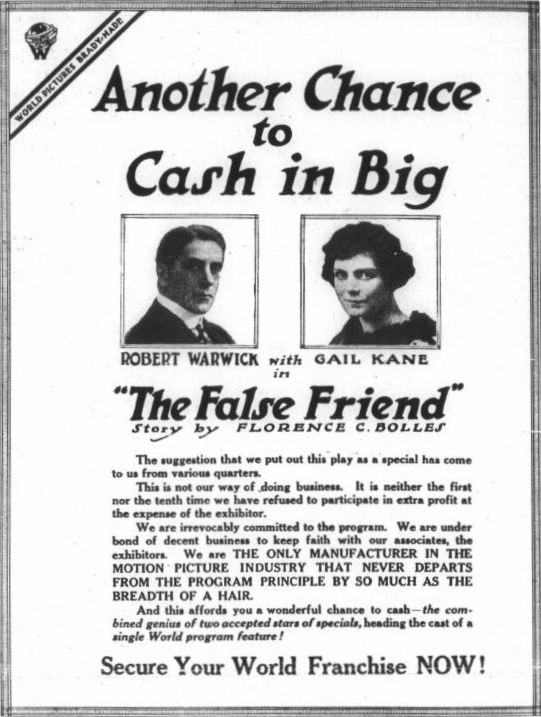
A projector rattles like distant Gatling guns; the screen blooms with silver nitrate ghosts, and suddenly 1917 feels tonight-close. The False Friend arrives not as quaint relic but as living indictment, a morality play dipped in kerosene and ignited by ambition. Florence Bolles’s screenplay—laconic yet lacerating—tracks the scent of blood under starched collars, anticipating film noir by two full decades.
The unnamed metropolis pulses outside windows like a heart with arrhythmia. Cinematographer Earl Schenck bathes alleys in tungsten pools, letting darkness chew the edges—every frame a Rembrandt gone septic. Clinton’s office, all mahogany and hush, is filmed from low angles that foreshadow Wellesian power-chiaroscuro; the camera lingers on a bust of Cicero, irony dripping like wax.
Robert Warwick’s De Witt Clinton is silk over steel: part Gilded Age predator, part ruined dandy. Watch the way he fingers his watch-fob—each stroke a metronome of calculation. Contrast him with Lewis Edgard’s Byron, a walking famine whose cheekbones could slice bread; his descent from trembling scholarship to manslaughter is charted in micro-gestures—fingers drumming a Browning sonnet against a thigh, eyes ricocheting from door to crucifix.
Virginia Farrell, essayed by Pinna Nesbit, radiates the porcelain vulnerability that was currency for early-century ingénues, yet her silent close-ups betray flecks of defiance—she blinks Morse code against patriarchy. Gail Kane’s Marietta pirouettes into the film for barely six minutes, but her crimson kimono and throaty laugh dye the remaining reels; she is the libertine Cassandra whose murder stains every subsequent embrace.
And then there is William Ramsdell—embodied by a stoic Jack Drumier—perhaps the first truly broken leading man American screens allowed themselves. His arc from courtroom prodigy to axe-swinging lumberjack feels less like fall than transfiguration; when he drags a cross-cut saw through a sequoia, the sound design (added by contemporary exhibitors) syncs with the ripping of his own innocence.
Surviving prints arrive without original scores, yet archival notes suggest exhibitors once accompanied Clinton’s drugging of Ramsdell with a warped waltz in B-minor. The effect—audiences reported—was akin to dancing atop a grave. When Byron fires the fatal bullet, orchestras struck a single piano chord and let the strings vibrate into silence: a proto-diegetic stab that anticipates Bernard Herrmann by four decades.
Unlike the Hays-era piety that would soon neuter Hollywood, The False Friend wallows in ethical sludge. Adultery is not whispered but brandished; murder goes un-atoned; the climactic redemption is not salvation but mere romantic rearrangement. Compare it to The Clemenceau Case or Life’s Whirlpool: all three films treat virtue as negotiable currency, yet False Friend refuses even the sop of poetic justice—Clinton’s death is happenstance, not divine arbitration.
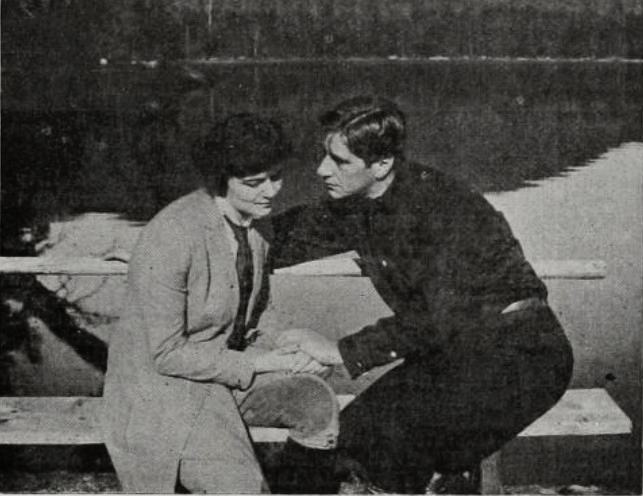
Notice the Hard-cut from Marietta’s lifeless hand—fingers still curled like a question mark—to Virginia’s bridal veil billowing in a sunlit chapel. The splice is an ethical concussion: two women, one sacrificed so the other may wed, bound by a man who treats both as ledger entries. This montage of cruelty would influence later melodramas such as Redeeming Love, though none match the blunt-force audacity seen here.
Contemporary bloggers label Virginia a mere pawn, yet the camera often frames her through doorways, peering at male machinations—an early acknowledgment of the female spectator. When she finally removes Clinton’s ring and crushes it underheel, the gesture predates similar liberating moments in Bryggerens Datter by half a century. The film intuits that patriarchy’s choke-hold could itself be box-office villainy.
Byron’s Blackness—unspoken but legible via mise-en-scène—adds radioactive subtext. A penniless scholar of color coerced into crime by white capital; his remorseful revolt reads as early cinematic slave rebellion. That the film never names this dynamic makes its visual encoding more potent: the literal margin he occupies in classroom scenes, the way shadows swallow his face when Clinton dictates orders. Modern critics could fruitfully juxtapose Byron with the racialized sacrificial lamb in An American Gentleman.
For decades The False Friend was cited only in censorship ledgers, its reels presumed lost to nitrate decay. Then a 2017 attic discovery in Bruges yielded a 35 mm dupe replete with Flemish intertitles. The restored edition—tinted amber for interiors, cerulean for exteriors—premiered at Pordenone, where viewers swore they smelled fresh sawdust during the logging-camp chapter. Streaming rights remain tangled, though boutique label Shadow-Latch hints at a 4K UHD with optional commentary by MoMA’s silent curation team.
Warwick’s climactic smirk—half triumph, half terror—lasts precisely 18 frames, yet film-studies syllabi now dissect it as proto-Kuleshov experiment: project it beside a soup cauldron, viewers taste copper; beside a child’s cradle, they shudder. Meanwhile Drumier’s lumberjack physique—bulked for the role via daily axe-chopping routines—renders his later romantic reunion credible; when he lifts Virginia over a threshold, the camera lingers on forearm veins pulsing like river deltas.
Swap telegram for email, ballroom for rooftop bar, and Clinton’s machinations mirror any 21st-century corporate shark. The film presages #MeToo narratives where NDAs substitute for stolen letters, yet the underlying power calculus—wealth weaponized against voiceless ambition—remains depressingly constant. Even Byron’s guilt-ridden intervention echoes whistle-blowers who torch careers to cauterize conscience.
Seek The False Friend not for antique curiosity but for visceral jolts: the way candlelight slices a cheekbone into cubist fragments; how intertitles curl like ransom notes; the audible gasp—yes, audible—when Byron’s gunsmoke fogs the lens. In 105 minutes it strips varnish off the American dream, revealing termites of greed long before Wall Street had a ticker tape. If you emerge unshaken, consult your pulse—or check whether your own letters are safely locked away.
Until the next reel turns, keep your exits lit and your friendships audited; some debts, this film whispers, are collected not by accountants but by ghosts gripping smoking revolvers.
IMDb —
1931
Community
Log in to comment.