DbcultAccessing Vault...
5.6/10
Senior Film Conservator
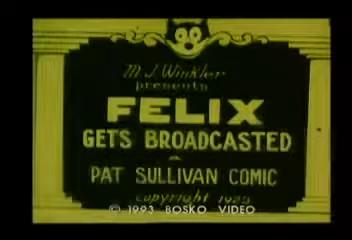
A definitive 5.6/10 rating for a film that redefined the boundaries of cult cinema. Felix Gets Broadcasted remains a cornerstone of transgressive art.
To witness Felix Gets Broadcasted in the modern era is to look directly into the chaotic, unbridled furnace of early 20th-century imagination. Otto Messmer, the unsung architect behind the Pat Sullivan brand, wasn't merely drawing a cat; he was manifesting a trickster god for the radio age. This 1923 short is a kaleidoscopic journey that begins with a mundane act of larceny and ends in a surrealist nightmare of technological displacement. It is a film that captures the zeitgeist of an era terrified and fascinated by the invisible forces of electricity and broadcasting.
The narrative architecture of the film is deceptively simple. Felix, ever the opportunist, follows a fisherman. In these early frames, we see the fluidity of movement that set Messmer apart from his contemporaries. While films like The Haunted Manor relied on static, gothic atmospheres to convey dread, Felix operates in a world of pure kinetic energy. His tail is not just an appendage; it is a question mark, a hook, a steering wheel. It is the physical manifestation of his internal monologue.
The stalking sequence is a masterclass in tension, albeit a farcical one. One might draw parallels to the methodical tracking seen in The Hound of the Baskervilles, but where the hound is a creature of omen, Felix is a creature of appetite. He doesn't just want the fish; he wants the thrill of the heist. This predatory opportunism is what made Felix the first true animated superstar—he was relatable because he was flawed, driven by the same base instincts as the working-class audiences who flocked to see him during the silent era.
The pivot point of the film—the moment Felix is 'broadcasted'—is where Messmer transcends the medium of gag-based animation. The fisherman, reaching a breaking point of frustration, doesn't just kick the cat; he utilizes the telephone wires to exile him. In 1923, the concept of 'broadcasting' was still in its infancy, a magical process where sound and information vanished into one point and reappeared in another. Messmer literalizes this by turning Felix into a stream of data.
This sequence is remarkably prescient. It anticipates the digital age by nearly a century, suggesting a world where the physical body is subservient to the network. As Felix is stretched and pulled through the wires, the animation takes on a frantic, almost agonizing quality. It’s a stark contrast to the leisurely travel tropes found in Around the World in Eighteen Days. While that film celebrates the romance of distance, Felix Gets Broadcasted highlights the violent erasure of distance through technology.
Upon his arrival in Egypt, the film takes a turn into the realm of the 'other.' The depiction of Egypt is, predictably for its time, a collection of Orientalist clichés—pyramids, palm trees, and a hostile local populace. However, through the lens of modern criticism, this sequence serves as a fascinating study of displacement. Felix is no longer the master of his environment. In the pastoral woods, he was the apex predator; in Egypt, he is an unwanted interloper.
The rejection he faces is visceral. The Egyptians don't just ignore him; they actively expel him. This mirrors the harsh, unforgiving landscapes of Westerns like Hell's Hinges, where the environment itself seems to conspire against the protagonist. Felix’s struggle to find a place in this new world underscores the film's underlying theme of karmic balance. He who steals must eventually pay the price of isolation.
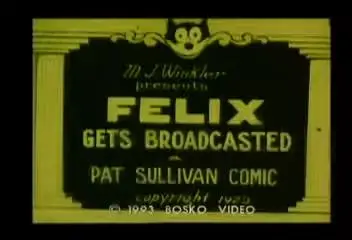
Technically, the film is a marvel of economy. Messmer’s use of negative space and high-contrast black-and-white visuals creates a world that feels both expansive and claustrophobic. The way he handles the transition from the telephone receiver to the Egyptian desert is a precursor to the match cuts of later cinema. There is a rhythmic quality to the movement, a visual jazz that matches the energy of the 1920s.
Consider the character design. Felix is a series of circles and curves, a design choice that allows for maximum expressiveness with minimum effort. This simplicity allows the audience to project their own emotions onto him. Whether he is smugly devouring a fish or wide-eyed with terror as he is sucked into a wire, his face is a canvas of human experience. This is a far cry from the more rigid characterizations in films like Smiling Jim, where the actors are bound by the limitations of their physical bodies.
What sets Felix Gets Broadcasted apart from other shorts of the era, such as Henpecked and Pecked Hens, is its willingness to engage with the abstract. While other cartoons were content with simple domestic slapstick, Felix was exploring the boundaries of reality. The 'broadcast' is not just a plot device; it is a metaphor for the loss of control in an increasingly mechanized world. Felix, the ultimate individualist, is reduced to a signal, a wave, a flicker on the screen.
There is also a subtle commentary on the nature of justice. The fisherman’s revenge is disproportionate, yet the film doesn't frame him as a villain. He is merely a man using the tools of his age to solve a problem. This moral ambiguity is a recurring theme in the best of the Felix shorts. It lacks the clear-cut heroics of Calvert's Valley or the melodrama of Man's Woman. Instead, it offers a cynical, almost nihilistic view of the world where everyone is just trying to get their lunch, and the smallest mistake can lead to a transcontinental exile.
A century later, the film remains a vital piece of animation history. It isn't just a relic; it is a living document of a time when the rules of cinema were still being written. The sheer audacity of the premise—sending a cat to Egypt via a telephone wire—is a reminder of the power of the medium. Animation allows us to visualize the impossible, to make the invisible visible, and to find humor in the most terrifying aspects of human progress.
As we look back at the filmography of the early 20s, from the domestic struggles of Ambrose's Bungled Bungalow to the aristocratic dramas of Das Geschlecht derer von Ringwall, Felix stands out as a character who truly understood the zeitgeist. He wasn't just a cat; he was the ghost in the machine, the glitch in the system, the broadcast that we are still receiving today. Felix Gets Broadcasted is more than a cartoon; it is a surrealist manifesto disguised as a six-minute short, a work that continues to resonate with anyone who has ever felt like they were being pulled in too many directions by the invisible wires of the world.
In the end, Felix’s journey to Egypt and back is a testament to the resilience of the character and the brilliance of Otto Messmer. Whether he is dealing with the predatory nature of survival or the cold efficiency of technology, Felix remains unbowed. He is the ultimate survivor in a world that is constantly trying to 'broadcast' him away. For any serious student of film, this short is essential viewing—a glimpse into the birth of a medium and the birth of a legend.
IMDb 6.7
1934
Community
Log in to comment.