Summary
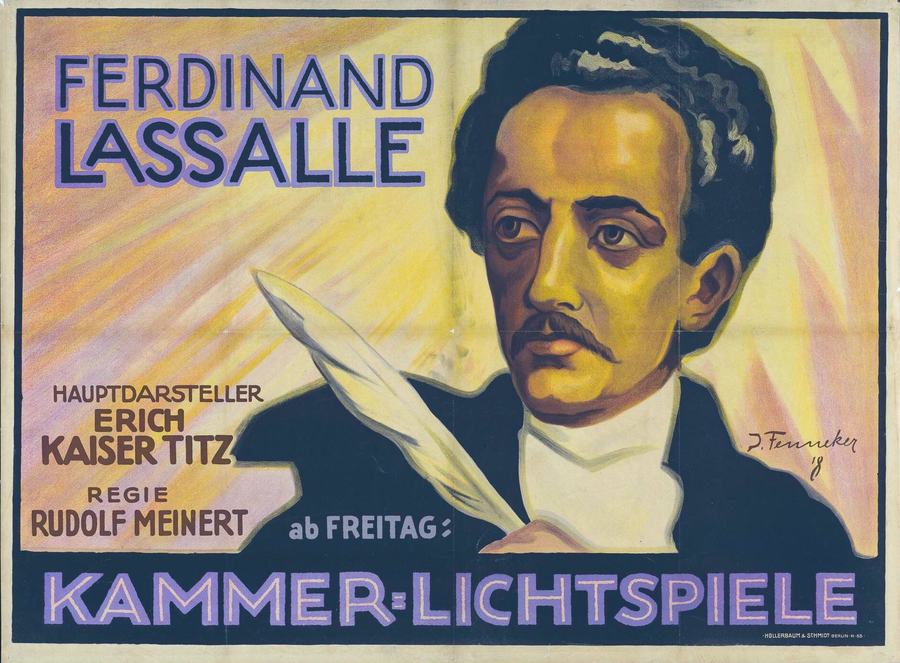
Berlin, winter 1918: a gaunt silhouette strides through the gas-lit drizzle, top-hat cocked like a guillotine blade—this is Ferdinand Lassalle, the spell-binding rhetor whose tongue could ignite foundries and salons in a single breath. Dupont’s camera stalks him from the gutter upward, transforming cobblestones into a mosaic of every crushed dream that ever bled beneath a boot. We watch the young firebrand court Countess Hatzfeldt (Anna Jordan) in a candle-blurred ballroom where violins swoon against the ticking of hidden stop-watches; every waltz is a wager on tomorrow’s barricades. When the Industrial Congress roars his name, the film cuts to montage—looms clatter, chimneys ejaculate soot, workers’ faces dissolve into Lassalle’s own, forging a single, molten question: who owns the muscle that propels the loom and the heart that yearns beyond it? Betrayed by comrade Schweitzer (Ernst Dohm), imprisoned for ‘incitement,’ Lassalle metamorphoses inside a dank cell: ink-stained fingers mapping the diagram of a future republic, eyes reflecting the corridor’s lone gas-flame like twin suns in eclipse. Upon release he staggers into the Zurich exiles’ café where champagne bubbles mimic the easy promises of reform; here he duels journalist Valenti (Victor Janson) not with pistols but with epigrams, the duel’s seconds holding mirrors instead of sabres, forcing each man to confront the cracks in his own mask. The narrative crescendos on a Geneva street at twilight: a lone gunshot fractures the mist, Lassalle collapses, silk waistcoat blooming a crimson poppy; yet Dupont refuses the martyr tableau—the camera lingers on a passing child who pockets the fallen leaflets, scurrying off to unknown alleys, seeding the revolution elsewhere, endlessly.
Review Excerpt
"
The first time I encountered Ferdinand Lassalle it was a whispered legend among archivists: a 1918 German print thought lost in the Spaartacus fires, its nitrate ghosts rumored to flicker only inside private vaults. Imagine my pulse when a 16 mm dupe surfaced on a rainy Tuesday, emulsified sprockets hissing like wet coal. One look at the opening iris shot—Lassalle’s silhouette consuming the screen—and I understood why Dupont’s name still echoes through film-theory seminars the way an unresolved..."