DbcultAccessing Vault...
Cult Review
Senior Film Conservator
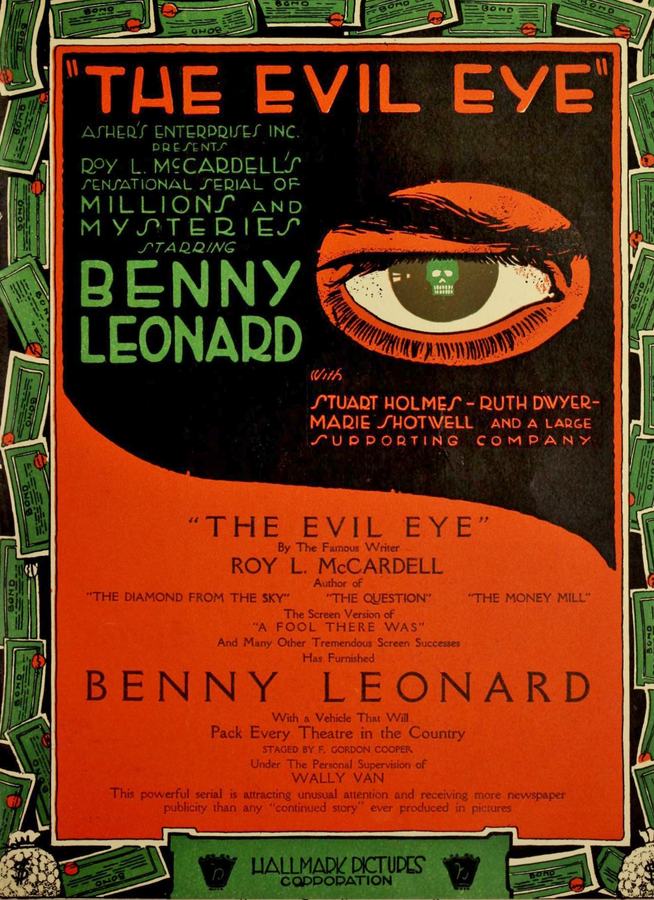
The year 1920 represented a seismic shift in the American consciousness, a post-war awakening that found its most vibrant expression in the flickering shadows of the silent screen. Among the myriad of episodic adventures that captivated the masses, The Evil Eye stands as a towering, if somewhat overlooked, monument to the sheer audacity of early action cinema. Directed by the industrious J. Gordon Cooper and penned by the narrative architect Roy L. McCardell, this serial is a masterclass in the economy of tension and the spectacle of human movement.
To understand the impact of The Evil Eye, one must first reckon with the directorial philosophy of J. Gordon Cooper. Unlike the pastoral pacing found in Anne of Green Gables, Cooper’s work is defined by a restless, almost frantic energy. He understood that the serial format demanded a constant state of flux. Every frame of this 1920 production feels charged with a specific kind of American optimism—a belief that any obstacle, no matter how supernatural or systemic, could be overcome with a well-placed punch or a daring escape.
The visual language Cooper employs is remarkably sophisticated for its era. While many contemporary films, such as The Price of Silence, relied heavily on static theatrical staging, Cooper pushes the camera toward the action. There is an intimacy in the conflict here; the viewer isn't merely an observer but a participant in the peril. This immersive quality is what separates the wheat from the chaff in the silent era’s prolific output.
The casting of Benny Leonard was nothing short of a stroke of promotional genius that yielded unexpected artistic dividends. Leonard, widely regarded as one of the greatest lightweight boxers of all time, brought a legitimacy to the film’s physical sequences that professional actors of the day simply could not replicate. In an era where stunts were often clumsy and choreographed with a certain stiff formality, Leonard’s movements are fluid, precise, and terrifyingly efficient.
Watching Leonard on screen is a revelation of athletic grace. He doesn't just play a hero; he inhabits the physicality of a man whose survival depends on his reflexes. This grit is a far cry from the more polished, almost sanitized heroics seen in Fireman Save My Child. Leonard’s presence gives The Evil Eye a visceral edge that anticipates the modern action star. His performance is a fascinating bridge between the vaudevillian traditions of the past and the gritty realism that would eventually define the noir and action genres decades later.
Contrast Leonard’s kinetic heroism with the brooding, calculated villainy of Stuart Holmes. Holmes was a veteran of the screen, a man whose face seemed etched with the very concept of the 'heavy.' In The Evil Eye, he provides the necessary gravitational pull to balance Leonard’s explosive energy. His performance is one of restraint and shadow, utilizing the silent medium's reliance on facial expression to convey a depth of malice that dialogue might only have diluted.
Where a film like The Man from Funeral Range deals with themes of vengeance in a more traditional Western setting, The Evil Eye transplants these primal conflicts into a more eclectic, almost gothic urban environment. Holmes thrives in this atmosphere. His interactions with the rest of the cast, including the formidable Rosita Marstini and the ethereal Ruth Dwyer, create a complex web of social and moral tensions that elevate the film above its 'pulp' origins.
Roy L. McCardell’s screenplay is a marvel of episodic construction. Writing for a serial requires a different set of muscles than a standard feature; one must sustain interest over weeks of screenings while ensuring each installment feels like a complete emotional beat. McCardell, who had already proven his mettle with works like The Plunderer, weaves a narrative that is both expansive and claustrophobic.
The 'Evil Eye' itself serves as a brilliant MacGuffin and a potent symbol. It represents the unseen forces that dictate the lives of the characters—be it fate, the law, or the criminal underworld. This thematic depth is often missing from more straightforward adventures like Conn, the Shaughraun. McCardell understands that for the audience to return week after week, the stakes must be more than just physical; they must be existential. The peril isn't just a cliff to fall off; it's the loss of identity, the betrayal of a loved one, or the corruption of the soul.
Technically, The Evil Eye is a testament to the ingenuity of the silent era’s craftsmen. The cinematography, though restricted by the equipment of 1920, achieves a chiaroscuro effect in its night scenes that rivals the later German Expressionist movement. The use of location shooting gives the film a grounded reality, a sense of place that is often absent in the studio-bound productions of the time. Comparing the textures here to something like A Japanese Nightingale, one sees a clear preference for the rugged and the raw over the decorative and the exotic.
The editing, too, deserves recognition. The pacing of the fight sequences is remarkably modern. There is a rhythmic quality to the cuts that mirrors the cadence of a boxing match—jab, jab, cross, reset. This synergy between the subject matter (Leonard’s boxing prowess) and the filmic technique is a rare example of form meeting function in early cinema. It lacks the whimsicality of Romance and Arabella, opting instead for a relentless, driving momentum.
In the broader context of 1920, The Evil Eye was a product of a world in transition. It sits comfortably alongside other explorations of social constraint and liberation, such as Beauty in Chains or the domestic dramas like The Wife He Bought. However, it distinguishes itself by its refusal to be confined to a single genre. It is a mystery, a romance, a sports film, and a crime thriller all rolled into one. This hybridity is what made it so appealing to the diverse audiences of the early 20th century.
Even when compared to international offerings of the period, such as the Hungarian Jó éjt, Muki! or the dramatic heights of An Alpine Tragedy, the American serial remains uniquely focused on the spectacle of the individual against the machine. It shares a certain thematic DNA with The Conspiracy; or, A $4,000,000 Dowry, particularly in its fascination with high-stakes finance and criminal machinations, but it filters these through the lens of pure action.
We often look back at serials like The Evil Eye as mere curiosities, precursors to the television shows that would eventually dominate the cultural landscape. But this is a reductive view. There is a specific artistry in the cliffhanger, a unique tension in the 'to be continued' that modern cinema has largely forgotten. The film’s ability to maintain a consistent tone while pivoting through disparate plot points is a feat of narrative juggling that few modern blockbusters manage to achieve.
Whether it’s the rugged landscapes that evoke the spirit of Scotland (in cinematic depiction, if not literal location) or the sense of being Set Free from the mundane through the medium of the silver screen, The Evil Eye captures the essence of what cinema was meant to be: an escape, a challenge, and a celebration of the human spirit’s resilience. It is a work that demands re-evaluation, not just as a piece of history, but as a vibrant, breathing example of visual storytelling at its most elemental.
In the final analysis, J. Gordon Cooper’s serial is a testament to the power of the image. It doesn't need synchronized sound to convey the impact of a blow or the terror of a hidden gaze. It speaks the universal language of movement, a language that Benny Leonard and his co-stars master with an elegance that remains undimmed a century later. To watch The Evil Eye today is to witness the birth of the modern action hero, forged in the fires of 1920s ambition and silent screen magic.
IMDb —
1926
Community
Log in to comment.