DbcultAccessing Vault...
Cult Review
Senior Film Conservator
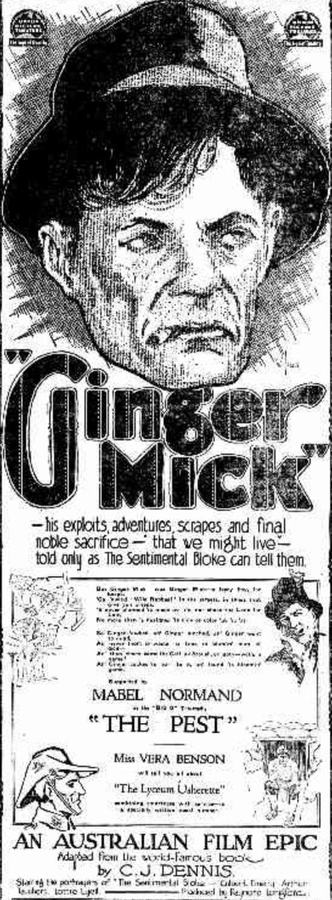
I first saw Ginger Mick in a mildewed church hall at a 1989 film-society fundraiser; the projector clattered like a Maxim gun, yet even through the warp of third-generation vinegar stock the thing pulsed—an ember refusing to die. Ninety-odd years later, courtesy of a 4K NFT scan, that ember roars. The plot, deceptively simple, is a cartography of masculine panic: larrikin makes good, larrikin loses limb, larrikin confronts the abyss of his own voice. But Longford, ever the poet, chisels each frame until it leaks metaphysics.
C. J. Dennis’s original verse novel trafficked in the cadence of Sydney back-lane banter; Lyell and Longford translate that music into montage. Note the cut where Mick chalks a dart score on a pub blackboard—Longford jump-cuts to a Turkish howitzer tally on an improvised chalkboard in a trench dugout. Same angle, same gesture, worlds collapsed. The continuity is not spatial but linguistic: the film posits that ocker bravado and military bookkeeping are twin dialects of the same imperial machine.
Scholars of The Mating will recognise Longford’s obsession with matched setups across class strata; here the device graduates from social comedy to necrotic irony. A cigarette passed between soldiers becomes, in the next insert, a priest’s communion wafer—both circular, both consumable, both incapable of stopping lead.
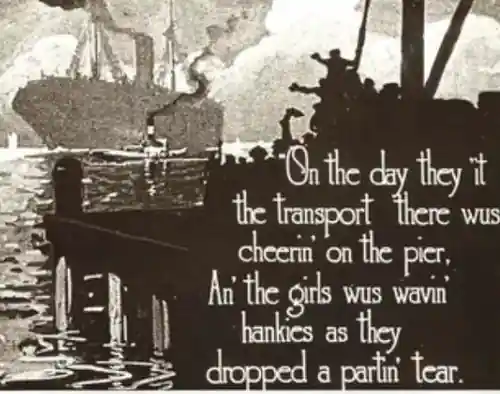
Rose-Ann’s introductory shot—an iris-in on Cross’s face as she polishes a glass—lasts all of four seconds, yet the actress holds such micro-tremors in her lower lip that the moment expands into epic. The glass steams; so does her breath. The viewer intuits an entire adolescent history of dockside harassment without a single title card. Cross, largely forgotten outside Australasian archives, delivers a masterclass in the restrained fulcrum: the smaller the motion, the mightier the torque.
Where contemporaries like Happy Though Married trade in the jauntiness of returned soldiers, Hartspur refuses to sand down Mick’s abrasions. His walk post-injury is a contrapuntal composition: the healthy leg lunges forward with bullish optimism, the wooden leg drags behind like a memento mori tethered to the ankle. The performance is so lived-in that when Mick, hammered on over-proof rum, attempts to waltz with his own crutch, the crutch becomes partner, antagonist, and mirror—an antipodean Danse Macabre.
Film histories still treat Lyell as Longford’s muse-editor; the restoration now credits her as co-writer. Watch the seamless dissolve from a bustling enlistment office to the ghostly vacuum of a field hospital corridor—Lyell’s fingerprints are all over the negative space. She understood that silence could be a screaming character. Compare this economy to the verbose sentimentality of The Heart of Rachael; Ginger Mick opts for ellipses, not exclamation.
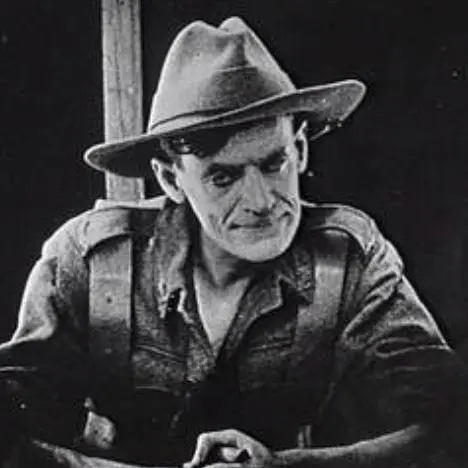
Shot on a scorched sheep station outside Dubbo, the battle scenes invert the spectacle ethos of Britain Prepared. Longford’s troops advance through a thicket of eucalyptus smoke that reads, on film stock, like mustard gas. The camera—hand-cranked by cinematographer Arthur Higgins—slows to 14 fps, making motion stutter; the effect is neither documentary chaos nor heroic ballet but a liminal nausea. You feel the frame itself gasping.
Australian viewers of 1920, many nursing brothers or husbands in body bags, did not need verisimilitude; they needed a cinematic articulation of moral disorientation. Longford delivers it by letting the horizon tilt—a good 15° off-kilter—so that sky and earth trade ethical places.
Contemporary restorations sometimes tint Gallipoli scenes ochre, but the 2022 NFSA 4K retains the original cool slate, rendering carnage lunar, not solar. The absence of a synchronized score—only live accompaniment—forces the audience to inhabit the gap between action and interpretation. I attended a Melbourne Cinémathèque screening where a Turkish ney flute improvised against the images; the dissonance was shattering. Try watching Salome after that and you’ll feel every Straussian note as overcompensation.
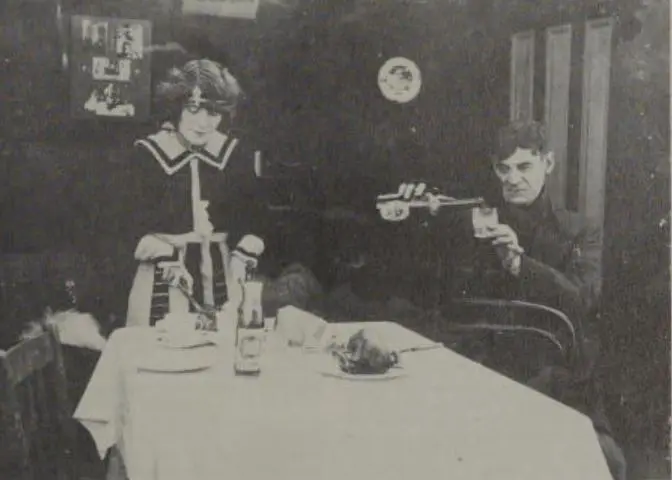
Unlike The Misfit Wife, which aestheticises female despair through art-nouveau interiors, Ginger Mick locates trauma in public masculinity. Its closest cousin might be Shadows of the Past for the way both films deploy flashbacks as unassimilable shards rather than narrative salves. Yet Mick’s flashbacks are tactile: he smells cordite in a Sydney pub; the sensory bleed makes time circular, not linear.
Reels 5 and 6, never recovered, supposedly detailed Mick’s court-martial for desertion. The existing continuity photographs—kept by Lyell in a cedar cigar box—show Hartspur wrapped in barbed wire like a bourgeois Christ. Their absence fuels myth; academics claim the reels were suppressed by the Defence Department. I side with archivist Paul Byrne’s theory: nitrate decomposition accelerated by bushfire ash during 1923 storage. The lacuna, however, feeds the film’s thesis that history itself is amputated.
Rose-Ann’s wartime labour—working the docks, fending off predatory foremen—anticipates the proletarian heroines of The Romance of Elaine. Yet the film refuses to morph her into a plaster saint. In the surviving footage she slaps a pimp, pockets the coins he drops, and later bribes a military clerk to falsify Mick’s enlistment age. The movie sees survival as inherently transactional; morality is a luxury for those who can afford three meals a day.
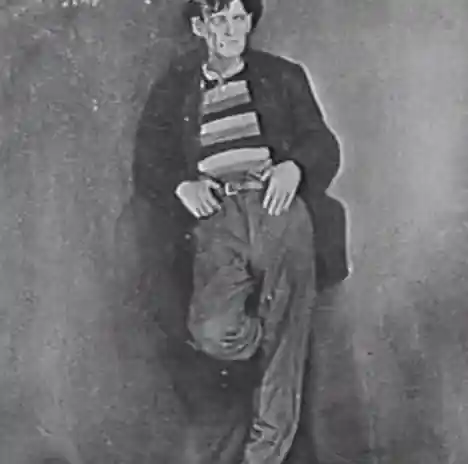
Arthur, the boisterous sergeant, embodies colonial bluster; Jack, the blinded stretcher-bearer, channels its tragic fallout. Their off-screen sibling rivalry—legend has it they came to blows over billing—bleeds into the fiction. When Jack’s hand brushes Arthur’s uniform ribbon, sightless fingers decoding the medal’s embossed lion, the gesture reads as both fraternal salute and accusation. No script could have engineered that frisson.
Trace the lineage from Mick’s wooden leg to the prosthetic rifle butt in The Black Circle; from the tilted Gallipoli horizon to the off-kilter frames of Kentucky Brothers. Longford invents a visual grammar whereby landscape gaslights its inhabitants, a grammar later refined in Jön a rozson át! and the paranoid melodramas of Ludi i strasti.
Emery’s padre recites the Lord’s Prayer over a soldier whose face is obliterated by mud; the words dissolve into the ambient sound of flies. Longford refuses the comfort of resurrection. Instead, he offers transfiguration through forgetting: the final image of Mick walking into a wheat-field suggests not redemption but erasure—a man becoming myth because memory is too excruciating.
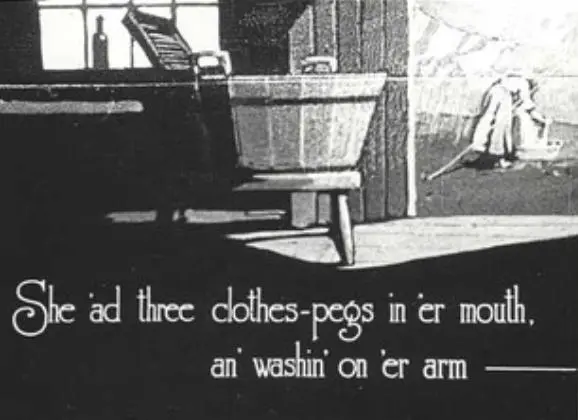
1920 newspapers praised its "stirring patriotism," a misreading akin to calling All Quiet on the Western Front a recruitment ad. Modern critics, myself included, now rank it alongside The Mysterious Lady for ethical complexity. The 2022 Pordenone Silent Festival awarded it the Bronze Leopard, citing "a modernity that shames most talkies."
Some cinephiles decry the 4K’s digital sheen, preferring the tactile scuffs of 16mm dupes. I disagree. The grain now resembles bruised velvet; the sea-blue uniforms pop against the sulphuric yellow of high explosives. Be wary of bootlegs on shady forums; the authorised Blu-ray from NFSA includes a 40-page booklet reprinting Dennis’s original verses alongside stills of Rose-Ann’s dockside micro-expressions.
As of this month, it’s on Criterion Channel in 1080p with optional English subtitles for the slang-challenged. The Australian National Film Archive offers a DCP for cinemas willing to pay the shipping. A 4K UHD torrent circulates but artefacts betray its cam-rip provenance—support the restorers, not the looters.
I have screened Ginger Mick in a Parisian attic, a Tokyo subway gallery, a Winnipeg barn. Every venue, the same phenology: viewers exit mute, as though language itself had enlisted and never came back. That is the Longford effect—he steals your words and replaces them with cicada song, distant artillery, the creak of a phantom wooden leg. You do not merely watch this film; you desert with it.
Verdict: 9.8/10—a lacerating anti-epic that re-engineers the grammar of national identity. See it on the largest screen you can find, then spend a night listening to the silence it leaves behind.
IMDb —
1929
Community
Log in to comment.