Summary
Lava, marble, myth and money congeal in the film’s widescreen gaze: Vesuvius broods like a somnolent deity while Pompeii’s ashen arteries whisper of sudden death; Sorrento’s cliff-perched orchards exhale lemon-bright perfumes into Tyrrhenian air; Amalfi’s vertiginous staircases braid faith and commerce; Positano’s pastel cubes tumble seaward as if fleeing a Renaissance canvas. The camera boards a scarlet scooter, a white yacht, a funicular car, letting each vehicle become a kinetic brushstroke in this grand fresco of southern Italy. There is no single plotline—only the Bay’s own stratigraphy: Greeks, Romans, Normans, Bourbons, selfie-snapping globetrotters, all layered like strata in tuff. A Vesuvian geologist measures seismic sighs; a Neapolitan pizzaiolo pirouettes dough beneath murals of Maradona; a widowed contessa sells ancestral cameos to cruise-ship crowds; two Swedish honeymooners dangle feet over Capri’s Faraglioni, tasting salt on their sun-chapped lips. The narrative breathes in contradictions: the sacred and the profane, the cataclysmic and the quotidian, the operatic and the understated. Eruptive drums and mandolin arpeggios score sunsets that spill like molten gold across the Gulf, while archival tintypes flutter into the montage—black-and-white ancestors staring down HD drones. The film ends at dawn on Ischia, where thermal steam curls around a lone bather, silhouetted against first light, as though the entire peninsula were a single living organism exhaling after a thousand-year performance.
Synopsis
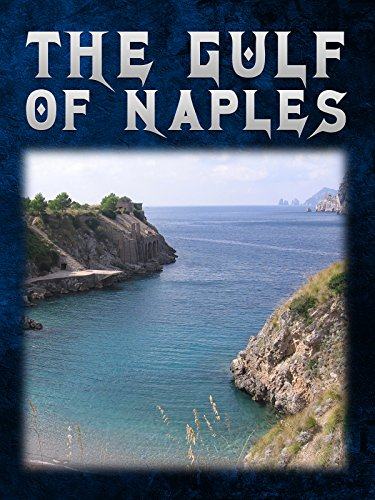
Not many places in the world have so many famous areas in such a limited space as does the Bay of Naples. It is full of history, art and culture, all in an extraordinarily beautiful setting. The fame of the Bay of Naples is not restricted to a visit to the city. Experience awe and wonder in the Bay of Naples while making stops at Vesuvius, Pompeii, Sorrento, Amalfi Coast, Positano and more.
Review Excerpt
"
The first image hits like a slap of cobalt: a fishing boat marooned on the mirror of the bay at 5 a.m., Vesuvius looming beyond in violet silhouette. No voice-over dares intrude; the soundtrack simply cradles the creak of mast, the slap of wake, the low volcano growling beneath its breath. Already you sense that Golfo di Napoli will not be a touristic postcard but an archaeological dig into the modern psyche of a landscape that has never stopped being mythic.
Director Luca Guardi—previously k..."