DbcultAccessing Vault...
Cult Review
Senior Film Conservator
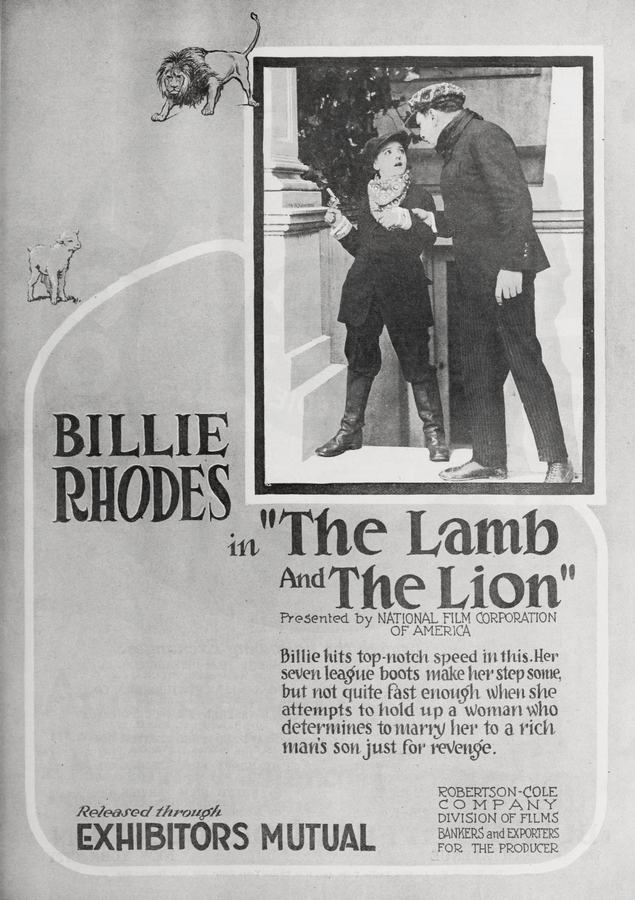
The silent era often thrived on the dichotomy of the 'born' versus the 'made,' and 1919’s The Lamb and the Lion is a quintessential specimen of this fascination. It is a film that operates on the friction between the soot-stained reality of the criminal fringe and the sterile, often cruel, elegance of the upper crust. At its heart lies a performance by Billie Rhodes that is nothing short of kinetic. As 'Boots,' she isn't merely a character; she is a force of unrefined nature being funneled through the narrow aperture of social expectation. The direction, guided by the narrative sensibilities of E. Magnus Ingleton and Lee Royal, avoids the saccharine pitfalls common to the period, opting instead for a psychological complexity that feels surprisingly modern.
The narrative pivot of the film relies on the character of Mrs. Kathryn Sylvester, portrayed with a chilling, calculated poise by Maude George. This isn't your standard mustache-twirling villainy. Sylvester’s motivation is rooted in a profound systemic rejection. When James Graham (Melbourne MacDowell) refuses her based on the 'stain' of her lineage, he isn't just rejecting a person; he is asserting a genetic hierarchy. The film uses this as a springboard to explore the performative nature of class. Unlike the stark moral landscapes found in Hell's Hinges, where redemption is found in the fire of the frontier, The Lamb and the Lion suggests that the 'civilized' world is merely a theater where the costumes are more expensive, but the motives are just as primal.
The transition of Boots from a tomboyish burglar to a high-society darling is handled with a deftness that allows the audience to feel the claustrophobia of her new life. The inclusion of her pet pig is more than a comedic beat; it is a visual metaphor for the 'unrefined' soul that refuses to be fully exorcised by silk dresses and elocution lessons. This tension reminds me of the atmospheric dread in The House of Fear, though here the 'ghosts' are the social stigmas that haunt the protagonist's every step.
Harry De Vere’s 'Uncle Ben' provides the emotional anchor of the film. His moniker, 'The Lion,' initially suggests a predatory nature, yet his relationship with Boots is the only truly honest connection in the first half of the film. His eventual reformation isn't a sudden, unearned shift, but a gradual realization of his own complicity in the girl's precarious position. This theme of a criminal with a hidden heart of gold was a staple of the era, seen in works like A Case at Law, yet De Vere brings a gravitas that elevates the trope. When he eventually disrupts the wedding, it isn't just to save Boots from a scandal; it is to reclaim his own dignity by speaking the truth.
Visually, the film utilizes light and shadow to distinguish the two worlds Boots inhabits. The hideout of the crooks is rendered with high-contrast, moody lighting that mirrors the uncertainty of their lives—a style that prefigures some of the noir elements seen in The Port of Doom. Conversely, the Sylvester and Graham estates are flooded with a flat, bright light that feels almost clinical, highlighting the artifice of their interactions. The wedding sequence is a masterclass in silent tension, utilizing close-ups to capture the crumbling composure of James Graham as his obsession with lineage is weaponized against him.
The film also flirts with the subversion of gender roles. Boots in boy’s clothes isn't just a plot device for a burglary; it represents a freedom she loses once she enters the 'feminine' sphere of Mrs. Sylvester. This loss of autonomy is a recurring theme in silent melodramas like The Curse of Eve or Wife or Country, where women are often pawns in larger male-driven social games. However, Boots retains a core of defiance that makes her a precursor to the more liberated heroines of the 1920s.
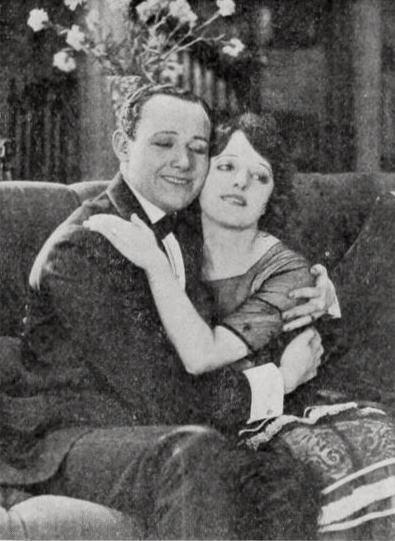
The third act revelation—that Boots is the daughter of Major Richard Harvey—is a classic Victorian literary device, yet it serves a specific function here. It exposes the hypocrisy of James Graham’s worldview. He was willing to discard a human being based on a perceived lack of pedigree, only to embrace her once her 'credentials' were verified. The film subtly critiques this obsession with bloodlines, suggesting that character is forged in the crucible of experience, not just inherited. This thematic depth is what separates The Lamb and the Lion from more pedestrian offerings like By Injunction or The Scarlet Trail.
The cast is exceptionally well-rounded. Charles Spere as Donald Graham provides a sensitive foil to the more hardened characters, while Walter Hiers and Al Ernest Garcia add layers of texture to the supporting ensemble. The presence of veteran actors like Melbourne MacDowell ensures that the dramatic stakes never feel trivial. The film’s pacing, often a hurdle for modern audiences viewing silent cinema, is remarkably tight, moving from the initial heist to the climactic wedding with a rhythmic precision reminiscent of Ultus 5: The Secret of the Night.
Looking back at The Lamb and the Lion, one cannot help but notice how it anticipates the social critiques found in later silent epics like Power or the psychological depth of Ahasver, 1. Teil. It is a film that demands we look past the surface—past the 'boots' of a criminal and the 'pearls' of a debutante—to find the actual human pulse underneath. It deals with the concept of the 'chrysalis' in a way that is both literal and metaphorical, as Boots sheds her rough exterior only to find that the interior world she has entered is far more dangerous than the one she left.
The film’s resolution, while seemingly a 'happy ending,' carries a bittersweet undertone. The reconciliation is only possible because Boots fits into the pre-existing social order by birthright. One wonders: what if she had been the niece of a crook? The film leaves this question hanging in the air, much like the unresolved tensions in La morte che assolve or the haunting ambiguity of Buchanan's Wife. It is this refusal to provide a simple answer to complex social prejudices that gives the film its lasting power.
In the pantheon of Billie Rhodes' work, this stands as a high-water mark. Her ability to pivot from the physicality of the early scenes to the restrained emotionality of the wedding sequence is a testament to her range. She navigates the film’s tonal shifts with an ease that prevents the melodrama from becoming bathos. Whether she is frolicking with a pig or standing at the altar of a high-society church, she remains the undeniable center of gravity. For those interested in the evolution of the female protagonist in early cinema—moving away from the 'damsel in distress' to the 'woman of agency'—this film is an essential watch, standing tall alongside other character studies like Woman, Woman! or The Red, Red Heart.
Ultimately, 'The Lamb and the Lion' is a sophisticated piece of silent storytelling that uses the tropes of its time to critique the very society that produced it. It is a story of how we label one another, how we seek revenge for the wounds of the past, and how, occasionally, the truth has a way of asserting itself despite our best efforts to bury it under layers of silk and soot.
IMDb 4.6
1929
Community
Log in to comment.