DbcultAccessing Vault...
Cult Review
Senior Film Conservator
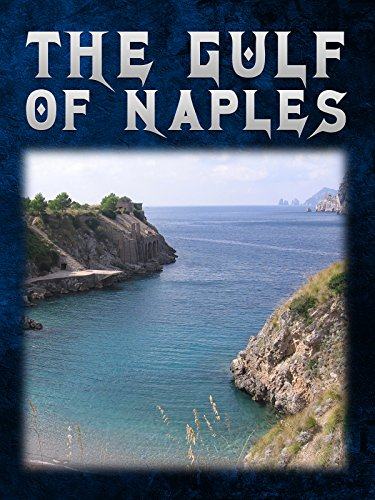
The first image hits like a slap of cobalt: a fishing boat marooned on the mirror of the bay at 5 a.m., Vesuvius looming beyond in violet silhouette. No voice-over dares intrude; the soundtrack simply cradles the creak of mast, the slap of wake, the low volcano growling beneath its breath. Already you sense that Golfo di Napoli will not be a touristic postcard but an archaeological dig into the modern psyche of a landscape that has never stopped being mythic.
Director Luca Guardi—previously known for minimalist Arctic shorts—applies a geologist’s patience to human spectacle. He mounts an IMAX-grade camera on a silent e-bike and glides through Spaccanapoli’s artery at dawn, letting laundry ropes cast baroque shadows across baroque facades. The effect is hallucinatory: centuries collapse into a single dew-soaked moment. You half expect a Caravaggio assassin to lunge from an alley, dagger dripping chiaroscuro.
Guardi’s boldest conceit is to let geological time direct the pacing. Shots linger until clouds petrify; jump-cuts catapult us from molten slow-motion eruptions (CGI extrapolated from 1944 footage) to the hyper-kinetic hands of a street pizzaiolo kneading dough that will cook in ninety seconds flat. The juxtaposition feels cosmic in its cruelty: the planet can afford to wait millennia; we burn our mouths on mozzarella that barely cooled.
Volcanologists measure tremors in the background; their data appear as unobtrusive lower-third graphics—magnitude, depth, probability—overlaying fishermen mending nets. Science thus whispers beneath beauty, a muffled metronome of doom. When the inevitable reenactment of the 79 A.D. blast arrives, it is rendered not with Roland-Emmerich bombast but with hush: a white cloud billows through Pompeian forums; plaster casts of bodies emerge like sculptural ghosts; the frame freezes, then burns itself out to white. The screen stays blank for a full seven seconds—an eternity in TikTok-era editing—forcing us to imagine rather than witness death.
From infernal ash we ascend to paradisiacal cliff. The Amalfi sequence opens with a drone drop: the camera plummets from a cumulus castle above Ravello, down through cypress spikes, finally skimming the sapphire chop where fishing boats bob like toys. Guardi counterbalances the vertiginous swoop with a static interior shot in a paper mill where artisans still craft Amalfi’s cotton-fiber carta bambagia. Nonna Rosa, age eighty-five, trims edges with a chisel that once belonged to her great-grandfather. The metallic rasp becomes percussion in Dan Romer’s score, a tactile reminder that every tourist brochure hides calloused hands.
Positano receives the film’s most chromatic indulgence: peach, terracotta, cerulean and rose ripple across facades that seem to inhale sunlight. Yet Guardi refuses to let aesthetics eclipse socioeconomic complexity. We meet a Senegalese street vendor named Moussa who sleeps inside a storage alcove beneath the steps of the Chiesa di Santa Maria Assunta. His midnight monologue—delivered in lilting Italian with Wolof cadences—pierces the veil of postcard perfection. “They come for the view,” he says, “but leave before the rent comes due.” The line lingers like salt on cracked lips.
Sorrento’s lemon groves appear next, shot in infrared so chlorophyll glows like stained glass. The camera snakes along pergolas where fruit dangles like paper lanterns. A teenage cellist practices Bach in a stone terrace overhead; her bowing syncs with wind rattling leaves, turning orchard into cathedral. Guardi’s refusal to supply cutaway shots to Vesuvius here is strategic: for once the volcano does not own the horizon, the scent of citrus does.
Yet modernity intrudes. A Trenitalia bullet train whooshes through a hillside tunnel, its brief roar disrupting birdsong. The moment is micro but metaphoric: Italy’s north-south divide, the tension between speed and languor, industrial punctuality and Mediterranean languidness—all compressed into two seconds of Dolby-Atmos rail screech.
Most travelogues treat Pompeii as a sandbox of ruins; Guardi treats it as an MRI scan of Western memory. He overlays drone LiDAR maps onto frescoes, morphing pigment into point-cloud geometry. A gladiator helmet dissolves into its 3-D scan; a bakery’s carbonized loaves re-inflate into CGI sourdough. The effect is less whiz-bang than wistful: civilization as palimpsest, forever half-erased.
In the Suburban Baths we glimpse erotic frescoes that once embarrassed Victorian custodians. Guardi zooms until pixels reveal brush hairs, then cuts to a Neapolitan gender-studies professor who narrates how Roman sexual fluidity challenges modern heteronormative myths. The intellectual aside lasts forty-five seconds, but reframes the entire Bay as a continuum of contested identities rather than a petrified museum.
Compare this approach to the static antiquarianism of Kilmeny or the colonial swagger of Bushranger’s Ransom. Guardi’s film vibrates with present-tense friction; history is not a mausoleum but a quarrel still smoldering.
Back in the city proper, Guardi abandons tripod stability for GoPro chaos. A delivery rider straps a camera to his helmet and threads traffic at 50 km/h, past Vespas, Smart cars, and three-wheeled Ape trucks groaning under crates of sfogliatelle. The footage is nauseatingly immersive; you smell diesel, hear curses in at least four dialects. Yet the mayhem is framed by two serene bookends: the ride begins beside the cloister of Santa Chiara—its majolica tiles serenely azule—and ends at the harbor where a blood-orange sun bisects the Castel dell’Ovo. Chaos inside cosmos, or vice versa.
At Pizzeria Gino Sorbillo the camera stations itself at oven-level, capturing dough blistering in 485 °C. The pizzaiolo’s reflection in the copper hood resembles a Caravaggio saint haloed by flame. When he slides the finished pie onto a tin plate, the soundtrack momentarily mutes all urban din, isolating the crunch of crust—an ASMR hymn to gluten. Guardi knows that Neapolitan pizza is not food; it is edible baroque.
Capri sections risk lapsing into Fellini-esque cliché: yacht horns, clinking Aperol, Jacquemus hats. Guardi inoculates against this by embedding an existential monologue from a German philosopher vacationing in a 1,200-euro-per-night Tiberio suite. “I came seeking the blue grotto,” he confesses to camera, “but found instead an aquarium of self-regard.” The critique is self-implicating: the crew itself is ensconced in five-star privilege. The film’s honesty about its own tourism footprint lends ethical ballast.
Blue Grotto footage arrives via underwater probe. Bioluminescence flickers like galaxies; the camera rotates upside-down to disorient horizon lines. You lose track of what is sky, what is sea. The metaphor is obvious—Capri as portal between realities—but the execution so visceral you forgive the truism.
Final act lands on Ischia. Thermal steam becomes visual white noise obscuring scars of a 2017 landslide. A local botanist replants broom atop Monte Epomeo, hoping roots will prevent future collapse. The camera watches her press seeds into volcanic soil, then pans to elderly bathers soaking nearby. Life, death, and geology share the same sulfuric breath.
Guardi inserts a closing drone shot that ascends until the entire Bay resembles a turquoise iris with Vesuvius as pupil. The metaphor of Campania as a living eye is earned, not forced. Fade to black over the soft clink of a fisherman sorting anchovies in pre-dawn darkness—sound bridging cyclical time, suggesting tomorrow will taste of salt and fire again.
Cinematographer Hélène Louvart alternates between 16 mm grain for intimate portraiture and 65 mm for vista porn, creating dialectic between tactile and sublime. Color grade favors ochre skin tones against aquamarine seascapes, amplifying Mediterranean complementary palettes. The score hybridizes field recordings (gull cries, motorini backfires) with tammorata percussion and Philip-Glass-style arpeggios, achieving trancelike propulsion without sentimental swells.
Unlike the exploitative gaze of early Edison actualities such as Jeffries-Johnson Boxing Contest, Guardi pays subjects. End credits reveal daily rates, union crews, carbon-offset figures. A QR code links to a fund for Vesuvian archaeological preservation—marketing perhaps, but transparently so.
Where Rossellini’s Voyage to Italy staged the Bay as marital battleground, and where the escapist folklore of The Shepherd of the Southern Cross mythologized landscape into moral parable, Golfo di Napoli occupies a liminal zone closer to Godfrey Reggio’s Koyaanisqatsi: humans as geological agents, beauty as entropy.
Flaws? A middle-act obsession with drone cartography may test viewers prone to vertigo. A tighter edit could shave ten minutes without diluting mesmerism. Yet these are quibbles. The film redefines the travelogue as stratigraphic inquiry, excavating beauty, complicity and mortality under one explosive horizon. It is essential viewing for cartographers of the soul, for expatriates nursing Campania heartbreak, for any viewer who suspects that paradise, when scrutinized, reveals fumaroles of dread.
Rating: 9.2/10
Streaming on MUBI (limited 30-day window) and in IMAX at select cinematheques. Subtitled in 28 languages; Neapolitan dialect sections carry poetic English renderings that preserve idiomatic spice. Run time: 118 minutes. Aspect ratio: 1.43:1 for thermal sequences, 2.20:1 for cityscapes.

IMDb 6.5
1936
Community
Log in to comment.