Summary
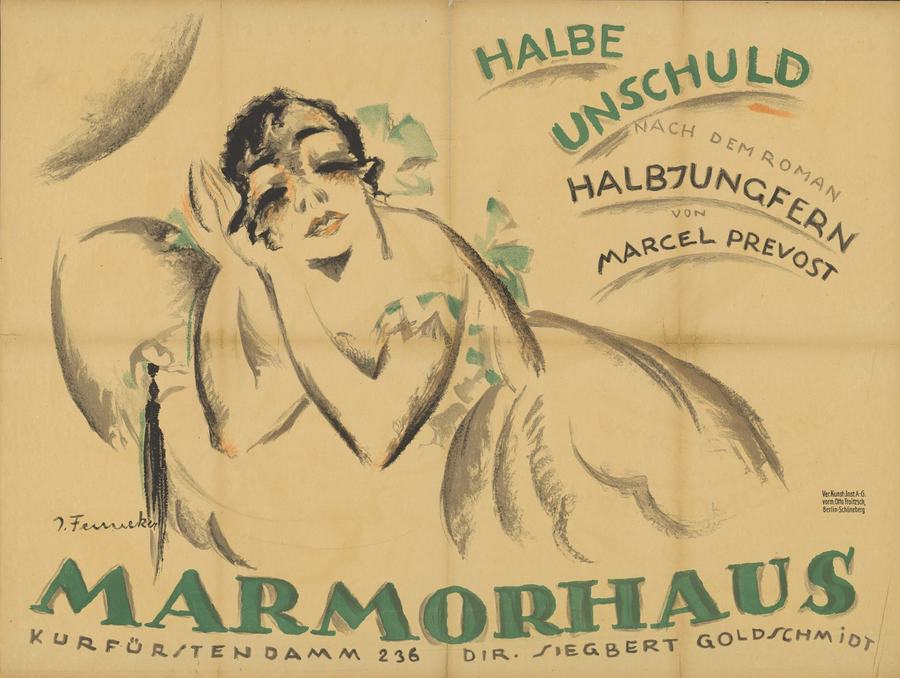
An incandescent carousel of fin-de-siècle Vienna spins before us: bourgeois drawing-rooms scented with lilac and guilt, gas-lamps flickering like nervous confessions, and a schoolgirl’s braid that becomes the fuse of a social powder-keg. Lotte Schüler’s fourteen-year-old Dora, all knees and curiosity, trades piano scales for the musky hush of a seamstress’s atelier where Marie Lenz’s Rita—petite, twenty-three, velvet-voiced—measures inseams by day and clandestine poetry by night. Their first kiss tastes of chalk dust and stolen marzipan; their second, of rainwater on cemetery marble once a trembling boy-cadet, Hanns Waschatko’s Franzl, discovers them and demands entrance to their secret. What begins as a triangular game of dare—who will first whisper the word “scandal”—mutates into a courthouse spectacle when Dora’s banker father, Willi Karl’s implacable Herr Schüler, presses charges of “moral seduction” against Rita, invoking paragraph 209 of the Imperial penal code. The trial is a danse macabre of wigs and whispers: medical men pontificate on “spinal irritation” in young girls, maidservants barter memory for coins, and Erika Glässner’s ghoulish Frau Hinterhuber sells diary pages to the press. Verdict: Rita exiled to a spinning-mill in Bohemia, Dora interned in a Carmelite cloister whose stone corridors echo with the same unanswered panting. Yet Marcel Prévost’s scenario refuses melodrama; instead it freezes each character inside a snow-globe of perpetual half-guilt—Halbe Unschuld—where every mouth is half-open, every caress half-finished, every apology half-spoken. The final shot, a match-cut between Rita’s industrial loom clacking in lunar blue and Dora’s white novice veil lifted by chapel wind, implicates the viewer: we too are complicit, forever rocking the cradle between desire and its punishment.
Review Excerpt
"
There are films you watch and films that watch you—Halbe Unschuld belongs to the latter caste, a mercury-silvered mirror thrust so close to the face that every viewer breathes upon it, fogging the guilt. Director Adolf Trotz, working from Marcel Prévost’s scandalous 1907 novella, orchestrates a visual sonata of half-tones: lamplight buttering the Biedermeier wainscoting, then guttering into bruise-colored dusk; lace curtains inhaling like lungs when a door slams off-screen. The camera glides at..."