Summary
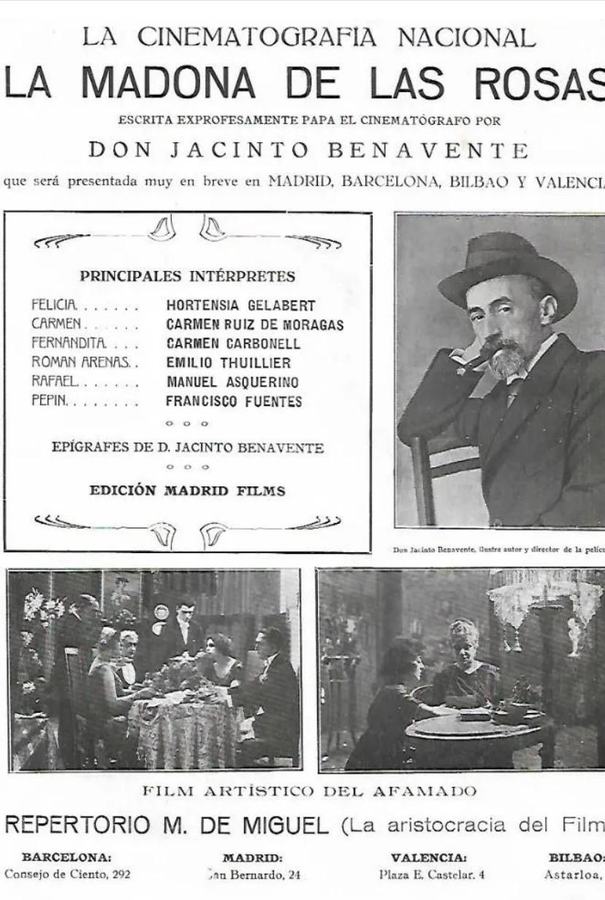
In the ethereal tapestry of early 20th-century Spanish melodrama, "La madona de las rosas" unfurls as a poignant narrative of virtue besieged and eventually, tragically, vindicated. At its heart lies Maria, portrayed with luminous fragility by Avelina Torres, a young woman whose life is inextricably linked to the vibrant rose garden she meticulously tends. These blossoms, initially symbols of her burgeoning, innocent love for Ricardo (Francisco Fuentes hijo), a dashing yet impetuous artist, gradually transform into mute witnesses of her profound suffering. The film meticulously charts Maria's descent into societal ignominy, orchestrated by the machinations of Ricardo's aristocratic, image-obsessed mother (Carmen Carbonell) and a jealous rival (Hortensia Gelabert). Falsely accused of infidelity and cast out, Maria endures a solitary existence, her only solace the enduring beauty of her roses, which mirror her unyielding spirit amidst the thorns of public scorn. The narrative masterfully employs visual metaphor, with the roses themselves acting as a leitmotif of purity, sacrifice, and the enduring power of truth. As years pass, the intricate web of deceit begins to unravel, propelled by the conscience of a minor character (Mariano Asquerino) and Ricardo's belated, agonizing realization of his profound error. The climax, a breathtaking tableau of emotional reckoning, sees Maria confront her past, her silent dignity ultimately exposing the hollowness of her accusers, culminating in a bittersweet, almost spiritual, triumph over adversity, yet stained by the irreversible passage of time and lost innocence.
Review Excerpt
"
Unveiling the Petals of ‘La madona de las rosas’: A Timeless Silent Symphony
Stepping into the world of ‘La madona de las rosas’ is akin to entering a meticulously preserved dreamscape, a silent film from an era when emotions were writ large across faces and gestures spoke volumes beyond any intertitle. This isn't merely a movie; it's an experience, a delicate and potent melodrama that, even a century removed, retains an astonishing capacity to stir the soul..."