
DbcultAccessing Vault...
Cult Review
Senior Film Conservator
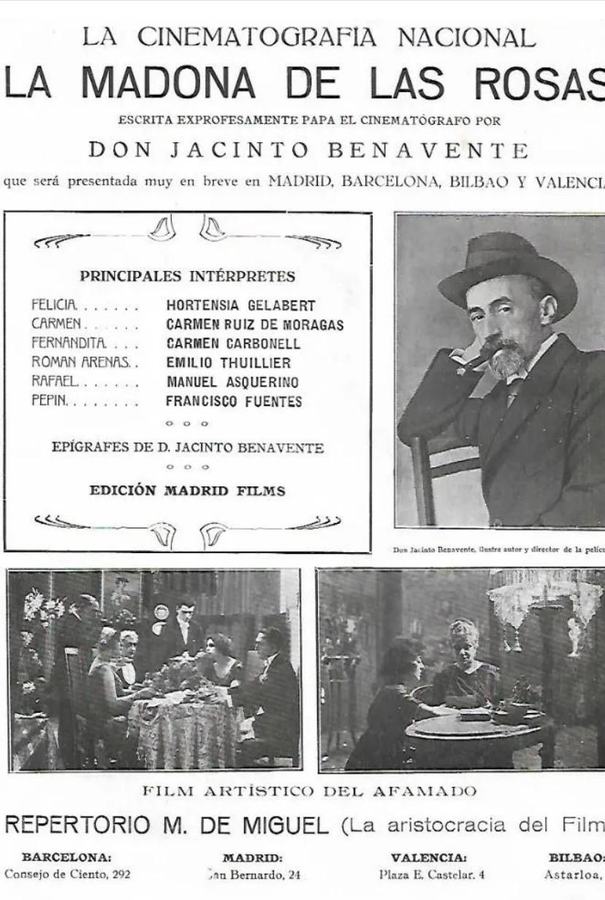
Stepping into the world of ‘La madona de las rosas’ is akin to entering a meticulously preserved dreamscape, a silent film from an era when emotions were writ large across faces and gestures spoke volumes beyond any intertitle. This isn't merely a movie; it's an experience, a delicate and potent melodrama that, even a century removed, retains an astonishing capacity to stir the soul. The film, a collaborative effort by the esteemed Jacinto Benavente and Fernando Delgado, transcends its technical limitations to deliver a narrative of profound human struggle and unwavering spirit. It invites us to consider the enduring power of innocence, the corrosive nature of societal judgment, and the quiet dignity found in suffering.
At the heart of this poignant cinematic offering is Avelina Torres, whose portrayal of Maria, the titular 'Madonna of the Roses,' is nothing short of breathtaking. Torres embodies Maria not just as a character, but as an archetype: the pure, virtuous woman whose inherent goodness becomes both her strength and her tragic vulnerability. Her performance is a masterclass in silent film acting, where every subtle shift in expression, every trembling hand gesture, every sorrowful gaze communicates an entire universe of emotion. One is reminded of the delicate yet resilient heroines found in contemporary works like ‘The Little Liar’, though Torres imbues Maria with a unique, almost ethereal grace that sets her apart. Maria's connection to her rose garden is more than a mere plot device; it's a visual metaphor for her soul. The vibrant, fragile beauty of the roses mirrors her own inherent purity, while the thorns often symbolize the cruel barbs of gossip and accusation she endures. Torres captures this duality with an astonishing depth, allowing us to witness Maria's spirit bloom even as her world withers around her.
Jacinto Benavente and Fernando Delgado craft a narrative that, while rooted in the conventions of melodrama, elevates itself through meticulous character development and an unwavering focus on moral complexities. Their screenplay doesn't merely present a series of events; it explores the psychological toll of injustice and the societal pressures that often dictate personal fates. The story unfolds with a deliberate, almost poetic rhythm, allowing the audience to fully absorb Maria's journey from innocent joy to profound sorrow and, ultimately, to a quiet, hard-won resilience. The writers deftly weave in elements of class struggle and the hypocrisy of aristocratic society, themes that resonate with the social critiques found in other powerful silent dramas of the era, such as ‘Scandal’. Their genius lies in making Maria's plight universal, transcending the specific circumstances of her time to speak to the timeless human experience of being misunderstood and unjustly condemned. The dialogue, though unseen, is felt in the intensity of the actors' expressions and the carefully chosen intertitles, which serve less as exposition and more as poetic commentary on the unfolding tragedy.
Francisco Fuentes hijo, as Ricardo, Maria's ill-fated love interest, delivers a performance that perfectly encapsulates the conflicted hero. His initial charm and artistic temperament give way to a tormented soul, caught between his genuine affection for Maria and the crushing expectations of his family, particularly his domineering mother, played with chilling authority by Carmen Carbonell. Carbonell's portrayal is a masterclass in subtle villainy, her stern gaze and rigid posture conveying more menace than any overt act of cruelty. She represents the unyielding societal judgment that ultimately drives Maria to despair. Hortensia Gelabert, as the rival, adds another layer of complexity, embodying the jealous, manipulative forces that often lurk beneath the surface of polite society. Her performance, though perhaps more overtly theatrical, is effective in highlighting the stark contrast between her character's superficiality and Maria's profound depth. The ensemble cast, including Mariano Asquerino, Carmen Ruiz Moragas, María Millanes, and Emilio Thuillier, each contribute to the rich tapestry of the film, creating a world that feels both expansive and intimately personal. Their reactions, their silent judgments, and their moments of fleeting compassion all serve to amplify Maria's isolation and eventual triumph. The way they interact, often through glances and body language, speaks to a sophisticated understanding of non-verbal communication, a hallmark of great silent cinema that can also be appreciated in films like ‘The Envoy Extraordinary’.
The film's visual language is exceptionally rich, with the roses serving as its most potent and recurring symbol. They are not merely pretty props; they are integral to Maria's character and the narrative's emotional arc. In the beginning, they represent her untainted love and simple joys. As her life darkens, the roses become a testament to her enduring spirit, blooming in defiance of the harsh winter of her circumstances. Their delicate petals, often filmed in close-up, convey vulnerability, while their thorns hint at the pain she endures. This profound use of natural imagery to reflect internal states is a hallmark of the era's best silent films, echoing the evocative landscapes and symbolic objects found in works such as ‘The Lure of the Bush’. The cinematography, though perhaps rudimentary by today's standards, is artful in its use of light and shadow, particularly in depicting Maria's solitary moments of contemplation amidst her garden. The interplay of light filtering through rose bushes, casting intricate patterns on her face, becomes a visual metaphor for hope piercing through despair. The film understands that in silence, visuals must carry the weight of expression, and it executes this with remarkable finesse.
While ‘La madona de las rosas’ undeniably embraces melodramatic conventions, it transcends mere sentimentality to offer a profound commentary on the moral failings of society. The film scrutinizes the ease with which reputation can be shattered by rumor and the devastating consequences of unchecked prejudice. Maria's suffering isn't just for dramatic effect; it's a stark indictment of a rigid social structure that prioritizes appearance over truth, and power over justice. This thematic depth elevates it beyond a simple tearjerker, placing it alongside more overtly critical films like ‘Den Vanærede’, which also explored social ostracization. The film implicitly asks: What is the true cost of maintaining social status? And at what point does collective judgment become a collective sin? The writers, Benavente and Delgado, do not shy away from these uncomfortable questions, instead allowing Maria's quiet resilience to serve as a powerful counter-narrative to the prevailing societal norms. Her eventual, albeit bittersweet, vindication is not a triumph of grand gestures, but a testament to the quiet power of truth and an unwavering spirit.
Decades after its initial release, ‘La madona de las rosas’ continues to captivate audiences who seek out the profound artistry of early cinema. Its ability to evoke such powerful emotions without spoken word is a testament to the universal language of human experience it so eloquently portrays. The film reminds us of a time when cinematic storytelling relied purely on visual narrative, compelling performances, and evocative symbolism. It stands as a significant piece of Spanish film history, showcasing the talent of its cast and crew in an era often overshadowed by Hollywood productions. For aficionados of silent film, it offers a rich and rewarding viewing experience, a window into the artistic sensibilities of its time. Its themes of love, betrayal, sacrifice, and redemption are timeless, ensuring its relevance far beyond its historical context. Much like other enduring silent classics such as ‘The River of Romance’ or ‘Hearts United’, its narrative power is undiminished by the passage of years. The film's poetic beauty, combined with its deeply resonant human drama, ensures that Maria's story, and her roses, will continue to bloom in the collective consciousness of cinema lovers for generations to come. It serves as a potent reminder that true cinematic artistry lies not in technological extravagance, but in the ability to touch the human heart with authenticity and grace.
In its quiet intensity, ‘La madona de las rosas’ leaves an indelible mark. It’s a film that doesn't scream for attention but rather draws you in with its elegant, sorrowful beauty. The performances, particularly that of Avelina Torres, are etched into memory, embodying a kind of suffering that feels both deeply personal and universally understood. The intricate plotting by Benavente and Delgado ensures that the emotional journey is never simplistic, but layered with the complexities of human nature and societal pressures. It’s a work that celebrates the resilience of the human spirit even in the face of overwhelming adversity, finding beauty in sorrow and strength in vulnerability. For those unfamiliar with the nuanced artistry of silent cinema, this film serves as an exceptional entry point, demonstrating the profound emotional depth achievable without a single spoken word. It’s a testament to the power of visual storytelling and the timeless appeal of a truly compelling human drama. The film's gentle yet insistent narrative, much like the slow unfolding of a rose, reveals layers of meaning and emotion, leaving the viewer with a sense of both melancholy and profound appreciation for the enduring power of the human heart. It’s a rare gem that continues to shine brightly, a beacon of artistic integrity from an era long past, yet eternally relevant.