DbcultAccessing Vault...
4.8/10
Senior Film Conservator
A definitive 4.8/10 rating for a film that redefined the boundaries of cult cinema. Manon Lescaut remains a cornerstone of transgressive art.
The annals of cinematic history are replete with tales of star-crossed lovers, but few resonate with the raw, relentless anguish and tragic grandeur of Manon Lescaut. This 1914 adaptation, a silent-era gem based on Abbé Prévost's seminal novel, plunges viewers into an eighteenth-century France where passion and societal constraint clash with devastating consequences. It’s a narrative that, despite its vintage, speaks volumes about the human heart’s insatiable desires and the unforgiving currents of fate. The film, starring the luminous Lina Cavalieri as Manon and the earnest Charles Hammond as Des Grieux, endeavors to capture the operatic sweep of its literary source material, charting a course through illicit romance, desperate measures, and ultimate ruin.
From its very inception, the film establishes a stark dichotomy. Manon, a young woman of inherent beauty and spirit, finds herself ensnared by the rigid dictates of a pious household. Her father’s decree, a life consigned to the spiritual solitude of a convent, serves as the initial spark for her rebellion. This opening sequence, though perhaps brief, is pivotal; it’s a clear articulation of the oppressive forces that will perpetually seek to crush Manon’s burgeoning autonomy. One cannot help but draw parallels to other tales of constrained women, such as the titular character in Jane Eyre, though Manon's path diverges sharply from the stoic resilience often depicted in such narratives. Manon, instead, yearns for a life unburdened by asceticism, a desire that finds its potent manifestation in the form of Chevalier Des Grieux.
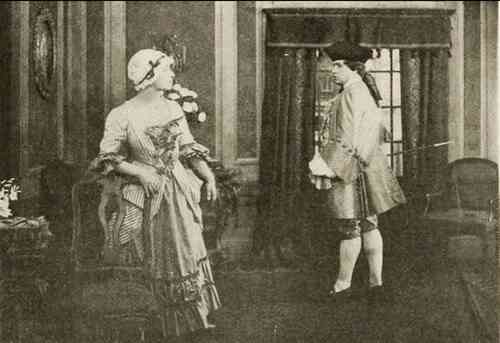
Their meeting at an inn in Amisne is portrayed with an almost preternatural intensity, a visual shorthand for the kind of instantaneous, overwhelming attraction that defies logic and reason. It's a coup de foudre, a love-at-first-sight scenario that, in the context of the era, is both romantic and deeply reckless. The camera, even in its early form, strives to capture the electrifying connection between Cavalieri and Hammond, suggesting a magnetic pull that leaves them oblivious to the world around them. This pivotal moment, the genesis of their shared destiny, is a testament to the power of human connection, a force strong enough to unravel meticulously laid plans and ignite a life of perilous adventure. Their subsequent flight to Paris is not merely an escape from a convent; it is an escape from an entire worldview, a declaration of independence steeped in romantic idealism.
Paris, however, proves to be less a sanctuary and more a gilded cage. The city of lights, often romanticized, here becomes a labyrinth of moral compromise and aristocratic intrigue. The introduction of Baron De Bretigny, a wealthy and predatory nobleman, immediately introduces the element of external menace. Henry Weaver, in his portrayal of the Baron, embodies the insidious charm and relentless opportunism that defined certain strata of 18th-century French society. His proximity to Manon and Des Grieux's humble abode is no accident; it is a narrative device that ensures their hard-won happiness remains perpetually precarious. The Baron's machinations, from his initial overtures to his eventual bribing of Manon’s maid, are a masterclass in calculated villainy, designed to pry apart the lovers through deceit and manipulation. This aristocratic interference echoes the struggles seen in films like The Count of Monte Cristo, where powerful figures wield their influence to destroy lives for personal gain or revenge.

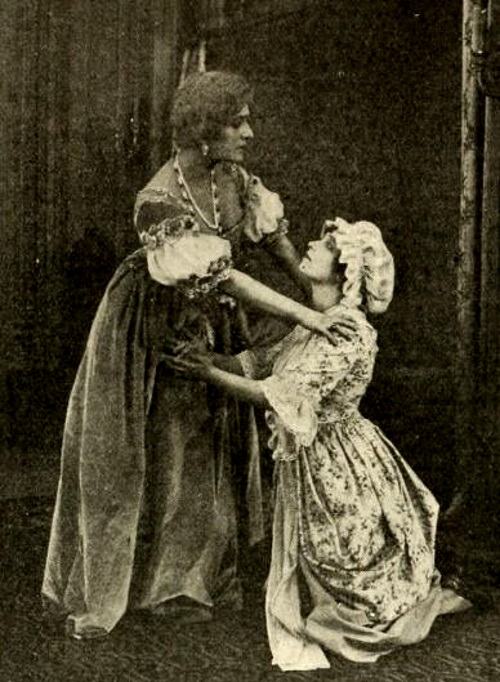
The forced separation of Manon and Des Grieux, orchestrated by the Baron and Des Grieux’s disapproving father, is a turning point that plunges the narrative into profound despair. Des Grieux, torn from Manon's side, is left to believe in her fidelity while Manon, fed a cruel lie by her corrupted maid, believes herself abandoned. This sequence is particularly heartbreaking, showcasing the fragility of trust and the devastating impact of miscommunication. Lina Cavalieri's performance here, though silent, must convey the crushing weight of heartbreak and the desperate solitude that drives Manon to accept the Baron's 'protection.' It is a choice born not of malice or greed, but of perceived desertion and an overwhelming need for survival in a society unforgiving to penniless women. Her plight, in some ways, mirrors the societal vulnerability depicted in Les Misérables, where women often had few options outside of marriage or patronage.
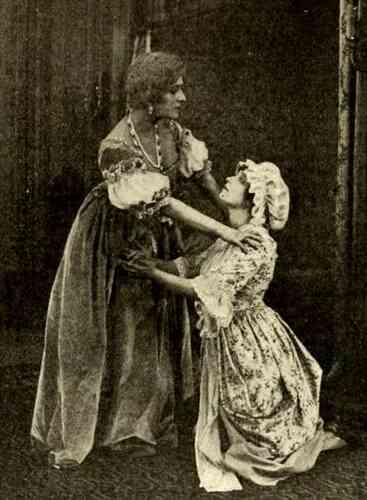
Des Grieux's subsequent retreat into an ecclesiastical life, persuaded by his friend Abbe Tiberge, is a powerful manifestation of his grief and disillusionment. He seeks solace and purpose in renunciation, attempting to extinguish the consuming flame of his love for Manon through spiritual devotion. Yet, the narrative deftly illustrates that true passion is not so easily quelled. Manon remains the "unforgotten object of his affections," a specter haunting his every prayer. His studies at St. Sulpice become a futile endeavor, a temporary diversion from the inescapable truth of his heart. When Manon, having uncovered the Baron's deceit, seeks him out, the emotional climax at St. Sulpice is nothing short of operatic. It is a scene brimming with pathos and raw emotion, as Manon, with a potent blend of vulnerability and resolve, reignites Des Grieux's dormant passion, drawing him back into a world he had tried so desperately to abandon. This scene, more than any other, underscores the irresistible, almost fated pull these two characters have on each other.
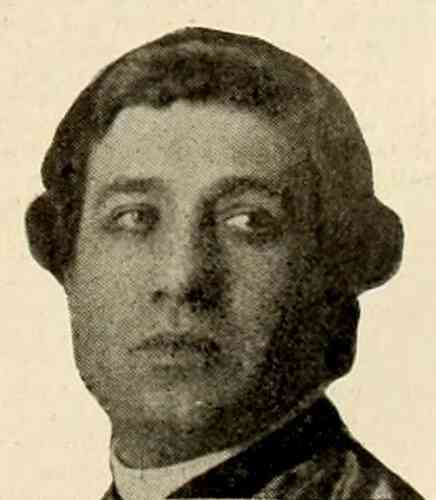
The re-entry of Manon's brother, Lescaut, into their lives introduces another layer of complication and moral ambiguity. Played by Lucien Muratore, Lescaut is depicted as a dissolute and unprincipled guardsman, a man whose loyalty is easily swayed by pecuniary gain. His initial involvement, hired by the Baron to recapture Manon, is a stark reminder of the constant external threats to their fragile happiness. The street combat that ensues, while perhaps limited by the cinematic technology of the early 20th century, would have aimed to convey a sense of desperate struggle, a physical manifestation of the lovers' fight against an unforgiving world. Des Grieux's daring rescue of Manon from the Baron's captivity, alone and unaided, paints him as a true romantic hero, willing to face any danger for his beloved. This act of defiance, however, only deepens their notoriety and further isolates them from conventional society.
Their brief sojourn in a suburban villa represents a fleeting moment of domesticity, a desperate attempt to carve out a semblance of normal life amidst the chaos. Lescaut's reappearance, feigning innocence and reconciliation, is a deceptive lull before the storm. Their financial woes, a constant undercurrent throughout their story, now come to the forefront, pushing Des Grieux towards increasingly desperate measures. Lescaut, ever the opportunist, persuades Des Grieux to gamble, leading him into a fashionable club where fate, in the form of the vengeful Baron, awaits. The gambling scene is a microcosm of their entire existence: a high-stakes game where the odds are stacked against them, manipulated by forces beyond their control. The accusation of cheating, the subsequent arrest, and their separate imprisonments serve as a cruel punctuation mark on their Parisian misadventures. The recurring motif of imprisonment, both literal and metaphorical, is a powerful thematic thread, highlighting their lack of true freedom.
Des Grieux's dramatic escape from St. Lazare, a feat of audacious courage involving a wounded guard and a coerced prison governor, underscores his unwavering commitment to Manon. It is a moment of pure, visceral determination, a testament to the lengths he will go to reunite with her. Concurrently, Lescaut's sudden change of heart, driven by a quarrel with the Baron rather than genuine remorse, provides a glimmer of hope. His assistance in rescuing Manon from the Magdalen, disguised in boy's clothes, is a desperate, thrilling escape sequence. The coach chase, the subsequent accident, and Lescaut's death are rapid-fire events designed to heighten the tension and underscore the relentless, almost mythical tragedy that pursues them. Manon's recapture and her sentence to transportation to America, specifically the French province of Louisiana, mark a new, brutal chapter in their saga. This form of penal exile, a grim reality of the period, condemns her to a future of forced labor and separation, a fate perhaps even more cruel than death. The visual of Manon, chained amongst other unfortunate women, evokes a profound sense of injustice and despair, a stark contrast to the initial romantic idealism.
Des Grieux's tenacious pursuit, his refusal to abandon Manon even in the face of such overwhelming adversity, elevates his character to a truly heroic, if ultimately tragic, stature. His decision to stow away on the ship bound for New Orleans is a final, desperate act of devotion, a testament to a love that transcends continents and societal condemnation. In the new world, Louisiana offers a brief, deceptive respite. The kindness of the Governor, a temporary balm for their wounded souls, allows for a brief period of peace. However, the narrative dictates that their tragedy is far from over. The Governor's nephew's infatuation with Manon, a familiar echo of the Baron's destructive desire, once again forces the lovers into a corner. The duel, a last-ditch effort by Des Grieux to protect Manon's honor and their fragile peace, is a desperate act of defiance against a world that simply refuses to let them be. Their final escape into the vast, untamed forests of Louisiana is the most poignant and heartbreaking sequence of all. It is here, far from the corrupting influences of European society, that Manon finally succumbs, not to human malice, but to the harsh indifference of nature itself. Her death in Des Grieux's arms, under the canopy of an alien sky, is the culmination of their relentless, ill-fated journey. It is a moment of profound sorrow, a testament to a love that burned so brightly it consumed them both.
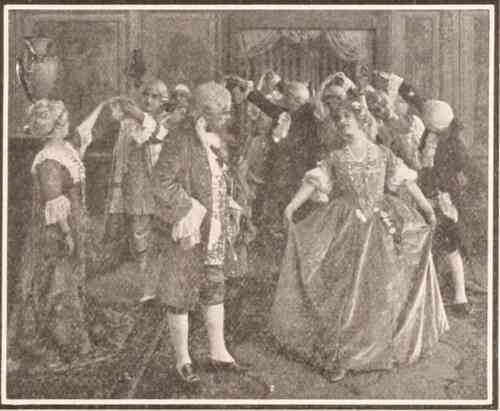
Lina Cavalieri, a famed opera singer, brought a certain theatricality and emotional depth to Manon. Her expressive face and gestures would have been crucial in conveying the character's journey from innocent girl to world-weary woman, constantly oscillating between moments of joy and profound despair. Charles Hammond’s Des Grieux, on the other hand, embodies the archetypal romantic hero: passionate, devoted, and ultimately undone by his unwavering love. The chemistry between the two leads, even in the silent era's constraints, would have been paramount to the film's success in conveying the all-consuming nature of their bond. The supporting cast, particularly Henry Weaver as the nefarious Baron and Lucien Muratore as the unreliable Lescaut, provide crucial antagonistic and morally ambiguous foils, driving much of the plot's dramatic tension. The film's writers, Abbé Prévost (whose original novel forms the foundation) and Herbert Hall Winslow, crafted a screenplay that, while adapting a complex narrative, aimed to retain the novel's essence of tragic romance and social critique.
Reflecting on Manon Lescaut in the context of early cinema reveals its ambitious scope. At a time when many films were still finding their footing, this production tackled a sprawling, emotionally charged narrative that traversed continents and social strata. While the technical limitations of 1914 filmmaking would undoubtedly be apparent to a modern audience, the film’s power lies in its ability to tell a universal story of love, sacrifice, and the relentless hand of fate. It explores themes that remain perennially relevant: the destructive power of societal judgment, the corrupting influence of wealth, and the enduring, often self-destructive, nature of obsessive love. The film stands as a significant early example of narrative cinema grappling with complex human emotions and moral dilemmas, much like other ambitious historical dramas of the era such as The Last Days of Pompeii or Cleopatra.
In its essence, Manon Lescaut is a cautionary tale, a vivid depiction of how societal pressures and personal flaws can conspire to destroy even the most fervent of loves. It's a story that asks profound questions about agency, destiny, and the true cost of passion. The relentless cycle of separation, reunion, and renewed peril creates a narrative rhythm that is both exhilarating and heartbreaking. The journey from the quiet French countryside to the bustling streets of Paris, through prisons and across oceans to the wild frontiers of Louisiana, is not just a geographical one; it is a profound descent into the depths of human experience. The film, even a century later, retains its capacity to move and provoke, reminding us that some stories of love and loss are simply timeless, echoing through generations with their raw, unvarnished truth.
IMDb —
1913
Community
Log in to comment.