DbcultAccessing Vault...
Cult Review
Senior Film Conservator
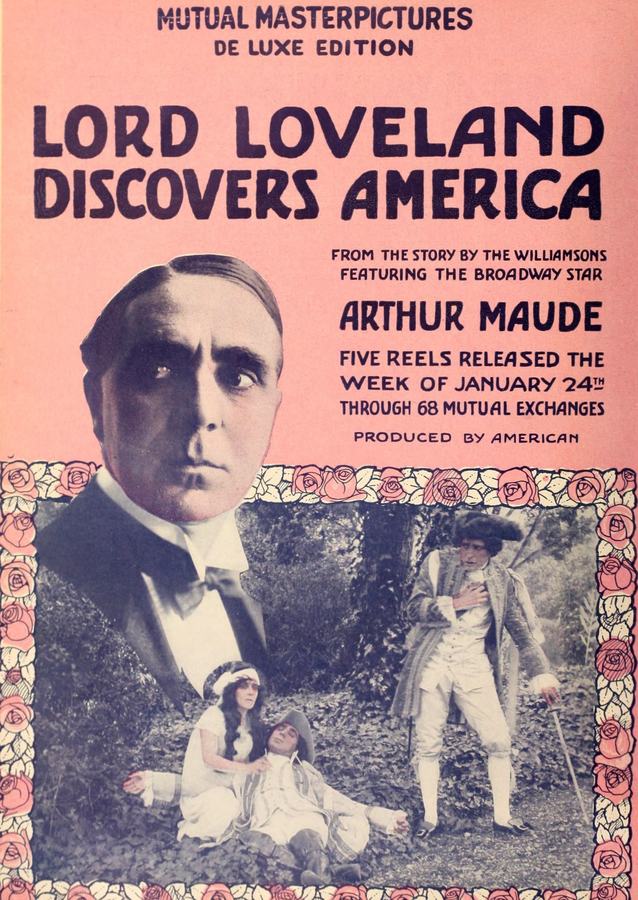
In the annals of early cinema, few narratives capture the delightful absurdity and poignant humanity of a man utterly displaced as vividly as "Lord Loveland Discovers America." This cinematic journey, a charming relic from a bygone era, invites us to ponder the mutable nature of identity when stripped bare of its societal accoutrements. Our protagonist, the titular Lord Loveland, is introduced not in a moment of aristocratic triumph, but rather amidst the ignominy of financial ruin. His ancestral estate, a bastion of British gentility, is teetering on the precipice of collapse, besieged by a relentless tide of creditors. It’s a familiar dramatic setup, yet the film imbues it with a distinctive early 20th-century charm, hinting at the crumbling facades of old-world privilege in the face of burgeoning modern realities.
Faced with this existential threat to his lineage, Loveland consults his mother, whose pragmatic counsel swiftly points him across the Atlantic. America, the land of burgeoning fortunes and unattached heiresses, becomes his desperate beacon. His mission is clear, if somewhat mercenary: marry into wealth, thereby salvaging his family's name from the abyss of insolvency. This initial premise, while rooted in societal expectations of the time, immediately establishes a tension between the pursuit of material gain and the potential for genuine human connection. The film playfully, yet effectively, sets the stage for a grand, if unwitting, social experiment.
The narrative's central conceit truly ignites with Loveland's impulsive decision to switch ships at the eleventh hour. A minor detail, one might think, yet it proves to be the catalyst for a grand cascade of comedic and dramatic misunderstandings. Unbeknownst to his family or, crucially, his disgruntled valet, Loveland departs on an unannounced vessel. This seemingly innocuous act of discretion, intended perhaps to escape the clamor of his creditors, inadvertently creates a void, an opportunity for audacious deception. His valet, a man clearly nursing a year's worth of unpaid wages and a simmering resentment, seizes this vacuum of information with remarkable alacrity, embarking on a bold impersonation of the noble Lord back in England. This dual narrative of mistaken identity, one accidental and one deliberate, forms the foundational scaffolding of the film's comedic engine, echoing the farcical elements often found in contemporary stage productions.
Upon his arrival in the bustling, unforgiving metropolis of New York, the authentic Lord Loveland is confronted with a stark and utterly disorienting reality. The grand dreams of an heiress-fueled salvation evaporate instantly, replaced by the grim statistics of his pockets: a paltry forty cents. The ensuing sequence, where he attempts to present his letter of credit at a bank, is a masterclass in situational irony. The very institution designed to facilitate his financial recovery instead brands him a charlatan, a "bogus Lord," thanks to the enterprising machinations of his former valet across the ocean. It's a moment that powerfully underscores the fragility of reputation and the ease with which identity can be usurped or misconstrued in an age less reliant on immediate verification.
Disgusted and utterly bewildered, Loveland retreats to his opulent hotel, only to find that credit, like his funds, has vanished. He is unceremoniously ejected, his baggage held hostage against accumulated bills. The image of a British nobleman, still perhaps clinging to the vestiges of his evening attire and monocle, cast out onto the tumultuous streets of New York with scarcely a penny to his name, is both a poignant and darkly humorous spectacle. It's a dramatic fall from grace that resonates with the struggles of characters in other films of the era exploring social stratification, though often from a working-class perspective. One might draw a thematic parallel to the sudden reversals of fortune seen in films like The Yellow Passport, where societal circumstances drastically alter a character's standing and perception, albeit through different mechanisms.
His subsequent attempt to solicit aid from a supposed friend further compounds his isolation. The friend, too, falls victim to the widespread misinformation, refusing even to grant an audience to the man he believes to be an impostor. This repeated rejection, born of a misunderstanding that Loveland is powerless to correct, effectively severs his last remaining ties to his former life and status. He is, for all intents and purposes, a man without a country, a title, or a coin, adrift in a strange new world. This period of intense vulnerability is crucial for his character development, forcing him to confront a reality far removed from his pampered upbringing.
Despair threatening to consume him, the nobleman seeks refuge in the verdant expanse of Central Park. It is here, amidst the relative anonymity of nature, that the narrative pivots from bleak isolation to unexpected human connection. A thrilling, almost instinctual act of heroism—the rescue of a small, beleaguered mongrel puppy—serves as the unlikely catalyst for a profound friendship. This spontaneous display of compassion not only reveals a deeper, more admirable facet of Loveland's character but also introduces him to Bill Willing, a likable, albeit down-on-his-luck, old man. Willing, a character who embodies the resilience and inherent kindness of the working class, becomes Loveland’s unexpected guide and mentor in this unfamiliar urban wilderness. Their immediate camaraderie, forged in a moment of shared humanity, stands in stark contrast to the cold rejections Loveland has hitherto faced.
Willing, demonstrating a resourcefulness born of necessity, escorts Loveland to a cheap hotel, where his meager forty cents miraculously suffices to procure two beds. This small act of generosity, a stark departure from the grandeur Loveland is accustomed to, initiates his immersion into a world where value is measured not by ancestral wealth but by practical utility and human decency. The next morning, Willing's ingenuity shines again at Alex's restaurant, where he barters for meals by drawing artistic signs advertising the day's tempting viands. This charming vignette not only provides sustenance but also showcases the dignity of honest labor and creative problem-solving, a stark lesson for the aristocratic Loveland. The film, in these moments, subtly champions the spirit of self-reliance and community, values often associated with the burgeoning American ethos.
Remarkably, Loveland, still incongruously attired in his evening clothes and monocle, finds employment as a waiter at Alex's. This visual juxtaposition—the epitome of British aristocracy serving tables in a humble American eatery—is a central comedic and thematic stroke. His initial motivation is purely pragmatic: earn enough to secure passage back to the "dear old British Isles." However, this stint in service is more than a temporary inconvenience; it is a crucible for his transformation. He learns humility, the value of hard work, and gains an unprecedented insight into the lives of ordinary people. This narrative arc, of a privileged individual forced into manual labor and finding unexpected growth, can be seen as a precursor to countless "fish out of water" stories, a testament to its enduring appeal.
The peculiar spectacle of a monocled aristocrat serving tables proves irresistible fodder for the burgeoning yellow journalism of the era. Tony Kidd, an enterprising New York reporter, seizes upon Loveland's unique situation, crafting a sensational story for his paper. Overnight, Alex's restaurant transforms into a daily spectacle, drawing crowds eager to be waited on by this "unique garcon." This sequence cleverly satirizes the public's fascination with novelty and the media's power to create instant celebrities, a phenomenon as relevant then as it is today. Among the curious throngs is Leslie Dearmer, a discerning woman playwright with whom Lord Loveland had shared a fleeting acquaintance during their transatlantic crossing. Her reappearance adds a layer of romantic intrigue, suggesting that fate, despite its initial cruelty, has a more benevolent plan in store.
A sudden, calamitous explosion in the kitchen provides the next dramatic turning point. Panic erupts, and guests flee in disarray from Alex's restaurant. In a moment of genuine heroism, Lord Loveland, demonstrating a courage born not of his title but of innate character, extinguishes the blaze. This act of bravery not only averts disaster but also restores order and instills confidence, causing the guests to return to their tables. He emerges a true hero, his actions speaking louder than any inherited title ever could. This scene is pivotal, solidifying his transformation from a passive recipient of misfortune to an active agent of good. It's a powerful statement about intrinsic worth over external status, a theme that resonates with many early American films, emphasizing deeds over lineage.
However, the capricious tides of fortune are not yet done with Loveland. His newfound heroism is short-lived as he loses his job, ironically, through the apparent affection he has for Izzy, Alex's daughter. This minor romantic misunderstanding, though brief, serves as another hurdle, reminding him of his precarious position and the constant need to navigate social complexities without the shield of his former status. From the relative stability of a waiter, he descends further into the theatrical demimonde, joining a "10-20-30-cent troupe" of theatrical players, relegated to minor, often humiliating, parts. This period of artistic struggle and low-brow entertainment further strips away any lingering aristocratic pretensions, forcing him to adapt to the raw, unfiltered realities of making a living. The contrast between his initial pursuit of an heiress and his current theatrical endeavors highlights the vast chasm he has traversed.
Just when his fortunes seem to have reached their nadir, fate intervenes once more, this time through the reappearance of Leslie Dearmer. Miss Dearmer, intending to sue the manager of Lord Loveland's troupe for the unauthorized use of one of her copyrighted plays, arrives at the theater. Her surprise at encountering the British nobleman working in such humble circumstances is palpable. This serendipitous reunion allows Loveland to finally relate his harrowing plight, a candid confession that elicits not scorn but empathy from the discerning playwright. Leslie, recognizing the genuine article beneath the veneer of destitution, offers him a position as her chauffeur. This act of kindness not only provides him with employment but also brings him into her orbit, setting the stage for the romantic climax.
As chauffeur and employer, their daily interactions foster a deep, unspoken affection. The class barrier, once insurmountable, begins to dissolve under the weight of shared experiences and mutual respect. The film beautifully portrays the subtle development of their romance, culminating in a pivotal scene during one of their drives. Summoning immense courage, the Englishman declares his love for Miss Dearmer. His ardor, however, proves to be a momentary distraction; so consumed is he by his heartfelt proposal that he fails to heed the path his automobile is taking. The machine veers violently off the road, crashing into a tree, and both occupants are thrown from their seats. This dramatic turn, typical of the heightened melodrama often found in early cinema, provides a powerful physical manifestation of the emotional intensity of the moment.
When consciousness returns, Miss Dearmer finds herself cradled in Lord Loveland's arms. In this moment of vulnerability, shared peril, and profound emotional intensity, the two plight their troth. It is a powerful affirmation of love triumphing over adversity, a connection forged not by societal expectations or financial gain, but by genuine affection and shared experience. This romantic resolution feels earned, a culmination of Loveland's journey of self-discovery and resilience. The narrative arc here echoes the romantic escapism and moral lessons often found in films like The Gates of Eden, where characters find redemption and happiness through love and new beginnings, often away from the strictures of their past.
With this emotional climax, the tide of Lord Loveland's fortunes definitively turns. A serendipitous combination of circumstances, often a hallmark of such romantic comedies, leads to his recognition as the true Lord Loveland. The identity imbroglio, which has plagued him since his arrival, is finally unraveled, and he is restored to his rightful position. This resolution is not merely a return to his former status but a profound affirmation of his journey. He has not just regained his title; he has earned a deeper understanding of himself and the world. Henceforth, the film concludes with a flourish of love and happiness. The nobleman, having discovered true love, true friendship, and true purpose in America, has no desire to again see the shores of dear old Britain. His "discovery of America" is thus not just geographic, but deeply personal and transformative.
"Lord Loveland Discovers America" is more than a simple romantic comedy; it is a fascinating document of its time, exploring themes that remain resonant. The film masterfully critiques the superficiality of inherited wealth and status, demonstrating how easily they can be stripped away, leaving an individual exposed. Loveland's journey forces him to confront his own prejudices and assumptions, learning that true worth lies not in a title but in character, resilience, and the capacity for empathy. The recurring motif of the monocle, an outdated symbol of his former status, serves as a visual shorthand for his anachronistic position in the vibrant, democratic chaos of New York.
The film also offers a compelling, if idealized, vision of the American Dream. Loveland comes seeking wealth, but finds something far more valuable: self-reliance, genuine love, and a community of supportive individuals like Bill Willing. Willing, in particular, represents the quintessential American spirit of ingenuity and kindness, a stark contrast to the rigid class structures Loveland left behind. The irony is palpable: he comes to America to marry money, but instead finds himself working for it, earning it, and ultimately finding love with a woman of intellect and independent spirit, Leslie Dearmer, who embodies a more modern, progressive ideal than the nameless heiress he initially sought.
Performances, particularly from the lead, William A. Carroll as Lord Loveland, anchor the film with a blend of aristocratic hauteur and genuine vulnerability. His transformation from a bewildered, entitled nobleman to a resilient, compassionate man is subtly portrayed, allowing the audience to root for his eventual triumph. Constance Crawley as Leslie Dearmer provides a strong, intelligent counterpoint, embodying the spirit of the modern American woman—independent, professional, and discerning. The chemistry between them, though constrained by the acting conventions of the era, is palpable and contributes significantly to the film's emotional resonance. The supporting cast, especially William Frawley as Bill Willing, provides vital comedic relief and heartfelt warmth, demonstrating the essential role of supporting characters in elevating the protagonist's journey.
In comparing it to other works of the period, "Lord Loveland Discovers America" stands out for its blend of social satire, romantic comedy, and an underlying message of personal growth. Unlike the more dramatic and often tragic identity crises seen in films like Called Back, Loveland's journey, while fraught with peril, consistently leans towards optimism and eventual triumph. It shares a certain thematic lightness and a focus on unexpected friendships with films like The Fairy and the Waif, where innocence and kindness pave the way through difficult circumstances. The film's emphasis on honor and the restoration of one's good name, albeit through a circuitous route, also aligns with the moral frameworks of films like John Glayde's Honor, though with a distinct comedic lens.
Ultimately, "Lord Loveland Discovers America" is a delightful and insightful piece of early cinema. It chronicles not just a man's journey across an ocean, but his profound internal voyage from aristocratic entitlement to genuine self-worth. It is a testament to the idea that true wealth lies not in one's bank account or inherited title, but in character, resilience, and the capacity for love and friendship. The film’s enduring appeal lies in its optimistic portrayal of human nature, its charming humor, and its timeless message that sometimes, losing everything is the only way to truly find oneself. It offers a captivating glimpse into the cultural anxieties and aspirations of its period, wrapped in an entertaining package that continues to resonate with audiences seeking tales of transformation and redemption.
IMDb 6.5
1928
Community
Log in to comment.