DbcultAccessing Vault...
Cult Review
Senior Film Conservator
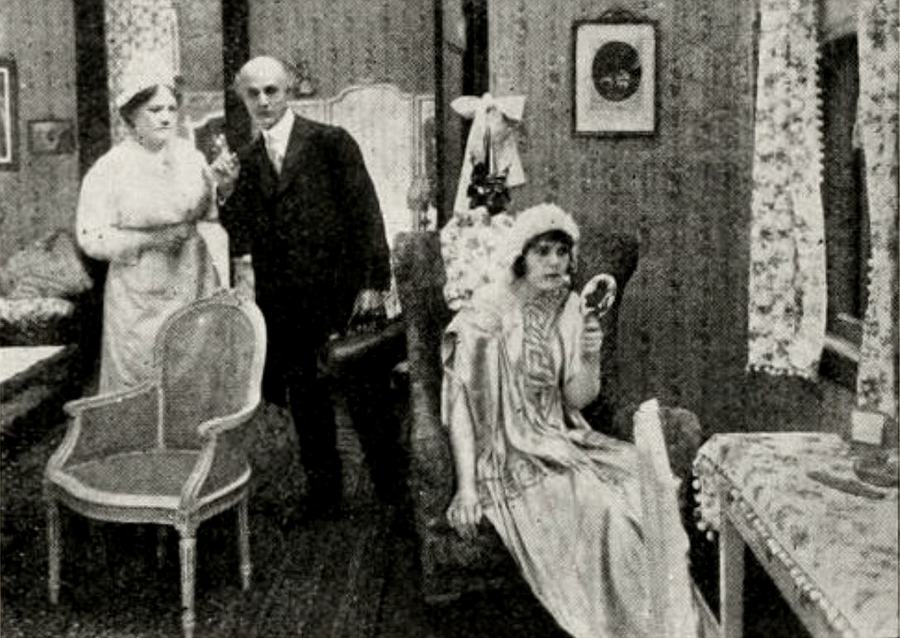
Step into the sweeping, multi-generational saga that is Milestones of Life (slug: milestones-of-life), a cinematic endeavor that transcends mere storytelling to become a profound meditation on the human condition itself. This isn't just a film; it's a meticulously crafted chronicle of love's intricate dance with fate, pride, and the inexorable march of time. From the innocent pledges of childhood to the hard-won wisdom of old age, the narrative unfolds with an almost epic scope, inviting us to witness the often-painful, yet ultimately redemptive, journey of two souls bound by an unseen thread.
The film opens in a pastoral idyll, a verdant 'miniature garden of Eden' where two children, a boy and a slightly older girl, forge an unbreakable bond. These 'mud-pie days' are painted with a nostalgic brush, evoking a sense of pure, unadulterated affection. Their innocent role-playing—he, the valiant knight, she, the lady fair awaiting her glove-token—establishes a foundational romantic archetype that will echo throughout their lives. The casting of young actors for these pivotal opening scenes is crucial, and the film reportedly captures this early charm with exquisite tenderness. However, even in this Eden, the 'serpent' of reality soon intrudes. The boy, still a mere child, formalizes his affection with a grimy note, scrawled with a blunt lead pencil on a torn scrap of paper—a moment of earnest, childish devotion that the girl, already on the cusp of womanhood, finds utterly hilarious. She keeps the note, a testament to its absurdity, providing her with many a good laugh. This early rejection, though innocent, sets a subtle precedent for future misunderstandings rooted in differing perceptions and expectations. Soon after, she marries a man considerably older than herself, vanishing from the boy's world with the abruptness of a dream. His youthful heart, though momentarily somber, resiliently drifts back to other youthful sweethearts, encapsulating the transient nature of early affections. This 'Springtime of life' sequence, while brief, is vital, establishing the characters' initial emotional landscapes and the first, gentle stirrings of destiny. The performances, even from the youngest cast members, under the guidance of the director, must convey both the whimsy and the underlying emotional truth of these formative years.
Fast forward to 'the summertime,' a period of vibrant growth and burgeoning romance. The girl has blossomed into a magnificent young woman, her beauty radiating across the screen, a transformation that one can imagine Mignon Anderson or Helen Badgley embodying with grace and conviction. The boy, too, has undergone his own metamorphosis, emerging as a manly, self-confident individual, a role perfectly suited for Leland Benham. Their reunion feels less like a chance encounter and more like an inevitable convergence, a cosmic alignment. It is here that their troth is plighted, a moment of profound commitment and joyous anticipation. Yet, even in this celebratory atmosphere, a shadow flickers. 'The other woman'—the very same girl from his childhood, now a married lady—attends the wedding. Her presence, and the particular attention she pays to the bridegroom, stirs a nascent, if unarticulated, resentment in the young bride. It's a subtle but potent moment, highlighting the fragile nature of new unions and the lingering echoes of the past. The adage that 'a woman never forgets the men who propose to her, and that the first proposal is remembered longest' is given a poignant, if ironic, twist here. While 'the other woman' harbors a kindly, almost nostalgic, place for the 'man' in her heart, she is not romantically inclined towards him, merely cherishing the memory of his childhood devotion. He, on the other hand, has entirely forgotten those early experiences, demonstrating the divergent ways memory shapes individual narratives. This section of the film, likely directed with a keen eye for subtle emotional nuance, serves to underscore how past connections, however innocent, can cast long, often misunderstood, shadows over present happiness. The interplay between the characters, particularly the unspoken tensions, would be a masterclass in subtle performance.
The narrative then plunges into the 'Autumn of life,' a period marked by profound sorrow and marital estrangement. Years have passed since the wedding, and 'the other woman' has faded from their immediate lives. However, fate, ever the orchestrator of human drama, brings them to the same city. The wife, once radiant, has aged, her spirit dimmed by an almost unbearable gloom. She is consumed by the memory of their son, lost in infancy, a grief so profound it eclipses the living, rendering her emotionally distant from her husband. Her fixation on the dead, to the detriment of the present, slowly erodes the foundations of their love, replacing affection with a chilling indifference. This portrayal of debilitating grief, perhaps brought to life by Louise Rutter with heart-wrenching authenticity, is a stark reminder of how tragedy can warp human connections. Her resentment towards 'the other woman' resurfaces, fueled by an ill-concealed dislike and an unfounded jealousy, a bitter irony given the husband's complete oblivion to his childhood 'proposal.' The film masterfully depicts the slow, agonizing death of a marriage, not through dramatic explosions, but through the quiet erosion of neglect and miscommunication. The husband, perhaps portrayed by Arthur Bauer with a nuanced sense of quiet despair, finds his love for his wife slowly slipping away, replaced by a growing sense of helplessness and resignation. This segment of the film resonates with the thematic depth of works like Der letzte Tag, exploring the final, desperate moments of a relationship under duress, or even the quiet desperation found in Greater Love Hath No Man, where unspoken burdens lead to profound sacrifices.
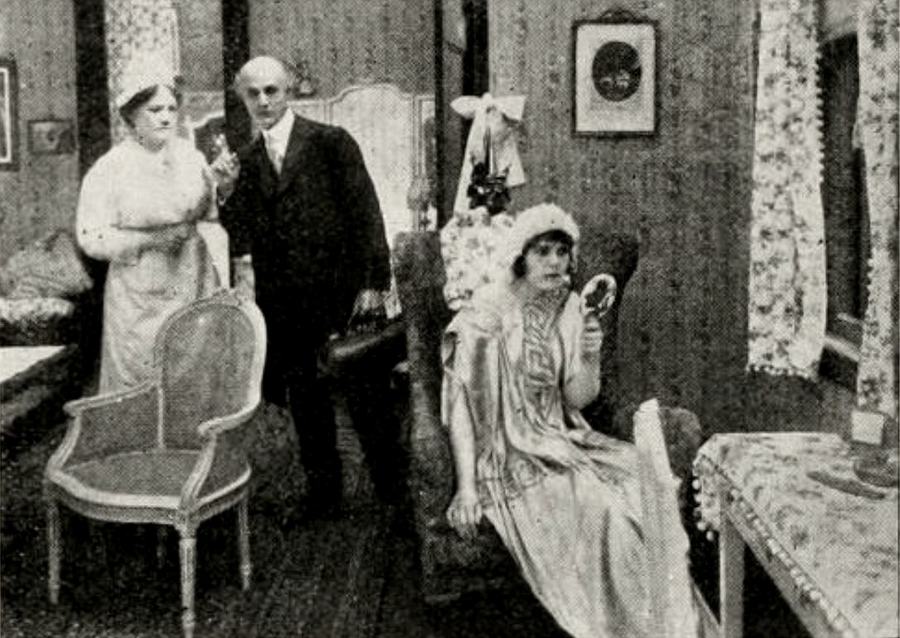
It is 'the other woman' who inadvertently precipitates the next major crisis. Struck by illness, she receives a grim prognosis: a year left to live. This brutal confrontation with mortality ignites a desperate craving for happiness, a temptation to seize fleeting joy before the final curtain. Her husband, perhaps too preoccupied or simply unable to provide the emotional attentiveness she craves, exacerbates her morbid frame of mind. Debating her options—to continue her joyless existence or to seek solace—she encounters 'the man' (her childhood knight, now the husband of the grieving wife). He calmly informs her of his impending business trip out west. Misinterpreting his past kindness, believing he still harbors affection for the 'beautiful princess of his dreams,' she makes a rash, tragic decision. She follows him, boarding the train, and astonishes him with a heartfelt confession of love. This scene, a crucible of raw emotion and misplaced hope, must be incredibly powerful, demanding a performance of profound vulnerability from Louise Rutter or whoever takes on this complex role.
The man, likely Leland Benham, is forced into an agonizing position. It takes him mere minutes to gently, but unequivocally, disillusion her, shattering her desperate fantasy. But a new, immediate crisis emerges: she has left a letter for her husband, one that would irrevocably 'blast her name' and destroy his peace. This ethical dilemma, reminiscent of the moral quandaries explored in The Conspiracy, forces the man into a desperate act of compassion. He takes extraordinary chances, leaping from the flying train, and through a remarkably clever ruse, manages to intercept the incriminating note from her unsuspecting husband. The tension in this sequence would be palpable, a testament to the director's skill in suspense and Leland Benham's portrayal of a man driven by a desperate need to protect an innocent's reputation, even at great personal risk. He 'fairly plucked it out of his hands,' yet somehow never let him suspect the true nature of the letter or the woman's intentions. This act of quiet heroism, born of circumstance, is a pivotal moment for his character, revealing a depth of integrity hitherto unseen.
Left alone on the train, 'the other woman' experiences a slight accident. While minor in itself, the shock proves fatal in her enfeebled state, a cruel twist of fate that underscores the fragility of life. Her passing is a somber note, a tragic consequence of desperation and misunderstanding. The man, ever the protector of reputations, skillfully weaves a narrative for her husband, convincing him that she was merely en route to see her old nurse when she was stricken. This compassionate deception, while morally ambiguous, saves the husband from an unbearable truth, allowing him to mourn with dignity rather than shame. However, the truth, as it often does, finds its way out. The wife, through an accidental discovery, learns of the railroad trip. This revelation, coupled with the simmering resentments and unaddressed grief, leads to a heated exchange of 'hasty words.' The man and the wife separate, believing their union irrevocably broken, entering what they perceive as the 'winter of life' forever apart. This period of intense emotional turmoil, marked by separation and profound loneliness, would undoubtedly be conveyed with raw power by the ensemble cast, particularly Leland Benham and Louise Rutter, as they navigate the desolate landscape of their fractured marriage.
The 'winter of life' indeed opens sadly and drearily for the estranged couple. Each, consumed by pride and a profound sense of injury, finds themselves unable to bridge the chasm that has opened between them. He remains in the bustling city, while she retreats to the tranquil, yet equally isolating, rural community of their childhood. Neither can forget the other, their hearts still tethered by years of shared history, yet their wills are too stubborn to initiate reconciliation. This period of quiet suffering, a poignant portrayal of human stubbornness and the corrosive nature of unaddressed grievances, would be masterfully depicted through subtle acting and evocative cinematography, highlighting the vast emotional distance between them. The film, in this phase, echoes the themes of arduous journeys and existential reflection found in Pilgrim's Progress, albeit on a deeply personal, emotional scale.
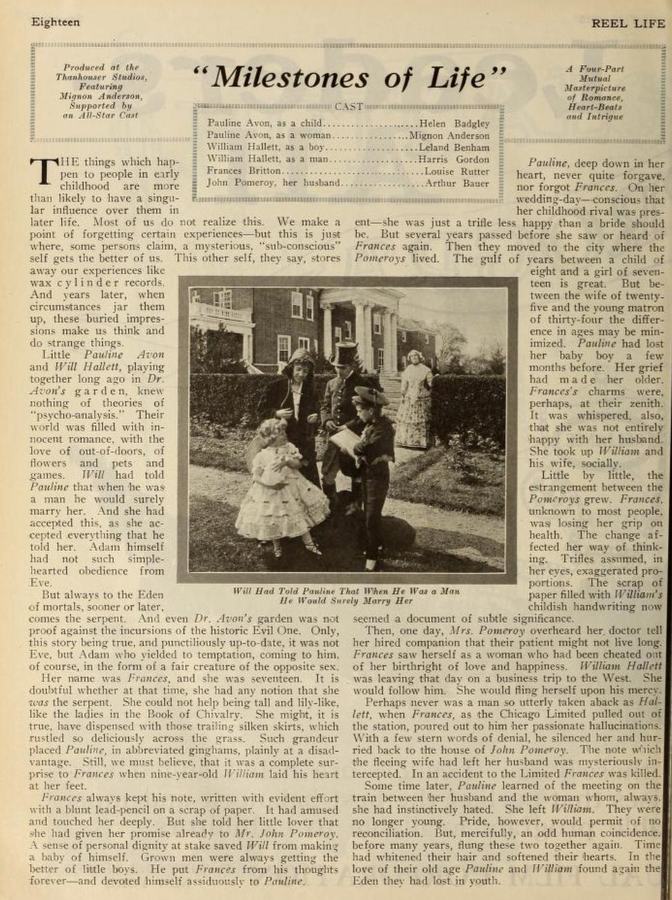
Then, a moment of profound crisis, a literal trial by fire, serves as the catalyst for their ultimate reunion. The wife, engaged in an errand of mercy, passes a tiny house engulfed in flames. Without hesitation, she bursts through the door, discovering a helpless baby amidst the inferno. Her brave attempt to rescue the infant is thwarted by the overwhelming smoke, and she succumbs, on the brink of perishing. In a stroke of dramatic serendipity, her estranged husband happens to be passing by. Hearing cries of distress and learning of a woman and baby in peril, he rushes into the conflagration. Risking his own life, he heroically saves both the wife and the child. This sequence, a thrilling and emotionally charged climax, would be a tour de force of visual storytelling and raw human courage. Leland Benham's performance here, embodying selfless heroism, would be particularly impactful, demonstrating a willingness to sacrifice everything for the woman he still, despite their estrangement, deeply loves.
In the aftermath of this harrowing event, with lives saved and fears assuaged, mutual explanations finally unfold. The wife, confronted with the reality of her husband's selfless act and perhaps softened by her near-death experience, realizes the unfounded nature of her suspicions regarding 'the other woman's' trip. The man, in turn, acknowledges his own pride and stubbornness, admitting that a few kind words, offered at the right moment, could have averted their painful separation. This scene of honest confession and vulnerable admission, a long-overdue catharsis, is the heart of the film's redemptive message. They mutually forgive, letting go of the past hurts, the unspoken resentments, and the corrosive pride that had kept them apart. The film beautifully illustrates that true love, though tested by life's cruelties, can ultimately triumph through humility and understanding, much like the themes of returning home and reconciliation found in Heimgekehrt.
Their final years are depicted as a period of profound peace and renewed harmony. They pass through the 'shadows into the beyond' some years later, a quiet, dignified exit that underscores the enduring nature of their bond. The film closes with the poignant realization that reconciliation had come before it was too late, a powerful testament to the resilience of the human spirit and the transformative power of forgiveness. The performances of Leland Benham, Arthur Bauer, Mignon Anderson, Helen Badgley, Louise Rutter, and Harris Gordon collectively paint a rich, variegated portrait of human experience, making Milestones of Life a timeless work that resonates deeply with anyone who has navigated the complexities of love, loss, and the enduring hope for redemption.
Milestones of Life is more than just a chronological recounting; it's a deeply felt exploration of how our earliest experiences shape us, how grief can isolate, how pride can destroy, and how, ultimately, selfless love can heal and unite. The film's narrative structure, mirroring the seasons, is a clever device that allows for both grand sweeps of time and intimate, emotionally charged moments. The screenplay, rich in human observation, avoids simplistic villains or heroes, instead presenting characters who are flawed, vulnerable, and profoundly human. It reminds us that life is a series of trials and triumphs, and that the greatest victories are often those won not against external foes, but against the demons within ourselves. The movie stands as a powerful testament to the enduring human capacity for love, forgiveness, and the quiet, profound strength found in shared understanding. It's a film that stays with you, long after the credits roll, urging reflection on your own milestones and the intricate tapestry of your own life.
IMDb 5.9
1922
Community
Log in to comment.