Summary
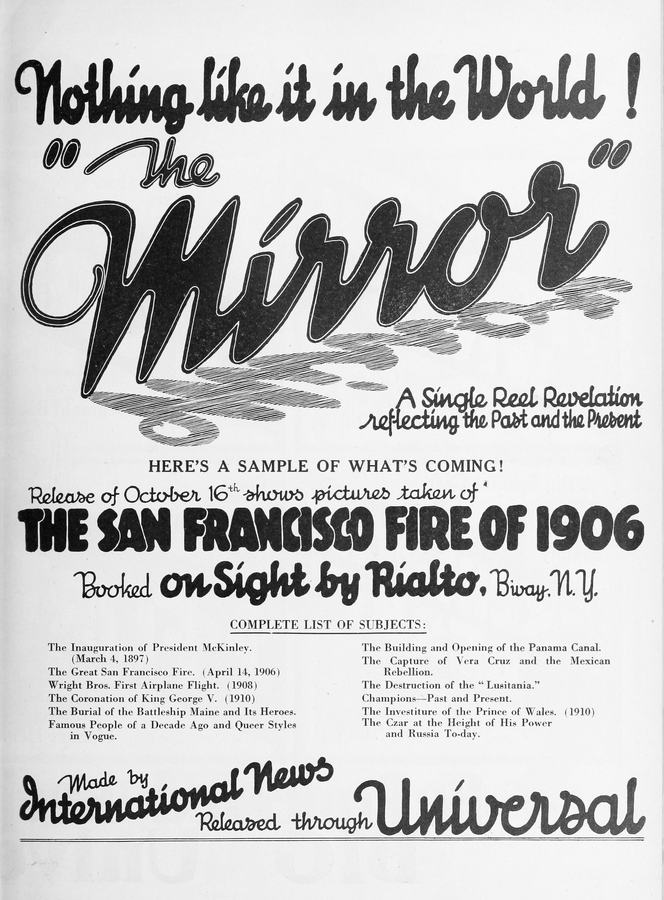
A profound temporal diptych, "Mirror No. 2. San Francisco Fire" transcends mere archival footage, offering an immersive, almost tactile journey through the cataclysmic aftermath of the April 1906 earthquake and subsequent conflagration. The narrative unfurls not through dialogue, but via stark, impactful newspaper headlines from the era, immediately plunging the viewer into the raw, unvarnished reality of a city in extremis. What follows is an unprecedented cinematic testament to devastation: vast swathes of pulverized urban landscape, the desperate, methodical work of dynamiting squads battling an inferno that defied containment, and the poignant, almost alien sight of streets devoid of modern automotive traffic, punctuated by a solitary, anachronistic vehicle. This visceral documentation of immediate crisis segues into the human cost, portraying displaced citizens seeking refuge in public parks, their lives uprooted. Crucially, the film then pivots, capturing the nascent stirrings of recovery—the symbolic chug of the first operational streetcar, a fragile harbinger of restored order. Woven throughout this harrowing historical document are contemporary vignettes of San Francisco, juxtaposing the scarred urban tableau of 1906 with the vibrant, meticulously rebuilt metropolis of the present. Aerial perspectives glide over the modern city, contrasting sharply with the ground-level ruins. The skeletal remains of the old City Hall on Nob Hill dissolve into the majestic edifice that stands today, while Market Street's desolate past gives way to its bustling contemporary incarnation. This masterful exercise in comparative visual storytelling transforms a historical record into a poignant meditation on destruction, resilience, and the relentless march of time, solidifying its place as a seminal work in early documentary filmmaking.
Synopsis
Newspaper headlines taken from issues of April, 1906, form the first titles of the film, followed by scenes of the "first great disaster to be recorded in motion pictures." Ruins are on every side, and dynamiting squads are at work in an effort to check the spread of the flames. Attention is called to the absence of motor cars in the streets, and a lone machine serves as a contrast with our present-day automobiles. Refugees are seen quartered in the public parks, and some few days later, the first street car to be operated (a good scene, and particularly true to life) gives promise of the restoration of order in the stricken city. Throughout the entire reel are scattered scenes of present-day San Francisco, to show the contrast between the city then and now. The San Francisco of today, as seen from an airplane, follows the scenes of the ruins, and the shopping district then is contrasted with the street as it appears today. The ruins of the City Hall on Nob Hill precede some fine views of the beautiful structure of today, built upon the same site. Market Street then and now is shown, and a general panoramic view of the city of 1906 is followed by air views of the city today.
Review Excerpt
"
Mirror No. 2: San Francisco Fire – A Cinematic Chronicle of Cataclysm and Rebirth
In the annals of early cinema, few works resonate with the raw, unvarnished power of historical documentation quite like "Mirror No. 2. San Francisco Fire." This isn't merely a film; it's a profound temporal artifact, a visual echo chamber that allows us to peer directly into the heart of one of America's most devastating urban catastrophes. It bypasses the theatrical pretense common to many of i..."