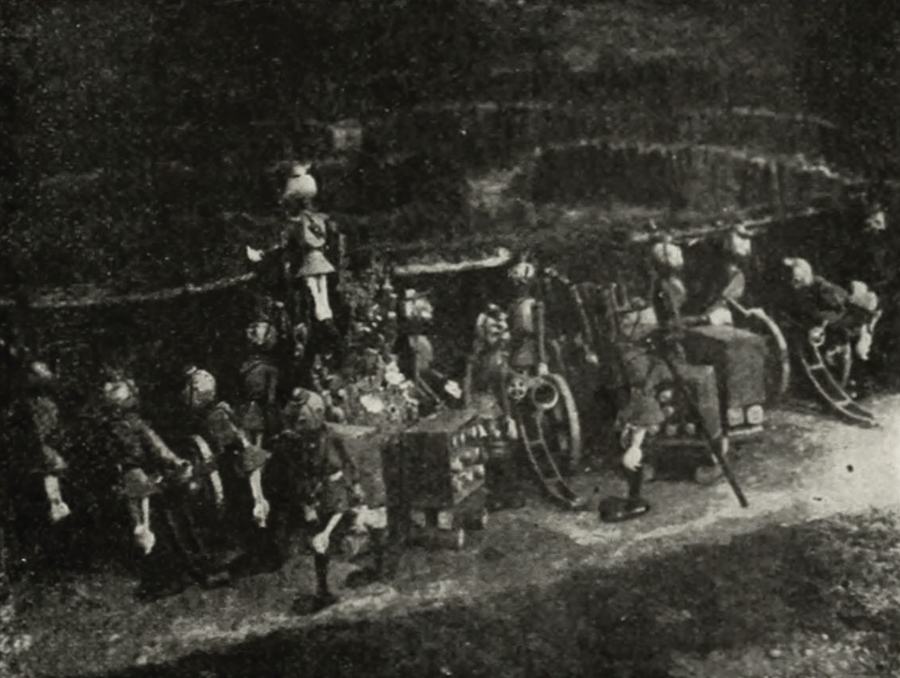
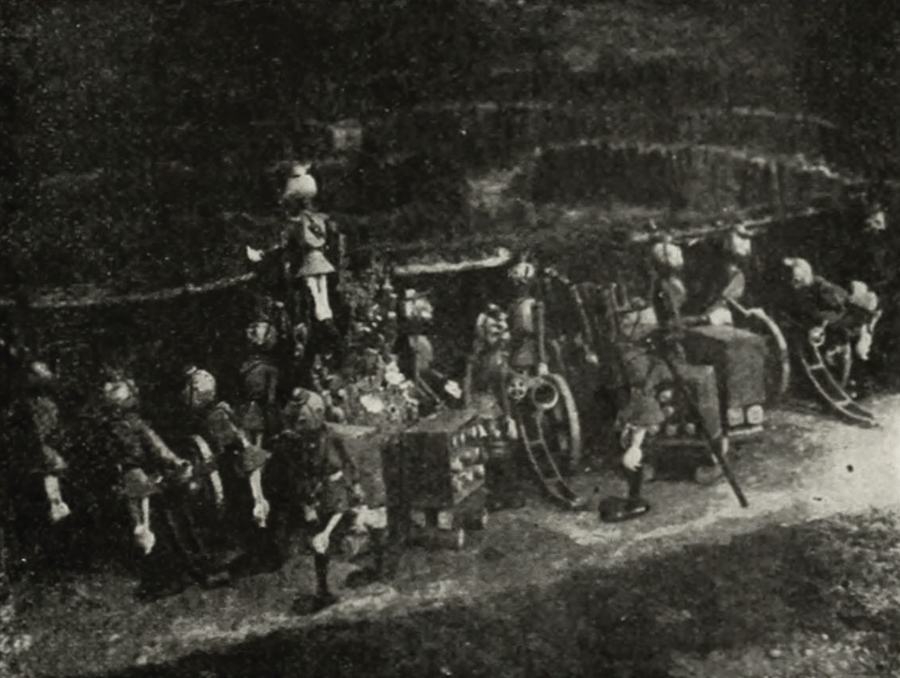
A little boy listens to his father tell him tales of warfare and the clash of arms. When the boy falls asleep, he dreams that his toy soldiers have come to life.
Italy
The Ontological Synthesis of Childhood and Conflict Cinema in 1918 was not merely an entertainment medium; it was a psychological crucible where the anxieties of a world at war were melted and recast into narrative forms. Outwitting the Hun stands as a peculiar artifact of this era, a film that navigates th...
still_frame
Comparing the cinematic DNA and archive impact of two defining moments in cult history.
Giovanni Pastrone
Giovanni Pastrone
Community
Log in to comment.
" The Ontological Synthesis of Childhood and Conflict Cinema in 1918 was not merely an entertainment medium; it was a psychological crucible where the anxieties of a world at war were melted and recast into narrative forms. Outwitting the Hun stands as a peculiar artifact of this era, a film that navigates the liminal space between domestic tranquility and the visceral horrors of the front line. By utilizing the framework of a child’s dream, the production bypasses the logistical const..."
Deep dive into the cult classic
Discover similar cinematic experiences
A Directorial Spotlight on Giovanni Pastrone