DbcultAccessing Vault...
Cult Review
Senior Film Conservator
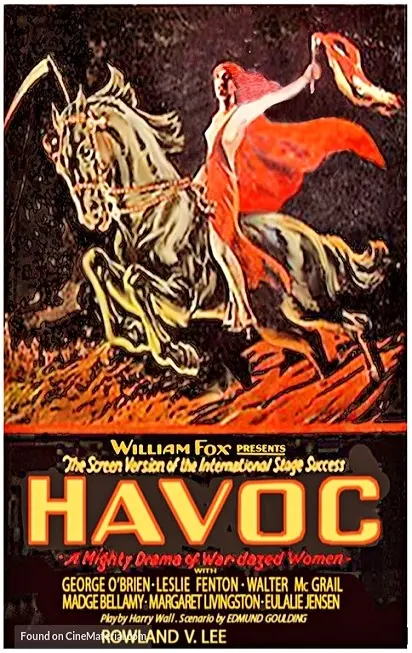
There is a specific, haunting quality to films produced in the immediate shadow of the Great War. Released a mere seven years after the Armistice, Havoc (1925) isn't just a piece of entertainment; it is a cinematic exhumation of a collective trauma. Directed by Rowland V. Lee and adapted from Harry Wall's play, this film bypasses the sanitized heroism often found in later war epics, opting instead for a claustrophobic study of how domestic infidelity and the horrors of the front lines can coalesce into a singular, devastating ruin.
At the heart of this tragedy lies a triangle of profound instability. We are introduced to Dick Chappell (George O'Brien) and Roddy Dunton (Walter McGrail), two men whose friendship is forged in the fires of English tradition but destined to be incinerated in the mud of France. George O'Brien, before he became the iconic face of Murnau's Sunrise, brings a startlingly raw physicality to Chappell. He is the archetype of the optimistic volunteer, a man who views the impending conflagration as a stage upon which to prove his worth to his fiancée, Violet Deering.
However, Margaret Livingston’s portrayal of Violet is where the film’s psychological teeth truly sink in. Much like the destructive allure found in Bella Donna (1923), Violet represents a chaotic element that thrives on the absence of her suitors. Her sudden shift in affection toward Dunton isn't framed as a simple romance, but as a predatory whim. When she convinces Dunton to break the news of her jilting to Chappell, she sets in motion a chain of cowardice that defines the film's moral core. Dunton’s failure to speak—his decision to let Chappell march into the jaws of death believing he is still loved—is a betrayal that feels more visceral than any bayonet charge.
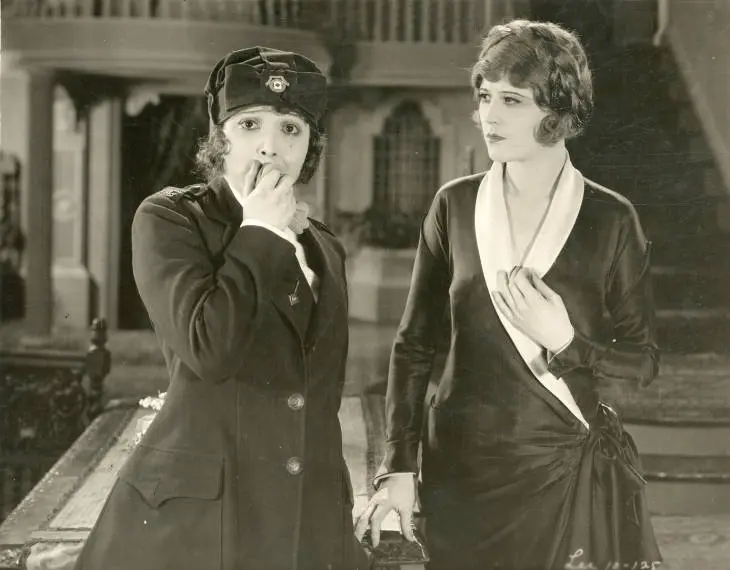
The cinematography in Havoc deserves a dissertation of its own. While other films of the era, such as Wild (1921), explored the primal nature of man in open spaces, Havoc excels in the restriction of space. The trench sequences are masterclasses in shadow and light. We don't just see the dirt; we feel the damp, the pervasive anxiety of the 'over the top' whistle, and the looming threat of the unseen German adversary.
When the attack finally comes, it is a sensory blitzkrieg. The explosion that blinds Chappell is handled with a jarring intensity that must have been revolutionary for 1925 audiences. The transition from the bright, chaotic flare of battle to the absolute darkness of Chappell's perspective is a narrative pivot point that transforms the film from a war drama into a gothic tragedy of the soul.
Walter McGrail’s Dunton is a fascinating study in moral disintegration. Unlike the straightforward villains of contemporary westerns like Singer Jim McKee, Dunton is a man hollowed out by his own silence. The guilt of seeing his friend broken and blinded because of a lie he sustained is too heavy a burden for the cinematic conventions of the 1920s to allow a happy ending. His eventual suicide is not just a plot point; it is a necessary ritual of cleansing for a narrative that has become too choked with deceit.
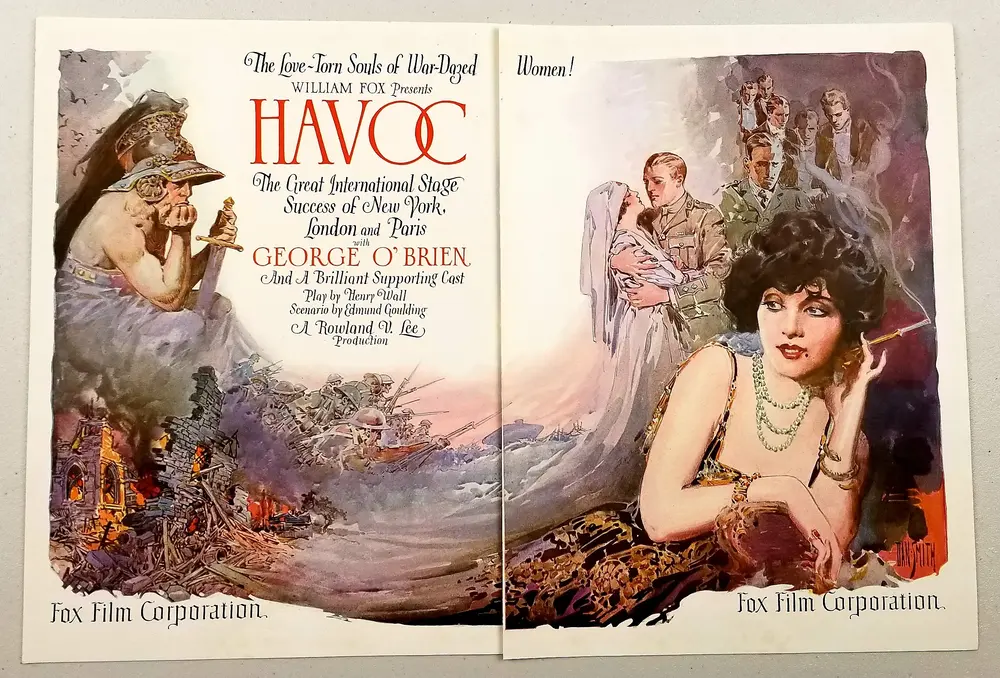
The film’s pacing during the London convalescence scenes is deliberately slower, mirroring the agonizingly long road to recovery for the blinded Chappell. Here, we see the introduction of Tessie, played by the luminous Madge Bellamy. Tessie serves as the antithesis to Violet’s artifice. If Violet is the storm, Tessie is the quiet morning after. Her devotion to Chappell, nursing him through the literal and metaphorical darkness, provides the film with its only source of genuine warmth.
When examining Havoc alongside its peers, one notices a distinct lack of the whimsical humor found in films like Kids and Kidlets or the lighthearted escapism of A kölcsönkért csecsemők. Instead, it shares a thematic DNA with more somber works like Everyman's Price, where the cost of one's integrity is the central question.
The film also stands in stark contrast to the exoticism of Eine weisse unter Kannibalen or the architectural romanticism of Builders of Castles. Havoc is grounded in a gritty, almost documentarian realism regarding the aftermath of war. It doesn't look for beauty in the rubble; it looks for the remains of the human spirit. The restoration of Chappell's sight is not merely a medical miracle in the context of the script, but a symbolic awakening—the moment he can finally see Violet for the manipulative specter she is and recognize the true value of Tessie's love.
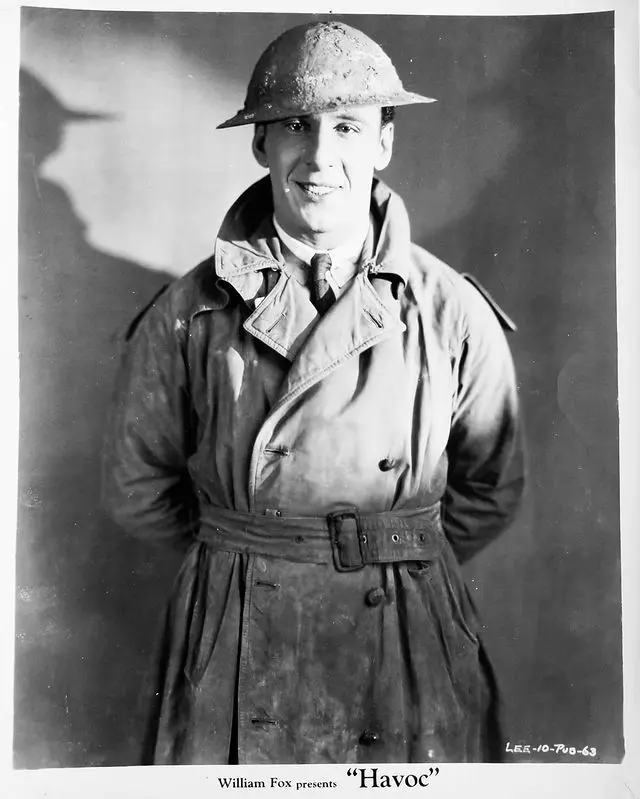
"The eyes are the windows to the soul, but in Havoc, the closing of those windows is what finally allows the protagonist to see the truth of his surroundings."
From a technical perspective, the collaboration between writers Harry Wall and Edmund Goulding (who would later direct Grand Hotel) ensures that the dialogue intertitles are sparse but impactful. They allow the actors' expressions—the frantic terror in McGrail’s eyes, the cold calculation in Livingston’s gaze—to carry the narrative weight. This is a film that understands the power of the close-up. It uses the human face as a landscape of war just as much as it uses the physical trenches.
In terms of visual storytelling, Havoc rivals the dramatic tension found in John Heriot's Wife or the period-accurate detail of Willy Reilly and His Colleen Bawn. However, it possesses a unique, biting cynicism that was quite rare for its time. It suggests that the 'Great War' did not just happen on the continent; it happened in the drawing rooms of London, in the letters sent across the channel, and in the silence between friends.
As we look back from a century's distance, Havoc remains an essential artifact. It lacks the polish of 1930s talkies, but it possesses a raw, unvarnished energy that sound often dilutes. It doesn't rely on the slapstick energy of Look Out Below! or the fairy-tale logic of Der verlorene Schuh. It is a work of heavy, meaningful drama.
Whether it’s the urban alienation seen in Hick Manhattan or the exotic peril of Minaret Smerti, few films of the mid-20s captured the specific flavor of post-war disillusionment as effectively as this. Even when compared to the rugged outdoor adventures like Up and Going, Havoc stands out for its internal, psychological stakes.
Verdict: A haunting, essential piece of silent cinema that proves the greatest battles are often fought within the confines of the human heart.
IMDb —
1924
Community
Log in to comment.