Summary
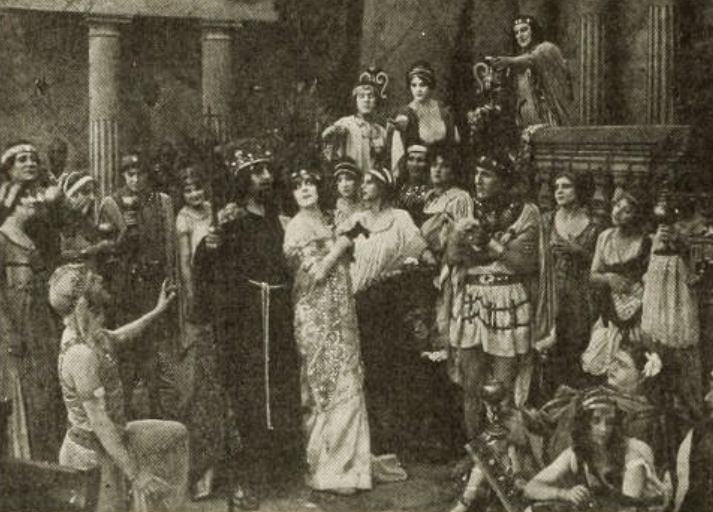
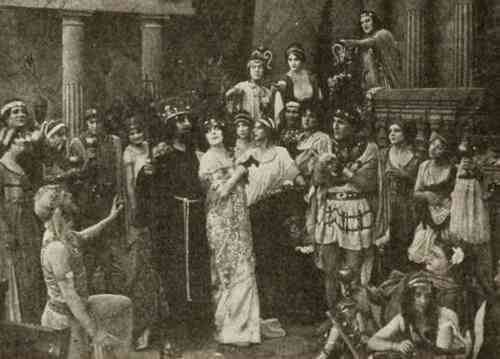
Alexandria, that gilded ulcer on the lip of the Nile, flickers like a rotting jewel under the moral twilight of late-antique decadence: incense and offal, psalms and orgies, marble colonnades echoing with the slap of sandals and the slap of flesh. Into this labyrinth of torch-lit excess drifts Thais, a courtesan whose laughter is a scalpel, carving desire into every youth who can pay the price of admission to her perfumed boudoir. Her kingdom is not of heaven but of silk, wine, and the trembling moment before a kiss; she rules by absence, by the threat that she might withdraw her radiance and leave her supplicants groping in darkness. Paphnuce, a Roman patrician lately dunked in the baptismal font, stumbles into her orbit like a comet grazing the sun—blazing, blinded, stripped of orbit. For one season he is her favorite, the jewel in her serpentine crown; then, discarded, he slinks into the desert where the sand scours memory from skin and the wind teaches the ribs to rattle like castanets of penance. Five years of salt and scripture calcify him into a stylite of his own making, a scarecrow of sanctity. Yet the mirage of Thais—golden, venal, unreachable—hovers still between his eyelids when he shuts them against the stars. Galvanized by a zeal that smells suspiciously of unfinished longing, he strides back into Alexandria’s stew of whispers, determined to wrench the siren from her throne of roses and dunk her into the chill bath of redemption. The irony is surgical: in saving her he unmakes himself, for the moment she kneels in white-cloaked contrition he feels the old hunger uncoil like smoke in his marrow. She enters the convent; he enters temptation. On her deathbed, walled in by candle and psalm, she expires just as his discipline finally fractures, her last exhalation a ghost of perfume that will haunt the hollows of his chest forever.
Synopsis
The story of "Thais" takes place in Alexandria during the early era of Christianity. Many of the scenes depicting the licentious life in Alexandria would be repellent in their realism, but for the care used by the cast in keeping all the sumptuousness possible in the picture, and eliminating everything that would be offensive. During the dominance of the fair courtesan Thais, the city was at the height of its glory. Paphnuce, a young Roman but recently converted to Christianity, falls under the spell of Thais, who rules Alexandria's youth with an iron hand. But Thais is never constant in her affection, and when Paphnuce finds himself no longer her favorite he turns, brokenhearted, to the church for consolation. He becomes a hermit-monk, and goes into the desert to preach the gospel to wandering tribes. Five years later he has conquered himself completely, and fired with the ardor of saintliness. he returns to Alexandria to try and win Thais from her wicked ways. He succeeds in converting her, and while she loves him again, she is strong enough to control herself, and enters the convent of the White Sisters to expiate her earlier life of sin. But while he is bringing Thais to see the light. Paphnuce's own spiritual downfall results, for he finds his love of the woman stronger than his own steadfastness to Christianity. He can control himself no longer, and one night, coming into the convent, he finds Thais dying, brokenhearted, and is just in time to let her last breath on earth come while pillowed in his arms.
Review Excerpt
"
p,blockquote,ul{margin:0 0 1.2em 0;text-align:left;color:#fff}
h2{color:#C2410C;font-size:1.5em;margin:2em 0 0.6em 0;border-bottom:2px solid #C2410C;padding-bottom:0.3em}
strong{color:#EAB308;font-weight:700}
em{color:#0E7490;font-style:italic}
blockquote{border-left:4px solid #0E7490;padding-left:1.2em;margin:1.5em 0;font-size:0.95em;opacity:0.9}
a{color:#C2410C;text-decoration:underline}
a:hover{color:#EAB308}
ul{list-style:square inside}
In the flicker of nitrate and candle, Thais (1914) ..."