DbcultAccessing Vault...
4.7/10
Senior Film Conservator
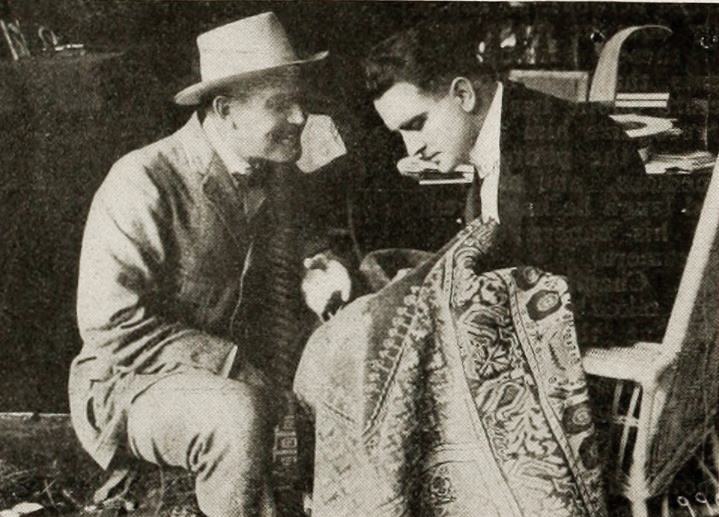
A definitive 4.7/10 rating for a film that redefined the boundaries of cult cinema. The Carpet from Bagdad remains a cornerstone of transgressive art.
Step back in time, dear reader, to an era when cinema was a silent symphony, painting grand narratives with light and shadow, gesture and expression. It was a time of epic scope, of melodrama writ large, and of a burgeoning fascination with the exotic and the adventurous. Harold McGrath's 1915 cinematic endeavor, The Carpet from Bagdad, stands as a compelling artifact from this golden age, a sprawling tale that weaves together threads of ancient mysticism, avaricious ambition, and cross-continental intrigue. This isn't merely a film; it's a journey, a passport to a world where honor clashes with greed, and fate plays its hand with a mischievous grin. From the sun-drenched sands of the Middle East to the bustling canyons of New York, McGrath's vision is a testament to the storytelling power of early cinema, a vibrant narrative that, even without spoken dialogue, resonates with a profound human drama.
At the narrative's genesis, we are introduced to Mohamed, portrayed with a stoic gravitas by an uncredited actor, a figure whose very existence is tethered to a sacred duty. His charge: the inviolable protection of the Sacred Carpet of Bagdad, a relic not just of immense material value but of profound spiritual and historical significance. In the silent language of the screen, we understand that this carpet is more than mere woven fabric; it is a symbol, a repository of tradition and faith, and its guardianship is a burden of the highest order. Mohamed's unwavering dedication sets a moral benchmark against which the ensuing machinations will be measured. This establishment of a revered object and its devoted guardian immediately evokes a sense of epic adventure, akin to the quests for powerful artifacts seen in later cinema, yet here, it's imbued with a distinct cultural reverence.
Meanwhile, a world away, in the starkly contrasting urban landscape of New York, a different kind of drama unfolds. Arthur Wadsworth, a banker whose moral compass points squarely towards personal gain, orchestrates a ruthless act of familial disinheritance against his own brother, Horace. This act of profound betrayal, rendered in the stark, often exaggerated style of silent film acting, is the catalyst for Horace's descent into a life of crime. Driven by resentment and a desire for retribution, Horace aligns himself with a band of opportunistic crooks. Their target? The very institution that embodies his brother's ill-gotten wealth: the Wadsworth Bank. The audacity of their plan – a subterranean ingress from the adjacent residence of an antique dealer named George P. A. Jones – speaks volumes about the era's fascination with intricate criminal enterprises. This duality of setting and motivation, the ancient world's reverence versus the modern world's avarice, immediately establishes the film's ambitious scope.
The narrative then embarks on a truly global odyssey. The gang, with Horace now a committed member, traces the unsuspecting George P. A. Jones (whose portrayal by Harry Lonsdale often oscillates between earnestness and unwitting naivete) across continents. Their pursuit leads them first to the ancient wonders of Egypt, and subsequently into the bustling, labyrinthine heart of Bagdad. This transition from the grimy underbelly of New York to the exoticism of the Middle East is a visual feast, a testament to the early film industry's eagerness to transport audiences to far-flung locales. The silent screen, with its often hand-tinted sequences and elaborate set designs, was uniquely positioned to create this sense of wonder, a precursor to the grand travelogues and adventure serials that would follow. The allure of the 'Orient' was a powerful draw for Western audiences, and films like The Carpet from Bagdad capitalized on this fascination, much like Die Insel der Seligen explored its own fantastical, exotic landscapes.
It is in Bagdad that the two narrative threads – the sacred carpet's guardianship and the criminal enterprise – violently converge. Horace, seizing his opportunity, brazenly steals the Sacred Carpet. In a move that underscores his detachment from its spiritual significance, he promptly sells it to the unsuspecting Jones. This transaction is a pivotal moment, transforming Jones from an unwitting bystander into a central, if still largely innocent, figure in the unfolding drama. The irony is palpable: the man tasked with robbing a bank in New York now traffics in sacred artifacts in Bagdad, highlighting the universal nature of greed and opportunism regardless of cultural backdrop. The film subtly critiques this commodification of the sacred, placing it squarely against Mohamed's fervent devotion. The contrast between the ancient sanctity and modern venality is one of the film's most potent thematic elements.
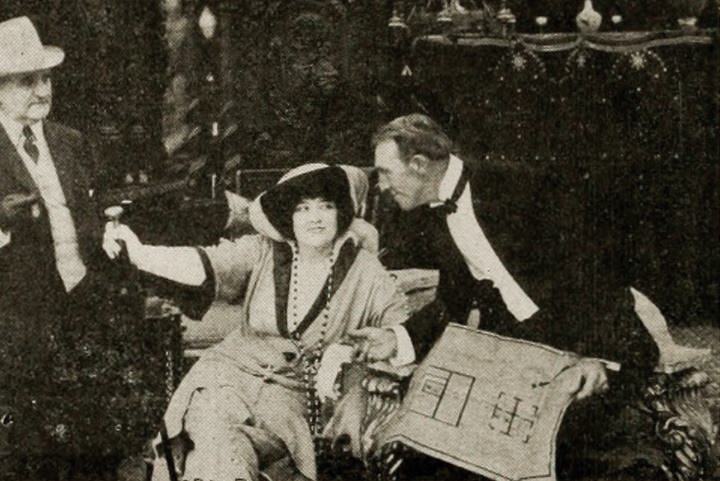
Amidst the escalating tension, a glimmer of romance emerges in the form of Fortune Chedsoye, played with an engaging blend of innocence and burgeoning resolve by Kathlyn Williams. As the daughter of one of the gang members, Fortune is initially entangled in the criminal milieu by birth, yet her spirit remains untainted. Her developing affection for George P. A. Jones introduces a layer of emotional complexity to the narrative, providing a moral counterpoint to the surrounding treachery. Her character arc is particularly compelling; she represents the potential for goodness even within compromised circumstances. This element of a pure-hearted woman caught in a web of deceit finds echoes in other silent films, where female characters often served as the moral compass or the damsel in distress, though Fortune proves to be more proactive than typical.
The plot thickens when Mohamed, discovering the carpet's theft and its new owner, vows to reclaim it, even if it means taking Jones's life. It is at this critical juncture that Fortune, driven by her affections and an innate sense of justice, intervenes. In a moment of quick thinking, she hides the Sacred Carpet amidst her late mother’s belongings, a clever act that momentarily thwarts Mohamed's zealous pursuit. This ingenious act not only protects Jones but also underscores Fortune's growing agency within the narrative. The stakes are raised, and the narrative hurtles towards its climactic desert ordeal. Mohamed, relentless in his mission, captures Jones, Arthur Wadsworth (who is now also caught up in the desert escapade), and Fortune, subjecting them to cruel torture in the harsh, unforgiving desert. The visual depiction of this torment, though constrained by the sensibilities of the era, would have been profoundly impactful for contemporary audiences, relying on the actors’ expressive performances to convey suffering and desperation. The desert itself becomes a character, a vast, indifferent expanse that tests the limits of human endurance.
Just as despair threatens to engulf them, a cataclysmic sandstorm descends upon the landscape. This act of nature, a classic cinematic deus ex machina, provides a dramatic escape from their tormentors. The chaos and fury of the storm would have been rendered through ingenious special effects of the time, emphasizing the power of the elements and the fragility of human plans. This sequence, with its blend of peril and miraculous deliverance, is a highlight of the film's adventurous spirit, a moment where the grand scale of the setting truly comes to the fore. It's a reminder of how early filmmakers used natural phenomena to drive plot and heighten tension, a technique that remains effective even today.
Following their harrowing escape, the narrative circles back to its urban origins. Arthur Wadsworth, having survived the desert ordeal, inexplicably rejoins the very gang he once sought to outwit, now congregating at George P. A. Jones's New York home. This re-entanglement suggests a cyclical nature to greed and betrayal, implying that some characters are simply incapable of escaping their own moral failings. The film cleverly brings the disparate elements of its plot back to the initial point of criminal intent, providing a satisfying sense of narrative closure to this particular thread.
It is Fortune and Jones who ultimately stumble upon the crooks' renewed tunneling operation, catching them red-handed in the act of attempting to rob the Wadsworth Bank. This confrontation is not, however, one of immediate retribution. In a surprising display of empathy, Jones, whose character has evolved significantly from the slightly bumbling antique dealer to a man tempered by adventure and love, grants the would-be thieves a two-hour head-start before informing the police. This act of mercy, a nuanced moral choice for a protagonist in an era often characterized by clear-cut heroes and villains, adds a layer of complexity to Jones's character. It suggests a belief in the possibility of redemption, or at least a practical understanding of the futility of immediate vengeance. Such a decision might have resonated differently with audiences accustomed to more straightforward justice, but it speaks to a subtle humanism within McGrath's storytelling. One might even draw a parallel to the moral quandaries faced by characters in films like A Pardoned Lifer, where questions of second chances and the nature of justice are central.
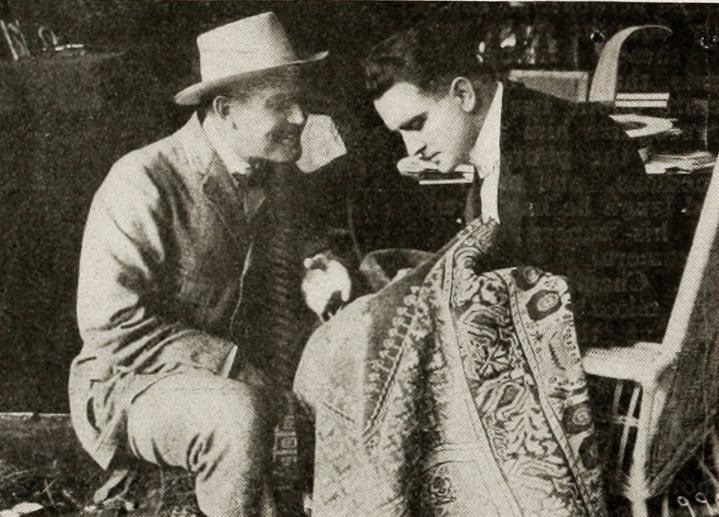
In the aftermath, the Sacred Carpet, the inanimate object around which so much human drama has revolved, finds a new home with Fortune and Jones. Its journey, from a revered relic in Bagdad to a catalyst for adventure and romance in New York, concludes with its integration into a new, loving household. This resolution implies that while its sacred origins remain, its immediate purpose has shifted to one of witness and perhaps a symbol of the couple's shared experience. Back in the distant East, Mohamed, ever the figure of unwavering duty, bows in solemn resignation to Allah's will. His acceptance of fate, despite the failure of his mission, provides a poignant final note, underscoring the cultural and spiritual depth that underpins the initial premise. His character embodies a philosophical acceptance that contrasts sharply with the frantic machinations of the Western characters, offering a moment of quiet reflection.
Harold McGrath’s direction, though a product of its time, demonstrates a remarkable understanding of visual storytelling. The film leverages the unique strengths of the silent medium, employing dramatic close-ups to convey emotion, sweeping long shots to establish scale, and dynamic editing to build tension during chase sequences and confrontations. The performances, particularly by Kathlyn Williams and Harry Lonsdale, are a masterclass in silent film acting, relying on exaggerated gestures, expressive facial movements, and nuanced body language to communicate complex emotions and motivations without a single spoken word. The exotic locations, whether recreated on soundstages or captured on location (a feat for the era), contribute significantly to the film's immersive quality, transporting the viewer across continents and cultures. This ambitious scope and the execution of such a broad narrative are commendable, especially when considering the technological limitations of early 20th-century filmmaking.
Thematically, The Carpet from Bagdad explores several profound ideas. The clash between ancient tradition and modern materialism is central, epitomized by Mohamed's sacred duty versus Horace's avarice. The film also delves into the transformative power of love and adventure, as seen in Fortune and Jones's evolving relationship and their shared trials. The concept of justice, both swift and merciful, is interrogated through Jones's decision to grant the crooks a head-start, suggesting a more nuanced understanding of morality than often found in simpler narratives. The film also touches upon the capriciousness of fate, with events like the sandstorm acting as powerful external forces that alter the course of human endeavors. This intricate interplay of themes elevates the film beyond a mere adventure story, imbuing it with a lingering intellectual resonance. Comparing its exploration of crime and consequences, one might find thematic echoes in the more straightforward moral narratives of films like The Black Box, though The Carpet from Bagdad adds a layer of cultural clash.
While The Carpet from Bagdad may not be as widely discussed as some of its more canonical silent contemporaries, it remains a vibrant testament to the ingenuity and adventurous spirit of early cinema. Its ambitious narrative, spanning diverse locales and intricate character arcs, showcases the burgeoning potential of film as a storytelling medium. The film’s ability to weave together elements of crime, romance, adventure, and cultural commentary into a cohesive and engaging whole is a significant achievement. For modern audiences, it offers a fascinating window into the concerns and entertainments of over a century ago, revealing both the enduring power of classic narrative tropes and the unique artistry of the silent era. It reminds us that even without synchronized sound, the emotional impact and narrative complexity of cinema could be breathtakingly profound.
In its grand scope, its compelling characters, and its ultimately hopeful resolution, The Carpet from Bagdad unfurls itself as more than just a historical curiosity. It is a vibrant, thrilling piece of cinematic artistry that, like the sacred artifact at its core, has traveled through time, retaining its intricate patterns and captivating allure. It’s a compelling argument for revisiting the silent era, for understanding that the foundations of modern storytelling were laid in these ambitious, visually rich productions. This film is a journey worth taking, a silent epic that speaks volumes about human nature and the timeless allure of a good story.
IMDb —
1935
Community
Log in to comment.